Winners



Best Film:
SUGAR ISLAND, Johanné Gómez Terrero, Dominican Republic
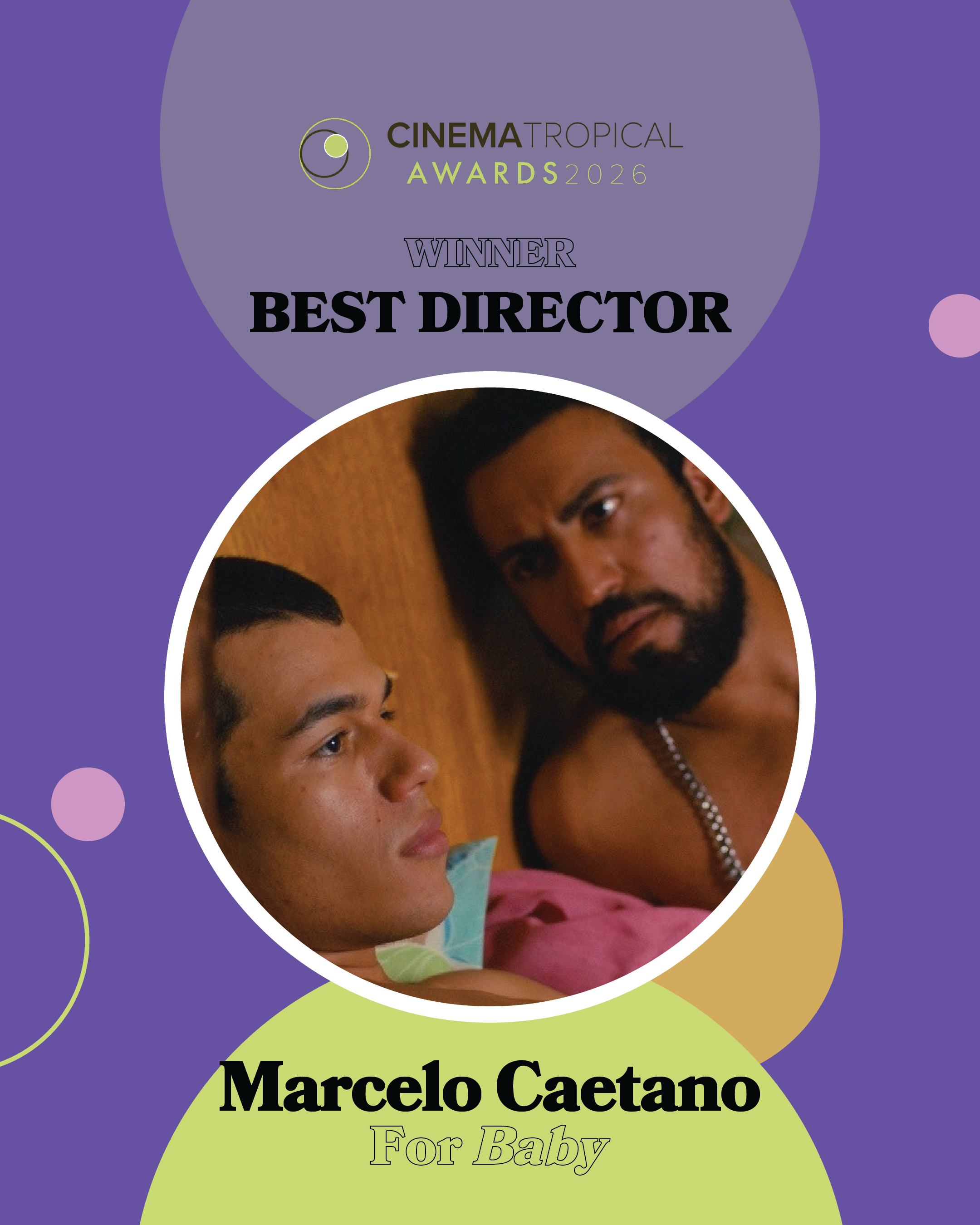
Best Director:
BABY, Marcelo Caetano, Brazil
Best Documentary:
CHRONICLES OF THE ABSURD, Miguel Coyula, Cuba
Best First Film:
THE DEVIL SMOKES, Ernesto Martínez Bucio, Mexico
Best U.S. Latinx:
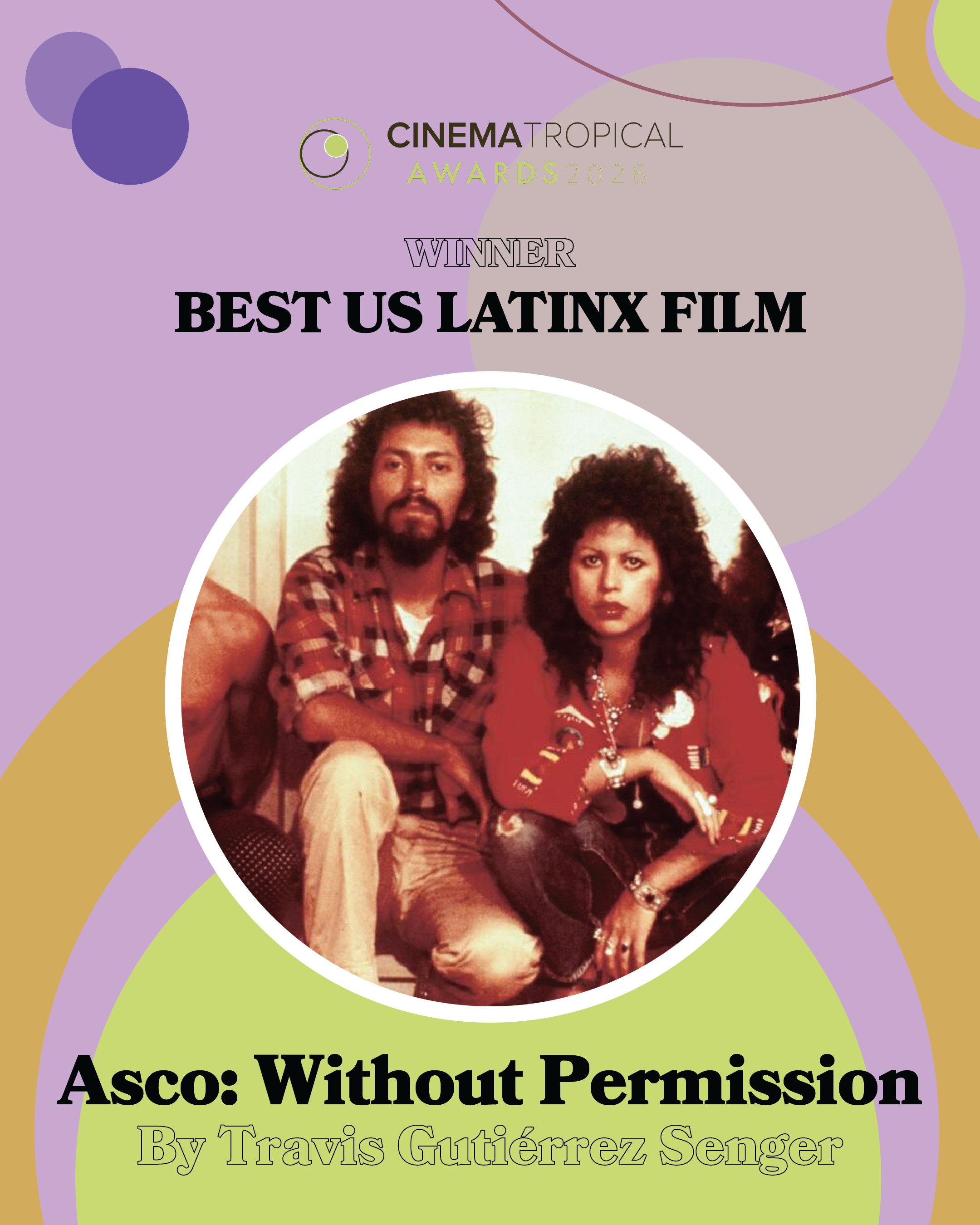
ASCO: WITHOUT PERMISSION, Travis Gutiérrez Senger
Special Mention, U.S. Latinx Film:
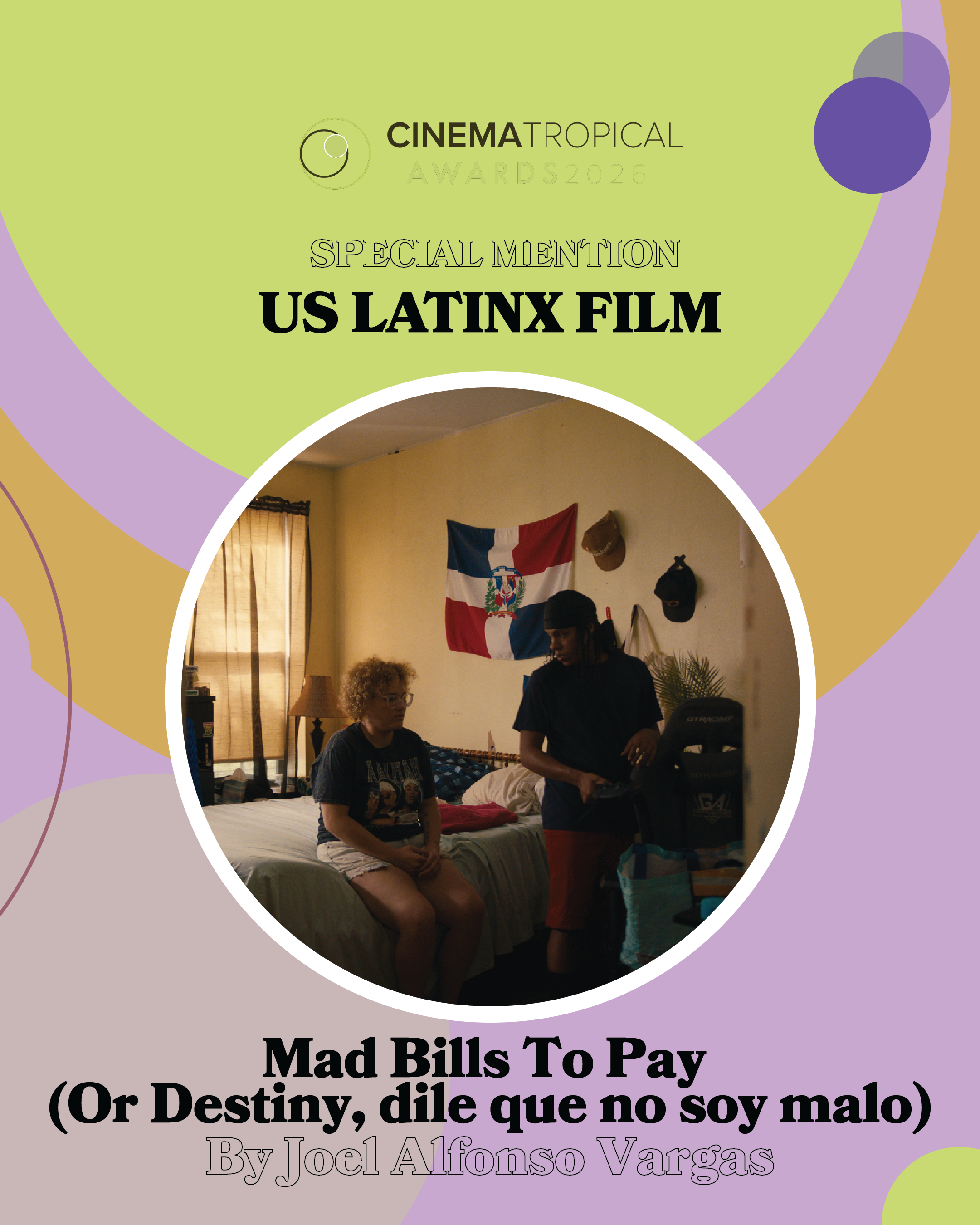
MAD BILLS TO PAY (OR DESTINY, DILE QUE NO SOY MALO), Joel Alfonso Vargas
The winners of the 16th Annual Cinema Tropical Awards were announced on Wednesday,
January 7, 2026 at a special ceremony at Film at Lincoln Center.
Cinema Tropical’s programs are made possible with public funds from the New York State Council on the Arts with the support of Governor Kathy Hochul and the New York State Legislature.
Cinema Tropical Awards Producer: Juan Pedro Agurcia.
Cinema Tropical has unveiled its annual list of the Best Latin American Films of the Year, comprising 25 titles from 12 countries, selected by the organization as the standout films of 2025.
The selection includes productions from Argentina, Brazil, Chile, Colombia, Cuba, the Dominican Republic, Ecuador, Mexico, Panama, Paraguay, Peru, and Venezuela. The films will compete for the 16th Annual Cinema Tropical Awards in the categories of Best Film, Best Non-Fiction Film, Best Director, and, in some cases, Best First Film.
The New York–based nonprofit organization has also announced the seven nominated films competing for Best U.S. Latinx Film.
Winners of the 16th Annual Cinema Tropical Awards will be revealed at a ceremony on Wednesday, January 7, 2026, at Film at Lincoln Center in New York City.
All films under consideration have a minimum runtime of 60 minutes and premiered between May 1, 2024, and April 30, 2025.
Special thanks to Cecilia Barrionuevo and Juan Pedro Agurcia.
LATIN AMERICAN FILMS
(in alphabetical order):
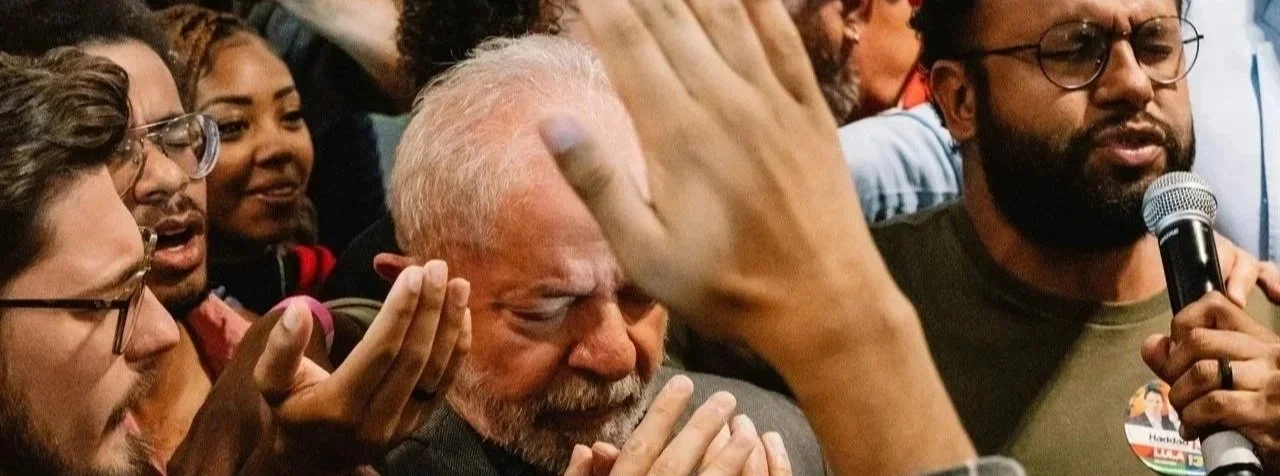
APOCALYPSE IN THE TROPICS / APOCALIPSE NOS TRÓPICOS
(Petra Costa, Brazil/USA/Denmark, 2024, 110 min. In English and Portuguese with English subtitles)
Petra Costa’s latest documentary is a probing exploration of the blurred line between democracy and theocratic influence in Brazil, focusing on the rising political force of evangelical powerbrokers. With unprecedented access to key figures—including President Lula, former President Jair Bolsonaro, and the nation’s most prominent televangelist—Costa follows a charismatic pastor whose ambitions stretch toward shaping the country’s far-right leadership from behind the scenes. Apocalypse in the Tropics had its world premiere at the Venice Film Festival and has screened at numerous festivals, including Telluride, New York, IDFA, Camden, and San Sebastian. It is now in the running for Best Documentary Feature at the 98th Academy Awards, having been shortlisted this week.

BABY
(Marcelo Caetano, Brazil/France/ Netherlands, 2024, 107 min. In Portuguese with English subtitles)
After being released from a juvenile detention center, 18-year-old Wellington, known as Baby, finds himself alone and adrift on the streets of São Paulo, cut off from his parents and with no resources to rebuild his life. As he drifts through the city’s margins, Wellington encounters Ronaldo, an older man whose experience navigating precarious urban spaces offers both guidance and risk. What begins as a fragile alliance gradually evolves into a complex bond shaped by desire, survival, and uneven power dynamics. This powerful queer drama, the second feature by Brazilian director Marcelo Caetano, had its world premiere in the Critics’ Week sidebar of the 2024 Cannes Film Festival.
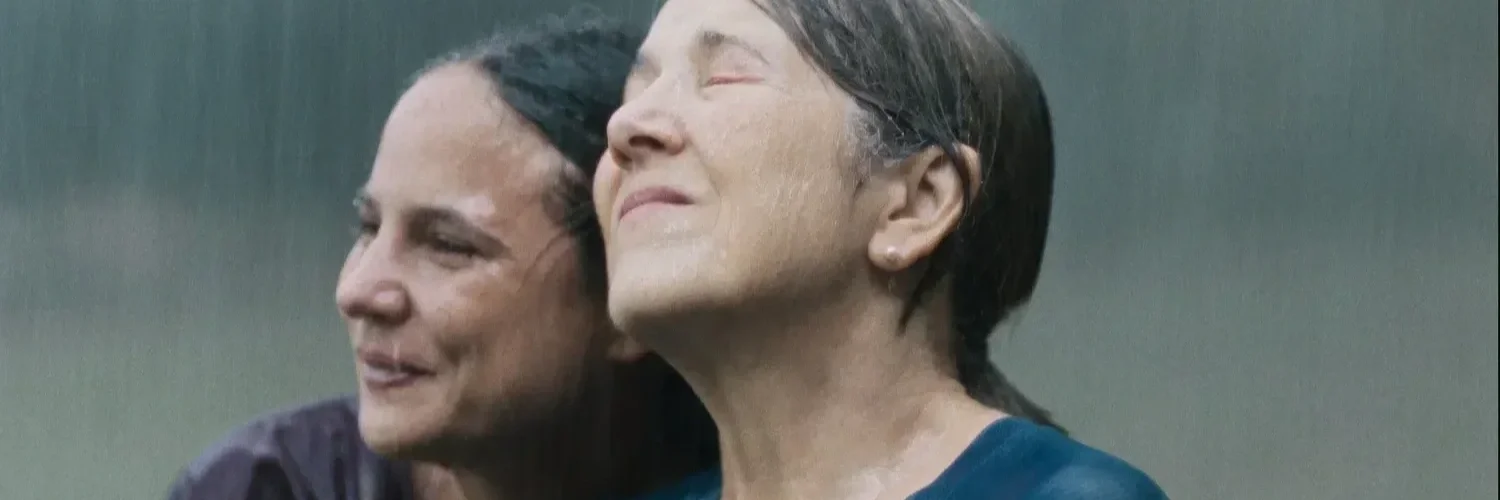
BELOVED TROPIC / QUERIDO TRÓPICO
(Ana Endara, Panama/Colombia, 2024, 108 min. In Spanish with English subtitles)
Set in Panama City and starring acclaimed Chilean actress Paulina García (Gloria), Querido Trópico explores the evolving relationship between two lonely and dissimilar women who form a touching and unexpected bond. Ana María (Jenny Navarrete, The Other So) is a Colombian immigrant facing precarious legal status and financial hardship while harboring a secret. Under the direction of Ana Endara, an accomplished documentarian making her first foray into feature fiction, the film’s deceptively simple premise opens onto a carefully observed relationship between two seemingly disparate women. Much like Panama’s unpredictable and ever-shifting weather, Querido Trópico unfolds as a luminous drama with a distinctly tropical texture, shaped by quiet gestures and unexpected turns.
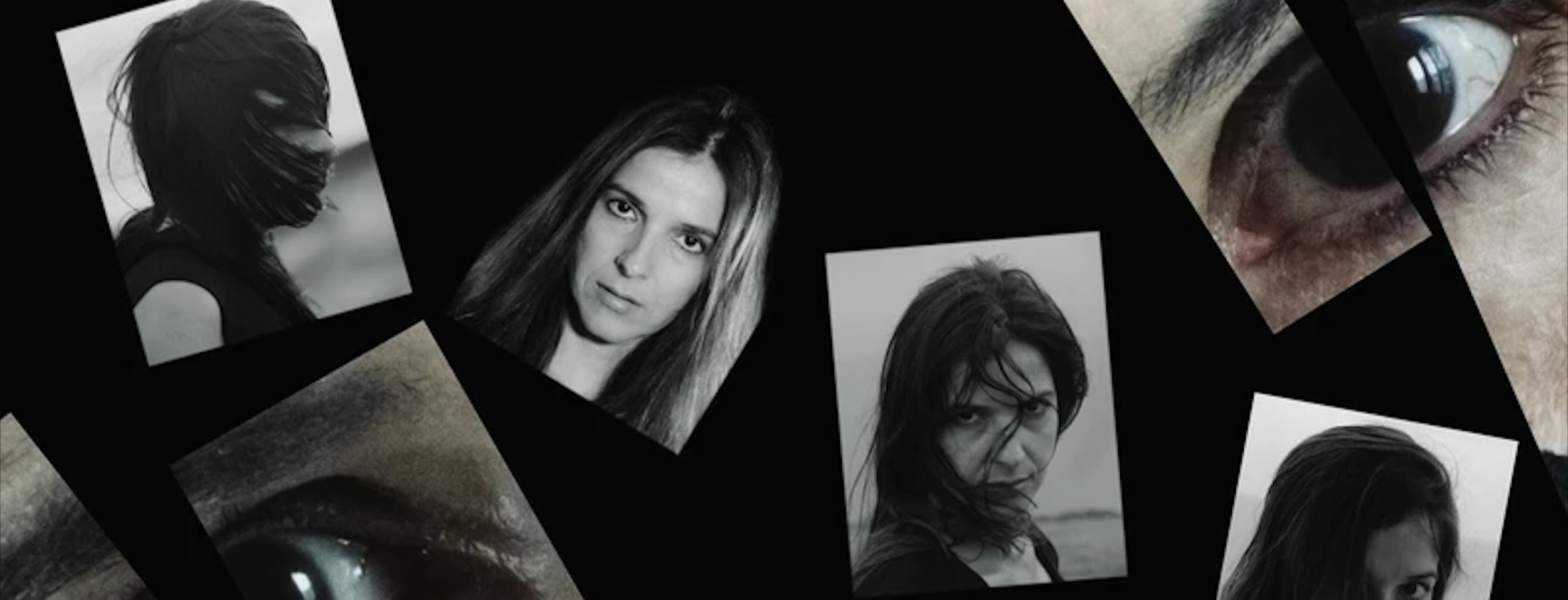
CHRONICLES OF THE ABSURD / CRÓNICAS DEL ABSURDO
(Miguel Coyula, Cuba, 2024, 77 min. In Spanish and Russian with English subtitles)
Told in ten elliptical chapters, Chronicles of the Absurd exposes the complex contradictions underpinning Cuba’s social and political dynamics—realities often invisible to casual visitors and official narratives alike. Constructed primarily from clandestine audio recordings captured on concealed cell phones, the film assembles a fragmented yet incisive portrait of everyday life shaped by surveillance, scarcity, and ideological fatigue. Rather than relying on conventional interviews or exposition, director Miguel Coyula allows disembodied voices, ambient sounds, and moments of interruption to carry the film’s political charge, revealing how absurdity emerges as both a condition and a coping mechanism. The film won the Best Film Award at its world premiere in the Envision competition of the 37th International Documentary Film Festival Amsterdam (IDFA).
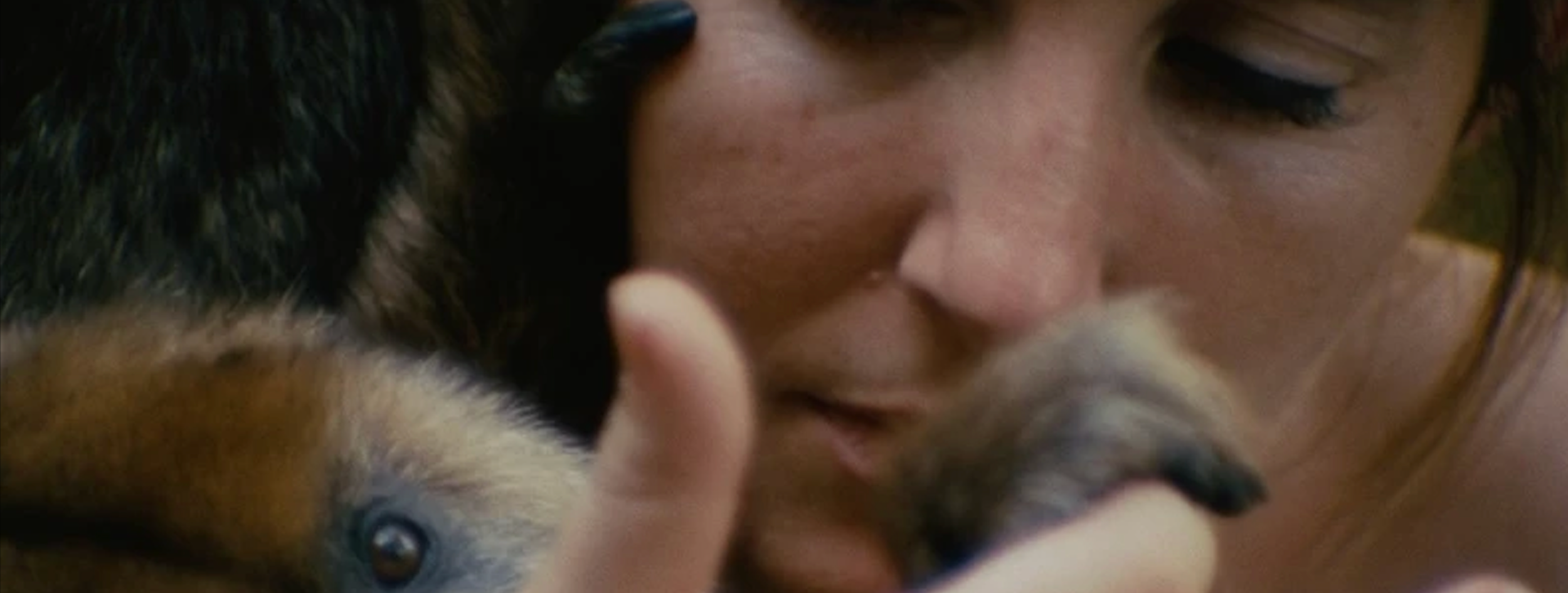
COLLECTIVE MONOLOGUE / MONÓLOGO COLECTIVO
(Jessica Sarah Rinland, Argentina/UK, 2024, 104 min. In English and Spanish with English subtitles)
Through the lens of Argentine-British director Jessica Sarah Rinland, Collective Monologue unfolds across a network of zoos and animal rescue centers in Argentina, capturing intimate, fragmented moments of daily life. As the layered histories of these institutions are gradually uncovered, dedicated workers commit themselves day and night to caring for the remaining animals in captivity. Through gestures of routine and proximity, the film reveals a mutual bond that quietly unsettles and transcends the imagined boundaries between human and animal.

EVERY DOCUMENT OF CIVILIZATION / TODO DOCUMENTO DE CIVILIZACIÓN
(Tatiana Mazú González, Argentina, 2024, 88 min. In Spanish with English subtitles)
Aiming to counter the inherent barbarism in the documentation of history and to describe the struggles of people who’ve been made invisible, erased from history, Every Document of Civilization seizes upon the case of the forced disappearance of Luciano Arruga, a teenager tortured and killed by Buenos Aires’ police, conducting a clinical, critical examination and meticulously dissecting the traces of this state crime. The latest film by Argentine director Tatiana Mazú González won the Georges de Beauregard International Award in the International Competition at FIDMarseille.
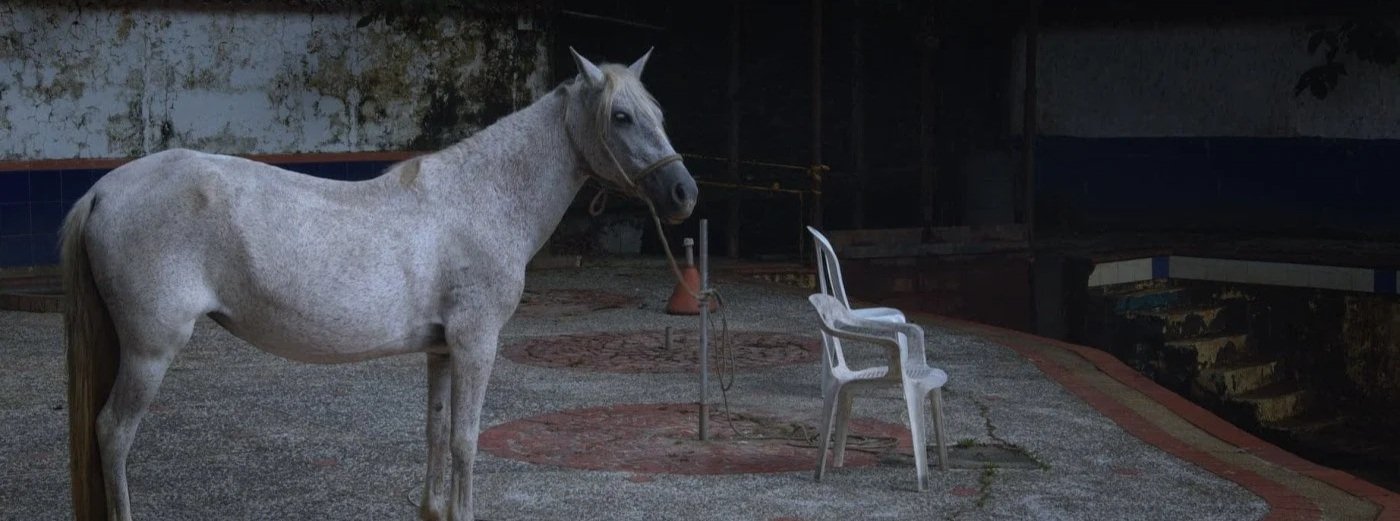
FORENSICS / FORENSES
(Federico Atehortúa, Colombia, 2025, 90 min. In Spanish with English subtitles)
Winner of the Proxima Special Jury Prize at the Karlovy Vary International Film Festival, Forensics explores Colombia’s disappeared, linking personal loss and national identity. It follows three narratives: the murder of a transgender woman and Katalina Ángel’s care for her body; the filmmaker’s uncle, Jorge Arteaga, whose disappearance was hidden for decades; and forensic anthropologist Karen Quintero’s ongoing search for the missing. Blending archival footage, animation, dreams, and maps, Federico Atehortúa’s second feature reflects on how Colombia’s history is inseparable from the history of its disappeared.
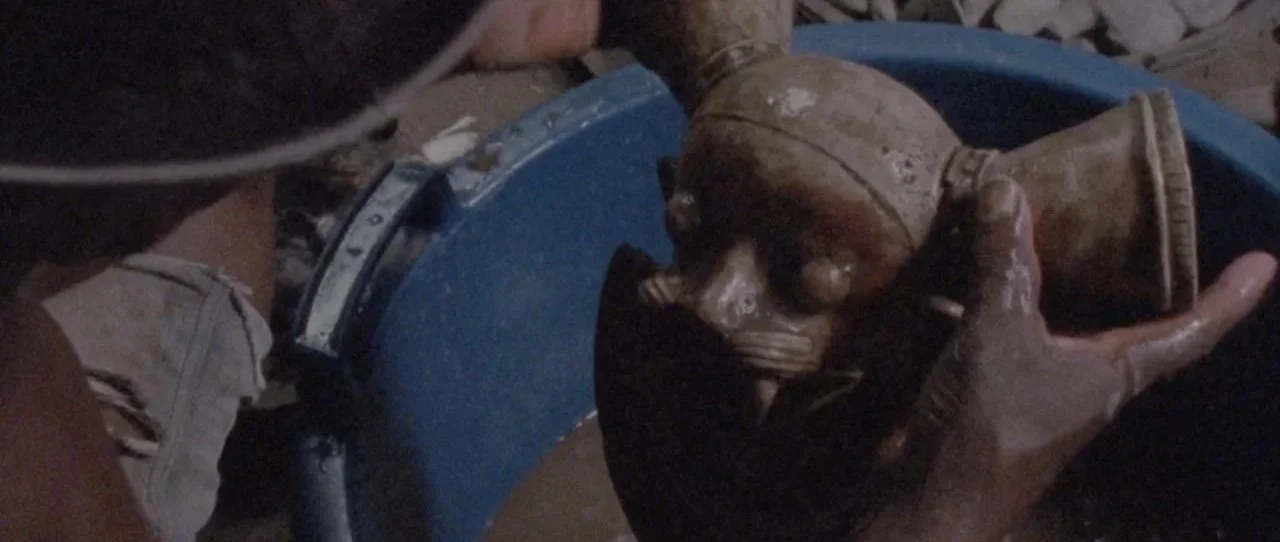
HUAQUERO
(Juan Carlos Donoso Gómez , Ecuador/Peru/Romania, 2024, 81 min. In Spanish with English subtitles)
Amid the rugged landscapes of Ecuador and Peru, Huaquero reconstructs the fragmented memories of ex-looters of pre-Hispanic artifacts, blending documentary and fiction to probe the enduring tensions between ancestral knowledge, heritage crime, and the colonial wounds that continue to shape these lands. Through intimate encounters, reenactments, and archival traces, the film traces how the past persists in the present, revealing the complex moral, cultural, and emotional stakes of recovering both objects and memory. With a patient, observant lens, the film illuminates the fragile boundaries between loss and restitution, personal history and collective heritage.
I DREAMED HIS NAME / SOÑÉ SU NOMBRE
(Ángela Carabalí, Colombia, 2025, 86 min. In Spanish with English subtitles)
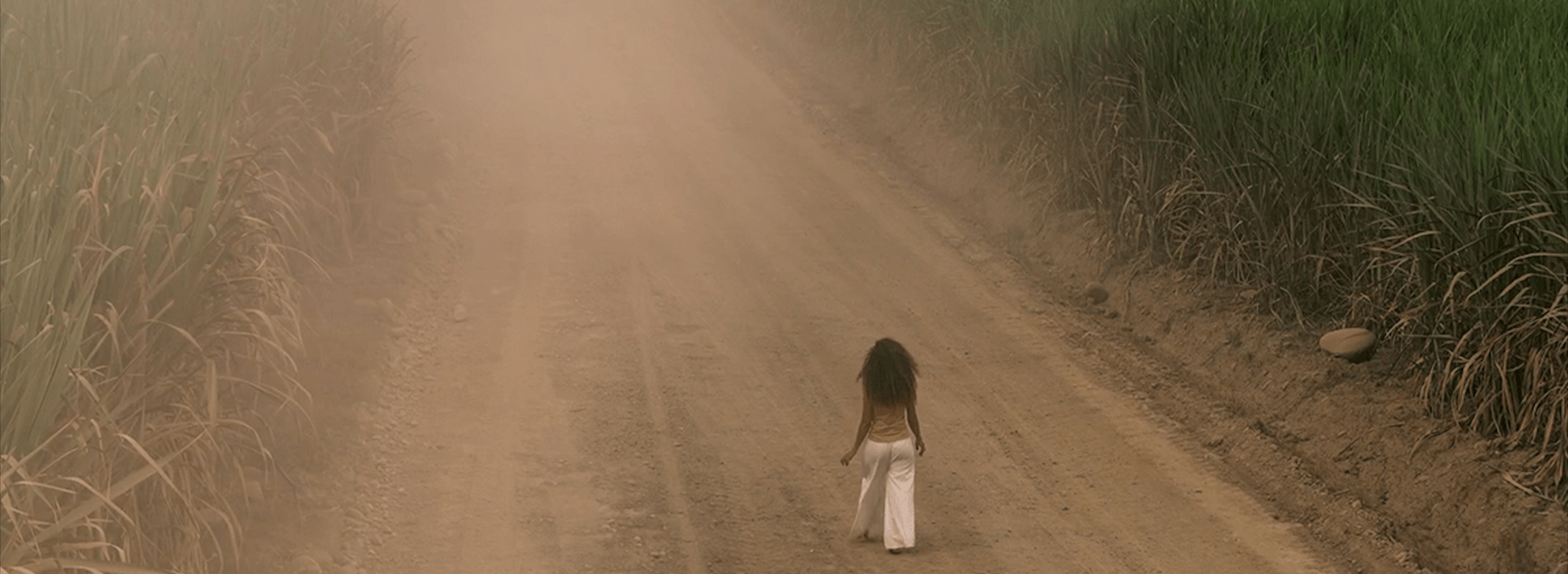
Through powerful, poetic storytelling, I Dreamed His Name / Soñé su nombre, by Colombian filmmaker Ángela Carabalí, follows the director and her sister, Juliana, as they journey across Colombia’s Indigenous farmlands to uncover the fate of their father. Thirty years ago, their Afro-Latino father became a victim of the violence that engulfed the country during a period of civil unrest. As Ángela and Juliana piece together his story, they encounter others who have similarly lost loved ones to the turmoil.
I'M STILL HERE / AINDA ESTOU AQUI
(Walter Salles, Brazil/Spain, 2024, 135 min. In Portuguese with English subtitles)
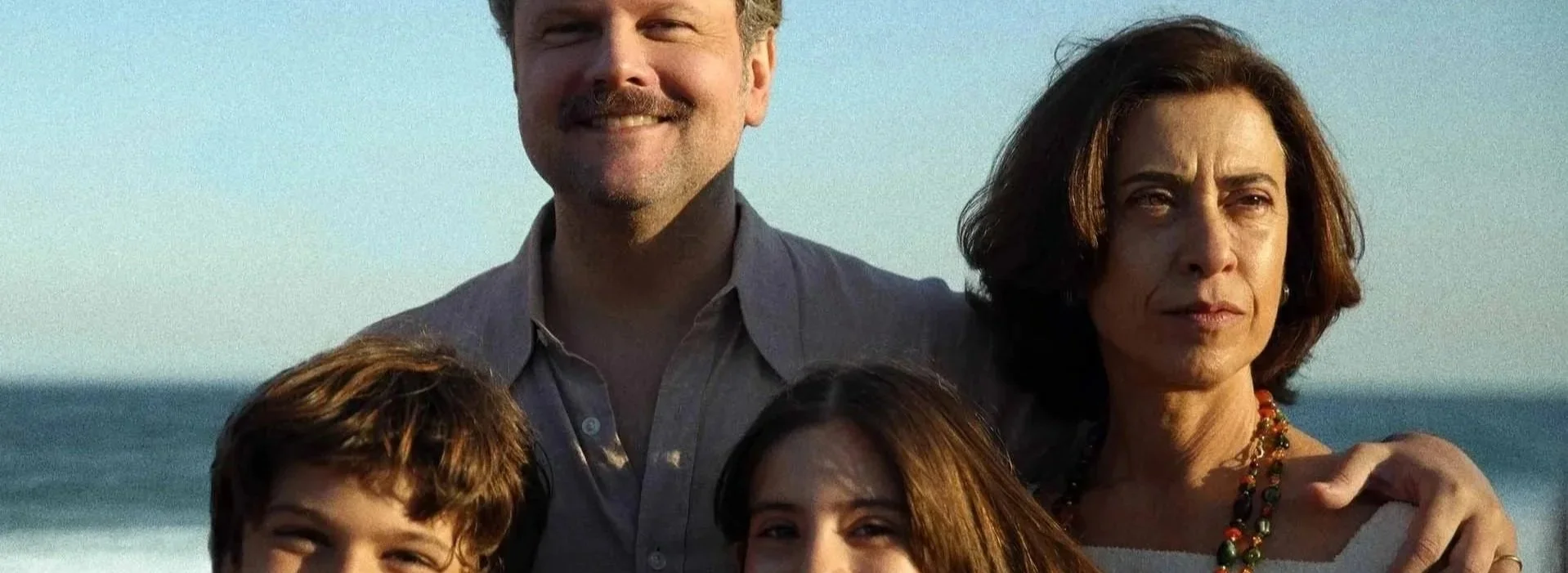
Director Walter Salles won Brazil its first Academy Award for Best International Film with I’m Still Here, a family political drama. Adapted from his son Marcelo Rubens Paiva’s memoir, the overwhelming, richly realized political drama from Walter Salles stays tightly wedded to the perspective of Rubens’s wife, Eunice, whose indefatigable search for the truth about her husband would stretch out for decades. Featuring a deeply affecting appearance from Fernanda Montenegro (Oscar nominee for Salles’ Central Station), I’m Still Here is a devastating true story that is exhilarating in its portrayal of human tenacity in the face of injustice.

KILL THE JOCKEY / EL JOCKEY
(Luis Ortega, Argentina/Mexico/Spain, 2024, 96 min. In Spanish with English subtitles)
A wild and surreal crime comedy from Luis Ortega (El Angel), Kill the Jockey explores the fluidity of identity, desire, and animal magnetism in a wholly original and unpredictable register. Winner of the Ariel Award for Best Ibero-American Film and Argentina's submission for Best International Film at the 97th Academy Awards, Kill the Jockey stars Nahuel Pérez Biscayart (120 Beats per Minute) as Remo Manfredini, a jockey whose self-destructive tendencies begin to eclipse his talent, jeopardizing both his career and personal life. After a life-threatening accident on race day, he vanishes, embarking on a transformative journey through the city, fleeing from both his identity and a dangerous criminal underworld.
LÁZARO AT NIGHT / LÁZARO DE NOCHE
(Lázaro de noche, Nicolás Pereda, Mexico/Canada, 2024, 76 min. In Spanish with English subtitles)
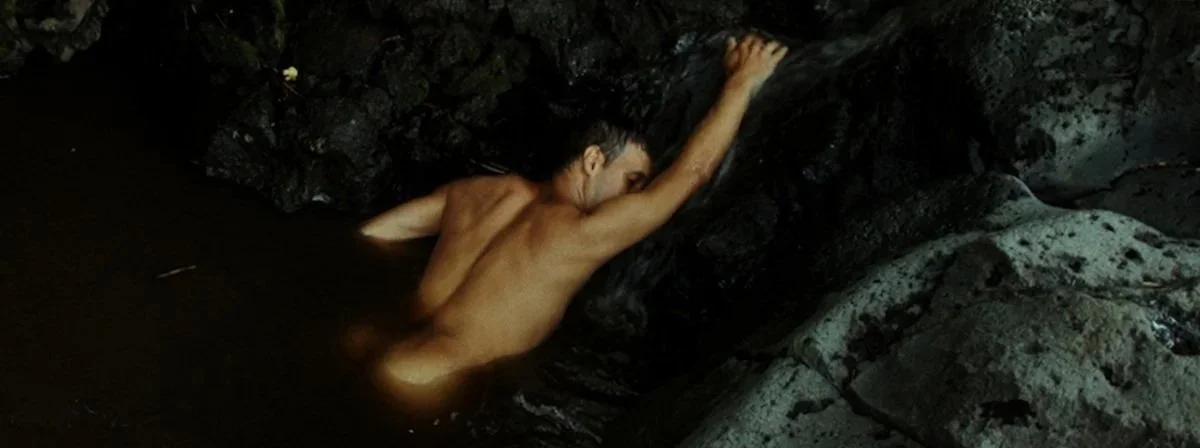
The latest film by prolific Mexican director Nicolás Pereda, starring Lázaro G. Rodríguez, centers on a trio of friends connected by a writing workshop they attended years earlier. Now navigating romance and infidelity, their bond is further complicated by the fact that they are all auditioning for the same low-budget film. Through a complex sound design that occasionally collapses time and space, scenes of absurd mundanity give way to the fantasies of fiction, depicting a triangle of poets, artists, and actors driven equally by wishful dreaming and comic, everyday neuroses.
NIGHT HAS COME / VINO LA NOCHE
(Paolo Tizón, Peru, 2024, 95 min. In Spanish with English subtitles)
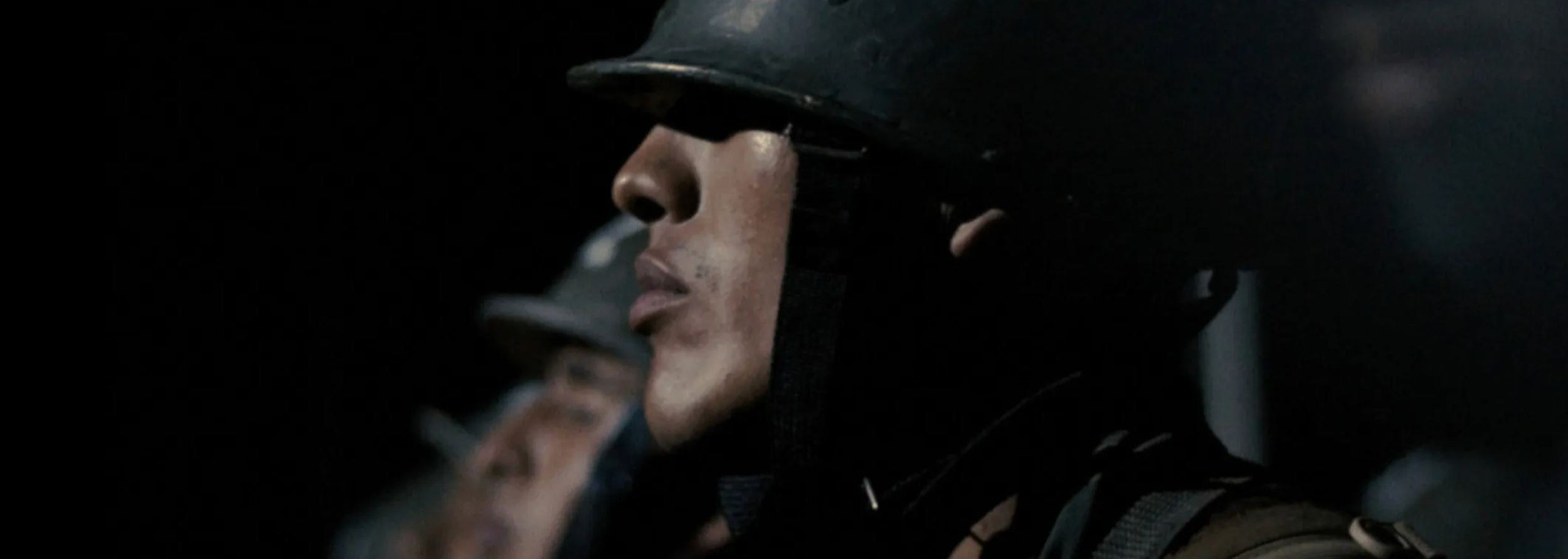
Paolo Tizón’s debut feature, Night Has Come, is a portrait of an elite military unit in Peru and a powerful meditation on innocence and experience, fragility and brutality. Young recruits, escaping girlfriend troubles and estranged parents back home, endure grueling physical and mental tests in preparation for surveillance, counterinsurgency, and combat missions in the VRAEM, Peru’s so-called “cocaine valley,” a hotbed of drug trafficking and violence.
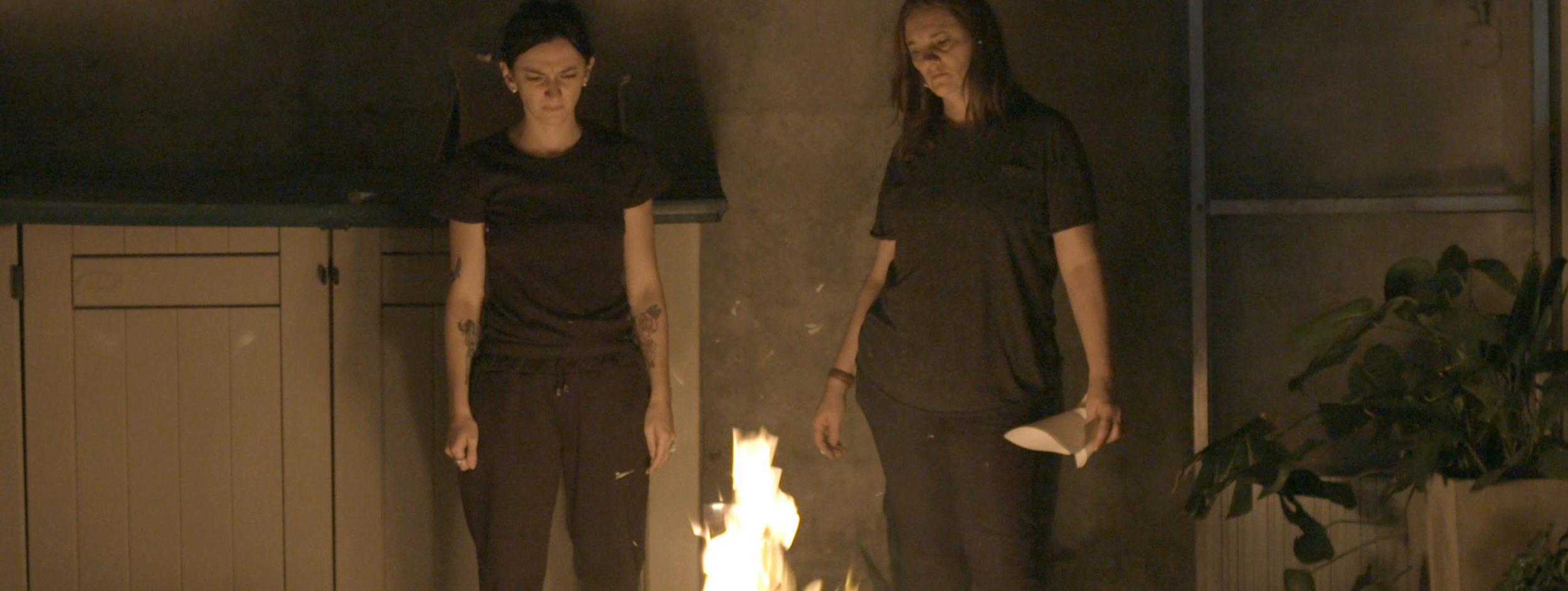
SOMETHING OLD, SOMETHING NEW, SOMETHING BORROWED / ALGO VIEJO, ALGO NUEVO, ALGO PRESTADO
(Hernán Rosselli, Argentina, 2024, 100 min. In Spanish with English subtitles)
Hernán Rosselli’s Something Old, Something New, Something Borrowed follows the Felpetos, a working-class family running a well-established underground sports betting business. After the father’s death, the operation is now led by the matriarch. Set on the outskirts of Buenos Aires, Rosselli’s film blends family home videos—both old and new—with fictionalized events to explore memory, loyalty, and a collapsing criminal empire, mixing documentary intimacy with cinematic invention. The film had its world premiere at the Cannes Film Festival in the Directors’ Fortnight section.
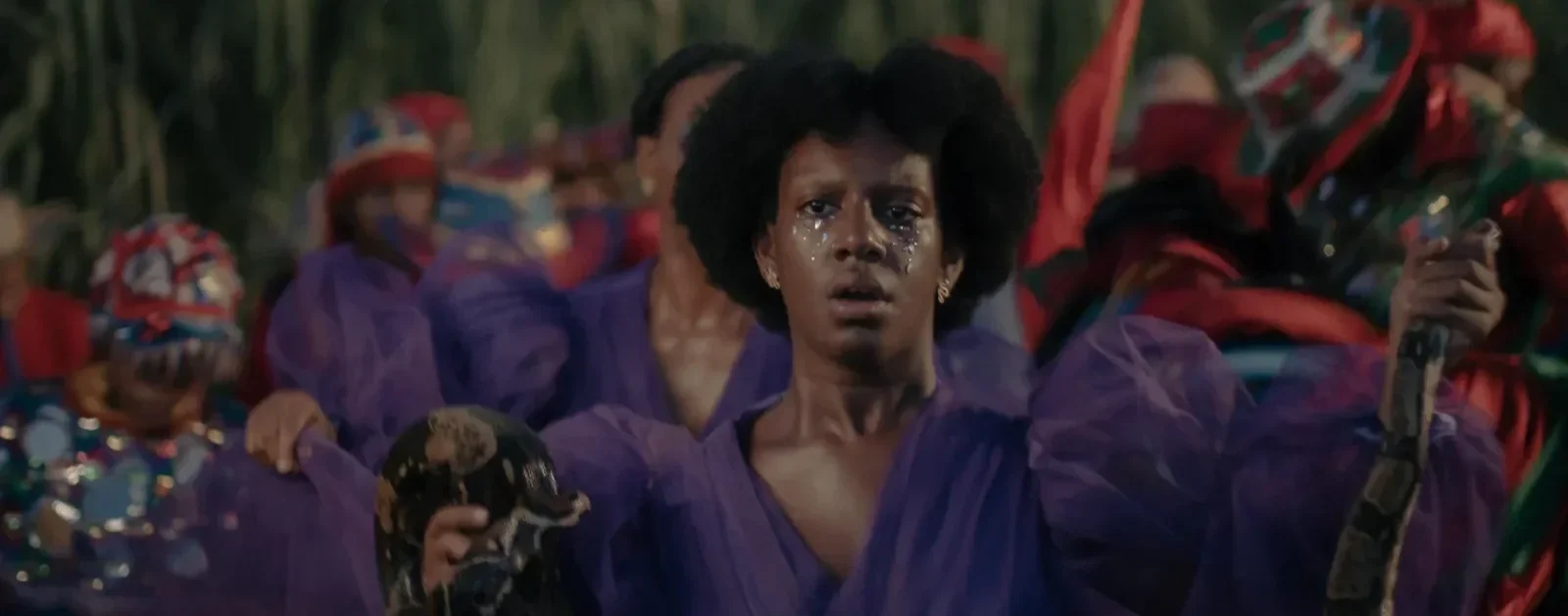
SUGAR ISLAND
(Johanne Gómez Terrero, Dominican Republic. 2025, 91 min. In Spanish, Haitian; Haitian Creole with English subtitles)
An immersion into the Dominican Republic’s sugarcane fields, where Makenya, a Dominican-Haitian teenager, navigates an unwanted pregnancy and the harsh labor that defines her world. Director Johanné Gómez Terrero masterfully blends social realism, spirituality, and Afro-futurism to expose the enduring legacy of colonial exploitation. As Makenya confronts family burdens and the specter of displacement, the arrival of a mysterious theater troupe illuminates haunting connections between past and present struggles. As Makenya fights for her future and her grandfather battles for justice, Sugar Island unfolds as a lyrical, visually rich meditation on identity, survival, and the enduring power of cultural memory.
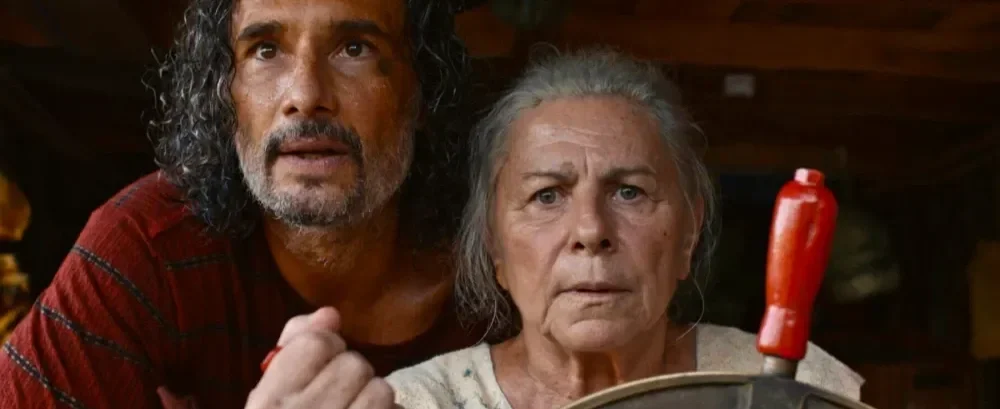
THE BLUE TRAIL / O ULTIMO AZUL
(Gabriel Mascaro, Brazil/Mexico/Netherlands/Chile, 2025, 85 min. In Portuguese with English subtitles)
Winner of the Silver Bear Grand Jury Prize at the Berlinale, The Blue Trail follows Tereza, an elderly woman who has spent her entire life in a small industrialized town in the Amazon. One day, she receives an official government order to relocate to a senior housing colony—a secluded facility where the elderly are sent to “enjoy” their final years, freeing the younger generation to focus on productivity and growth. Unwilling to accept this fate, Tereza embarks on a transformative journey through the rivers and tributaries of the Amazon to fulfill one last wish before her freedom is taken away—a decision that will change her destiny forever.
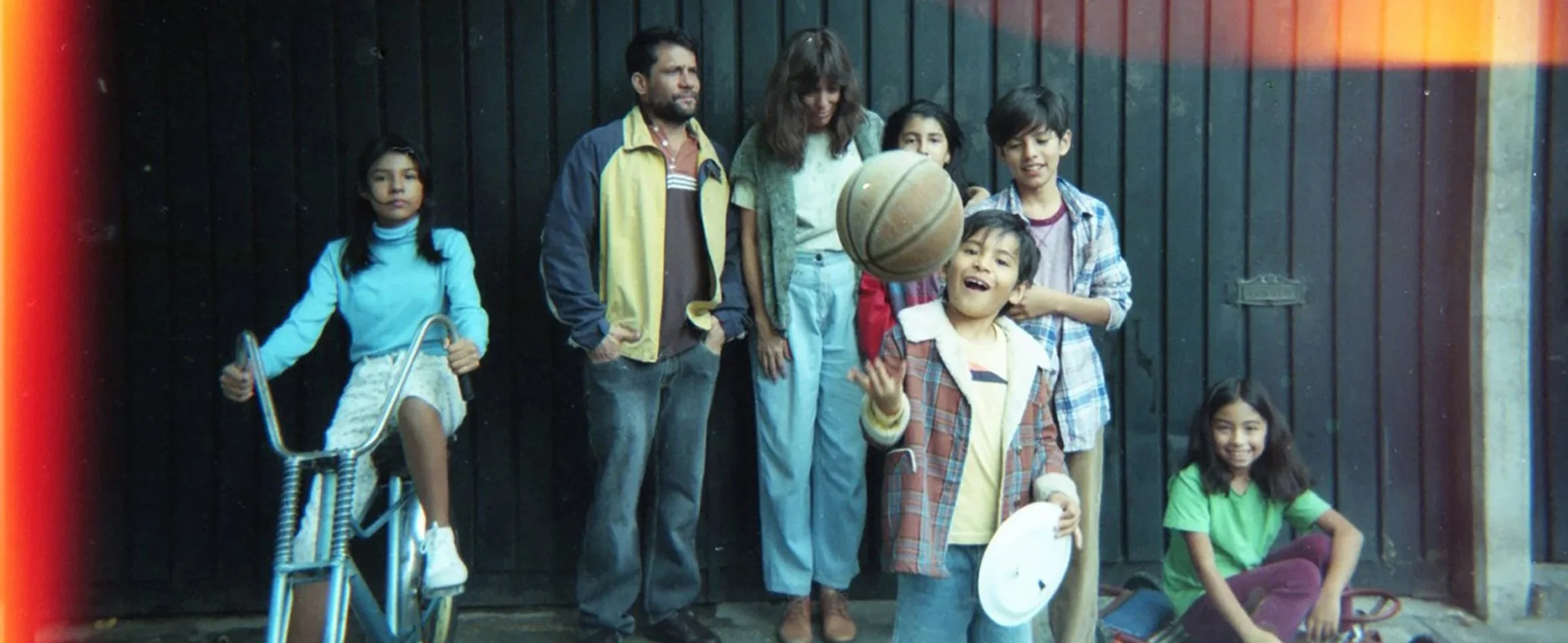
THE DEVIL SMOKES / EL DIABLO FUMA (Y GUARDA LAS CABEZAS DE LOS CERILLOS QUEMADOS EN LA MISMA CAJA)
(Ernesto Martínez Bucio, Mexico, 2025, 97 min. In Spanish with English subtitles)
Set in Mexico City in the nineties, as crowds prepare to welcome Pope John Paul II, the Palacios López children are left waiting for someone who never returns—their mother. While their father sets off in search of his missing wife, the five siblings remain behind under the erratic care of their grandmother Romana, in a household where superstition and fear begin to take root. Winner of the Best First Feature Award at the Berlin Film Festival, Ernesto Martínez Bucio’s remarkable and beguiling debut captures the uncanny blur between childhood fantasy and haunting reality.

THE FALLING SKY / A QUEDA DO CÉU
(A Queda do Céu, Eryk Rocha and Gabriela Carneiro da Cunha, Brazil/Italy/France, 2024, 110 min. In Yanomamö and Portuguese with English subtitles)
A standout at major international festivals—including Directors’ Fortnight at Cannes, DOC NYC, and Doclisboa—The Falling Sky follows the Yanomami people as they gather to perform the reahu, a ritual honoring a recently deceased shaman. But an even greater threat looms over them—the relentless advance of miners destroying their land. Through sacred ceremonies and spiritual invocations, the shamans seek to push back against this invasion. Inspired by the 2010 book of the same name by Yanomami shaman Davi Kopenawa—who serves as both protagonist and narrator—and French anthropologist Bruce Albert, this breathtaking and collaborative film gives voice to the remote Yanomami and Watoriki communities as they issue a dire warning to the world: environmental catastrophe is imminent, driven by the greed of industrialized nations.
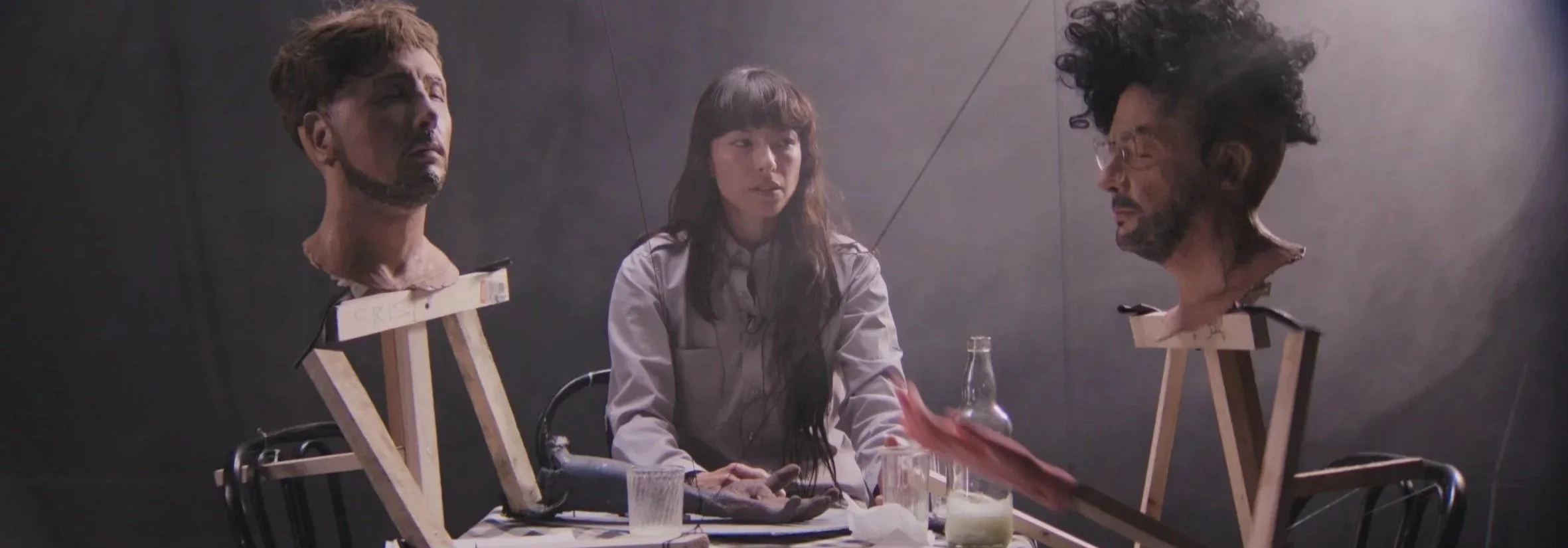
THE HYPERBOREANS / LOS HIPERBÓREOS
(Joaquín Cociña and Cristóbal León, Chile, 2024, 71 min. In Spanish with English subtitles)
The Hyperboreans, the second feature film by Joaquín Cociña and Cristóbal León (The Wolf House), celebrated its world premiere at the Cannes Film Festival in the Directors’ Fortnight. When the negative of a film she starred in disappears, an actor embarks on a quest to recover it, encountering Chilean history and the legacy of fascist thinker Miguel Serrano along the way. Antonia Giesen plays a version of herself as an actor and psychologist who initially stole the missing film’s idea from her patient Metalhead’s dreams. That dream state infects her search as she transforms into a cop contending with ailing parents, Metalhead’s declining condition, Chile’s fascist history, and astonishing phenomena that dwell beneath Antarctica’s ice. Cociña and León appear as twisted versions of themselves in this fantastically surreal and virtuoso blend of live action, animation, puppetry, and practical effects.

THE LOST CHAPTERS / LOS CAPÍTULOS PERDIDOS
(Lorena Alvarado, Venezuela, 2025, 68 min. In Spanish with English subtitles)
Lorena Alvarado’s debut feature The Lost Chapters is a tender and inquisitive story about a father and daughter brought together by literature. After years abroad, Ena returns to Caracas to find her grandmother gradually losing her memory and her father immersed in the search for rare Venezuelan books. Amid the city’s shifting rhythms and intimate domestic spaces, the film delicately explores themes of memory, family bonds, and the quiet passions that shape our lives. As Ena reconnects with her father and the literary world he inhabits, their shared love of books becomes a bridge across absence, distance, and the personal histories that define them.

THE MEMORY OF THE BUTTERFLIES / LA MEMORIA DE LAS MARIPOSAS
(Tatiana Fuentes Sadowski, Peru/Portugal, 2025, 77 min. In Spanish with English subtitles)
Tatiana Fuentes Sadowski’s debut feature, The Memory of the Butterflies, which had its world premiere in the Forum section of the Berlinale, uncovers the lost stories of Omarino and Aredomi, two Indigenous boys shaped by the rubber trade. Sparked by a single photograph, the film blends archival research, family memory, and imaginative storytelling. Weaving reality and dreams, history and imagination, it is a transcendent journey exploring power, memory, responsibility, and legacy amid the remnants of a forgotten past.
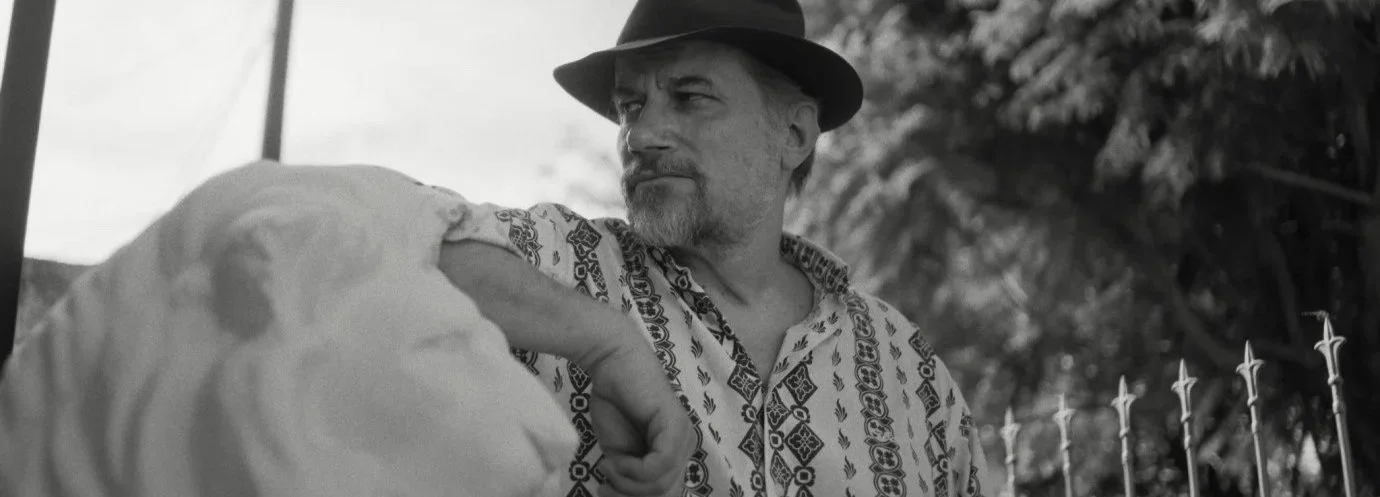
THE MESSAGE / EL MENSAJE
(Iván Fund, Argentina/Spain/Uruguay, 2025, 91 min. In Spanish with English subtitles)
Winner of the Silver Bear Jury Prize at the Berlinale, The Message is the latest film by Argentine director Iván Fund. Set along the dusty roads of rural Argentina, it follows a young girl whose mysterious gift allows her opportunistic guardians to sell pet medium consultations, blending superstition, ingenuity, and survival. Whether magic or fraud, one thing is certain: the service is real, and innocence is a treasure. The film explores the delicate interplay of childhood wonder, exploitation, and the human need for connection.
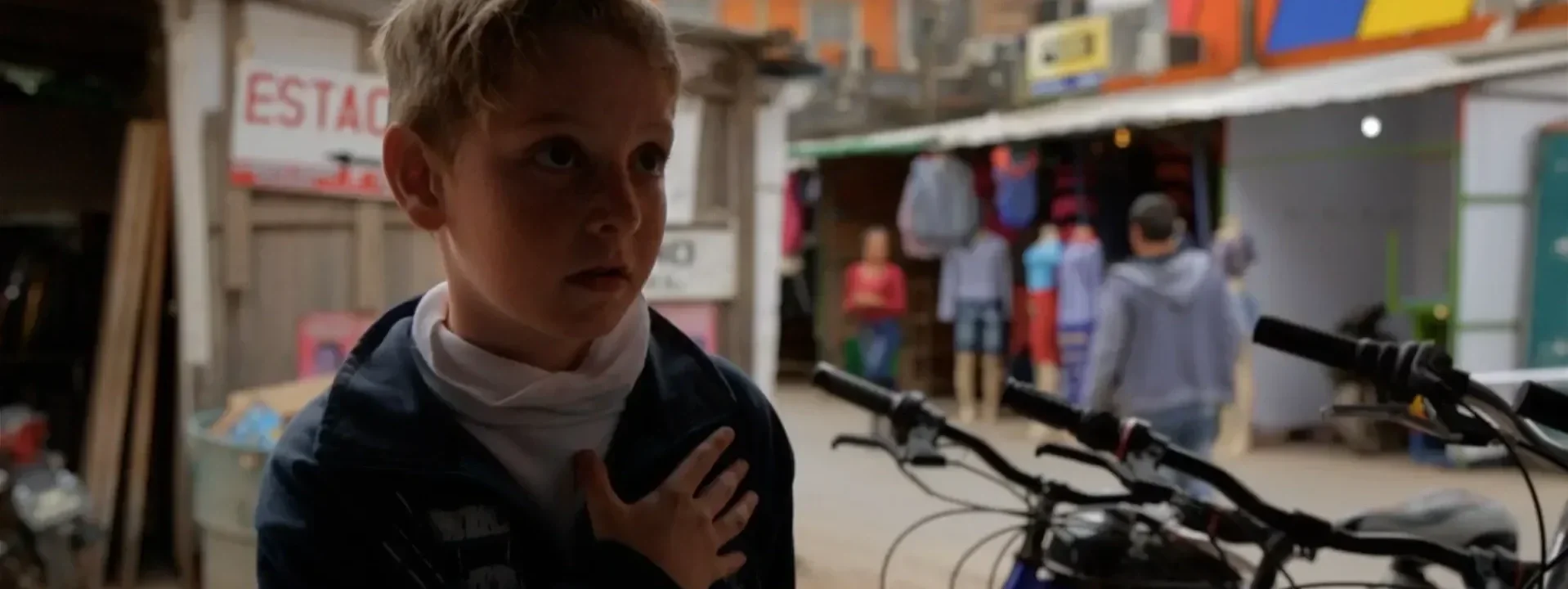
THE PRINCE OF NANAWA / EL PRÍNCIPE DE NANAWA
(Clarisa Navas, Argentina/Paraguay, 2025, 212 min. In Spanish and Guaraní with English subtitles)
Winner of the Grand Jury Prize in the International Feature Film Competition at Visions du Réel, the second feature by Clarisa Navas is set on a bustling footbridge between Argentina and Paraguay, where people trade goods amid a mix of Guarani and Spanish. The film begins when the director meets nine-year-old Angel, struck by his expressiveness and panache, and follows him home. Over the next ten years, they create a film together, during which Angel faces life-defining choices about his future.
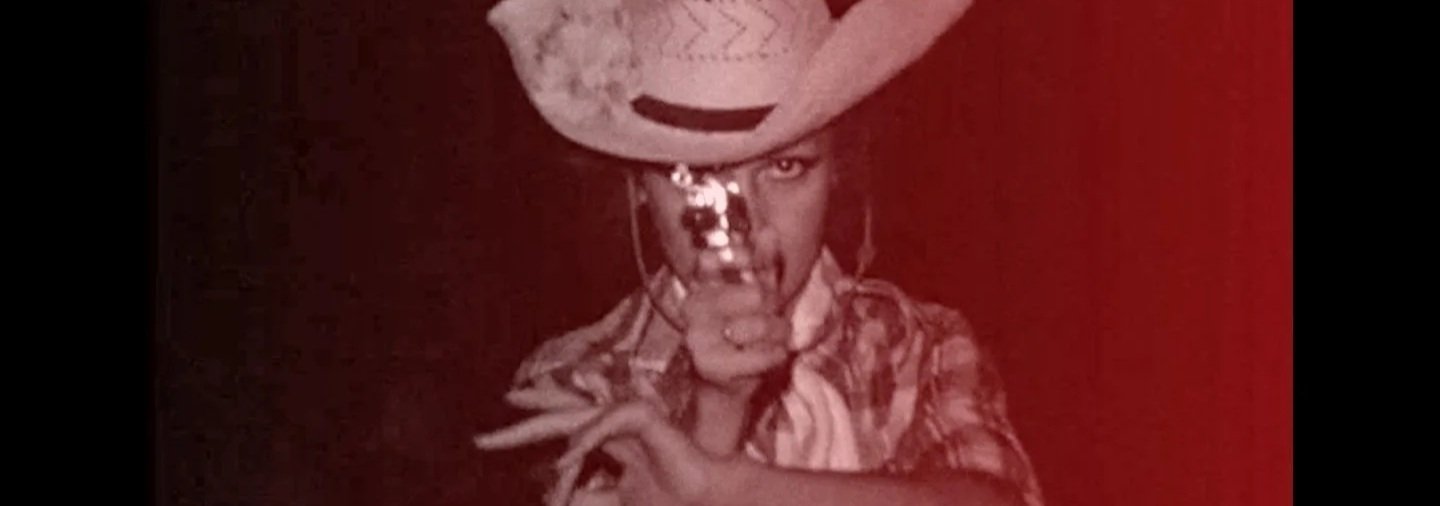
UNDER THE FLAGS, THE SUN / BAJO LAS BANDERAS, EL SOL
(Juanjo Pereira, Paraguay/Argentina/Germany/USA/France, 2025, 90 min. In Spanish with English subtitles)
A fully archival journey through the 35 years of Alfredo Stroessner’s dictatorship, Under the Flags, the Sun uncovers long-forgotten propaganda films, newsreels, and broadcasts to reveal the machinery of control that shaped Paraguay’s national identity and upheld the cult of Stroessner. Winner of the FIPRESCI Jury Prize at the Berlinale, this cinematic excavation shows how media manipulated memory, fueled Cold War alliances, and sustained oppression—traces of a past whose influence still lingers today. Juanjo Pereira’s debut feature was also selected as Paraguay’s official submission for the 98th Academy Award for Best International Feature.
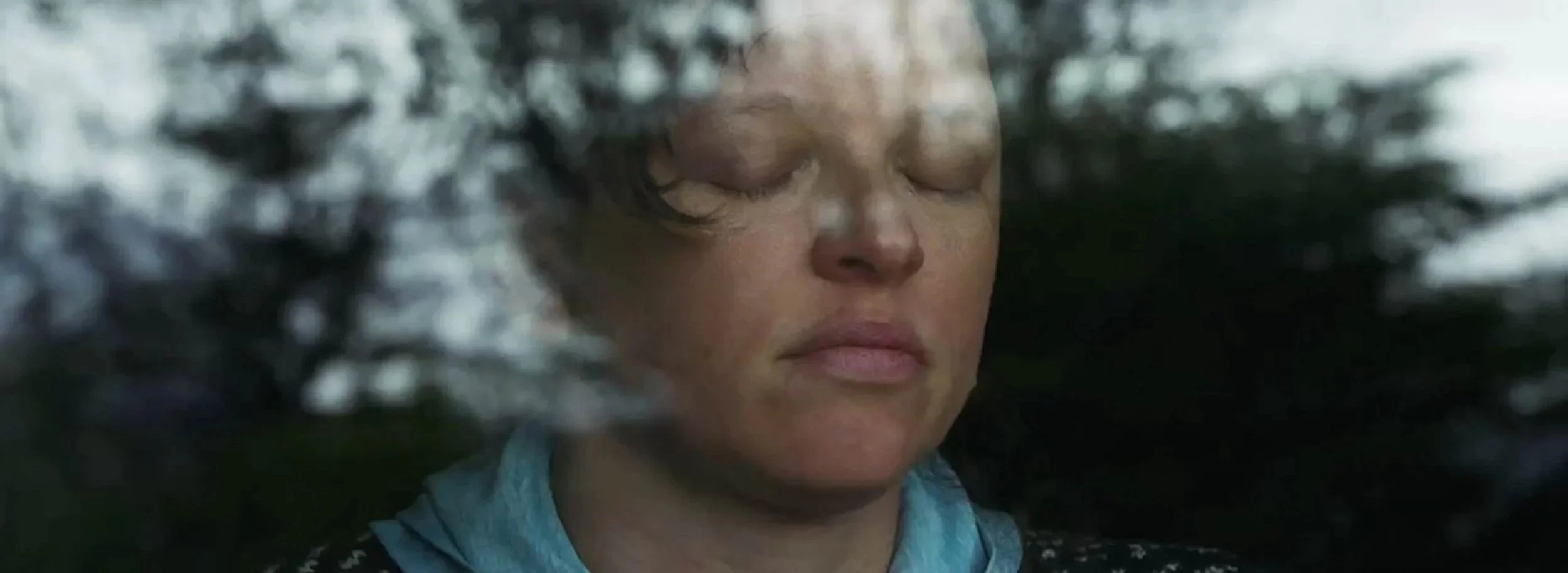
WHEN CLOUDS HIDE THE SHADOWS / CUANDO LAS NUBES ESCONDEN LA SOMBRA
(José Luis Torres Leiva, Chile/Argentina/South Korea, 2024, 71 min. In Spanish with English subtitles)
María travels to Puerto Williams, at the southern tip of Chile, to star in a film. But when a powerful storm prevents the crew from arriving, she finds herself stranded and alone. As she seeks relief for a sudden bout of severe back pain, María begins to discover the rhythms of life in the world’s southernmost city – and with it, an unresolved chapter from her own past. The latest film by acclaimed director José Luis Torres Leiva features María Alché—the Argentine director of A Family Submerged and star of Lucrecia Martel’s The Holy Girl—in a quietly luminous performance. Meditative and atmospheric, the film unfolds like a diary of solitude and revelation, capturing the fragile beauty of place, memory, and the passage of time.
U.S. LATINX FILMS
(in alphabetical order):
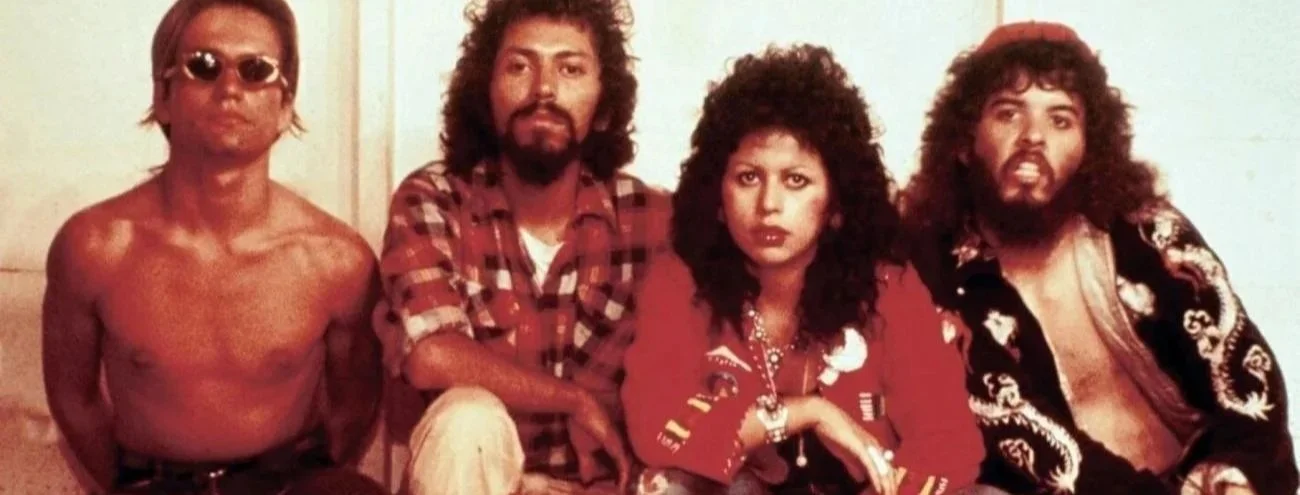
ASCO: WITHOUT PERMISSION
(Travis Gutiérrez Senger, USA/Mexico, 2025, 90 min. In English)
This genre-defying film by Travis Gutiérrez Senger, executive produced by Gael García Bernal and Diego Luna, profiles the extraordinary Los Angeles–based Chicano art group ASCO, active in the 1970s and 80s, who fused activism and art while challenging representation in the art world, Hollywood, and the news media. Largely unrecognized in their time, they are now considered among the most important artists of the 20th century. Through a wholly original approach in which nonfiction and fiction intertwine via collaborative film works created with a new generation of Latinx artists, Without Permission reimagines what is possible in cinema and art today while celebrating an iconoclastic group that was far ahead of its time.

GOODBYE HORSES: THE MANY LIVES OF Q LAZZARUS
(Eva Aridjis Fuentes, USA/Mexico, 2025, 103 min. In English)
The latest film by director Eva Aridjis is an intimate journey through the life of singer Diane Luckey, aka Q Lazzarus, told through her own words, lyrics, and music. Exceptionally talented yet long underappreciated, Q—best known for the cult hit “Goodbye Horses,” featured in Jonathan Demme’s 1991 The Silence of the Lambs—reveals the reasons behind her mysterious 25-year disappearance and charts a path toward re-emergence through stories that are heartbreaking, hilarious, and deeply moving, paving the way for a renewed appreciation of her artistry.
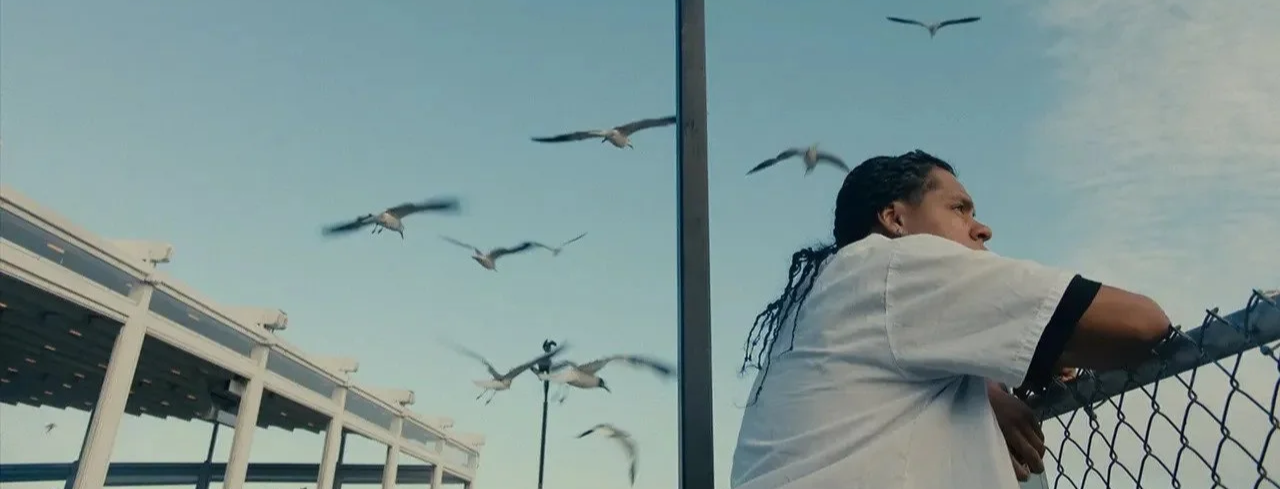
MAD BILLS TO PAY (OR DESTINY, DILE QUE NO SOY MALO)
(Joel Alfonso Vargas, USA/UK, 2024, 101 min. In Spanish and English with English subtitles)
A hit at Sundance, Berlin, and New Directors/New Films, Mad Bills to Pay (Or Destiny, dile que no soy malo) follows Rico during a carefree Bronx summer spent chasing girls and selling homemade cocktails at Orchard Beach. But when his teenage girlfriend, Destiny, moves in with his family, his life begins to spiral out of control. Shifting fluidly between English and Spanish, director Joel Alfonso Vargas crafts a debut of striking verisimilitude and empathy.
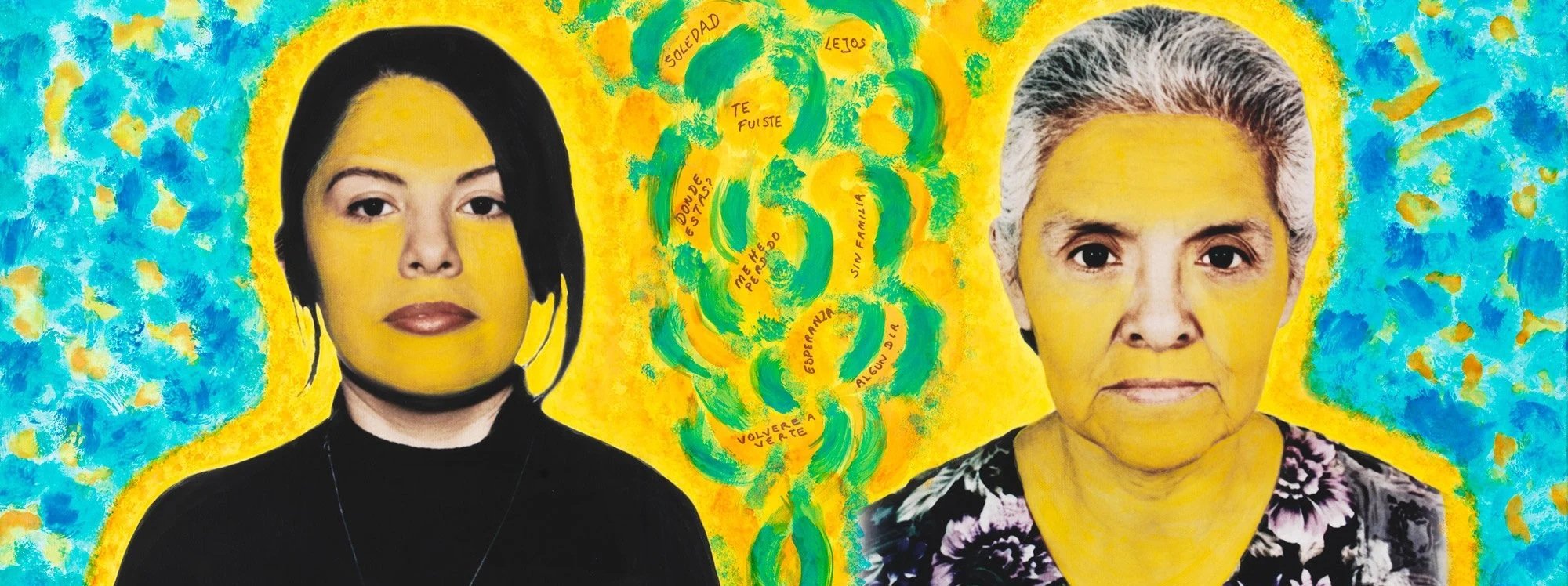
PRODIGAL DAUGHTER
(Mabel Valdiviezo, USA, 2024, 90 min. In English and Spanish with English subtitles)
Filmmaker and former punk artist Mabel Valdiviezo reunites with her family in Peru after 16 years of silence, confronting haunting childhood memories, her youth in war-torn Peru, and a troubled past as an undocumented immigrant artist in the United States. Weaving vérité scenes with family photos, Valdiviezo transforms the images into vibrant mixed media “photo-paintings” to convey her emotional separation from her family and her longing to reconnect with them, using art as both a tool for storytelling and as a healing method. Through Valdiviezo’s vibrant lens, the film challenges stereotypes and encourages a deeper understanding of the immigrant story, ultimately celebrating resilience, passion, and the quest for belonging in an ever-changing landscape.
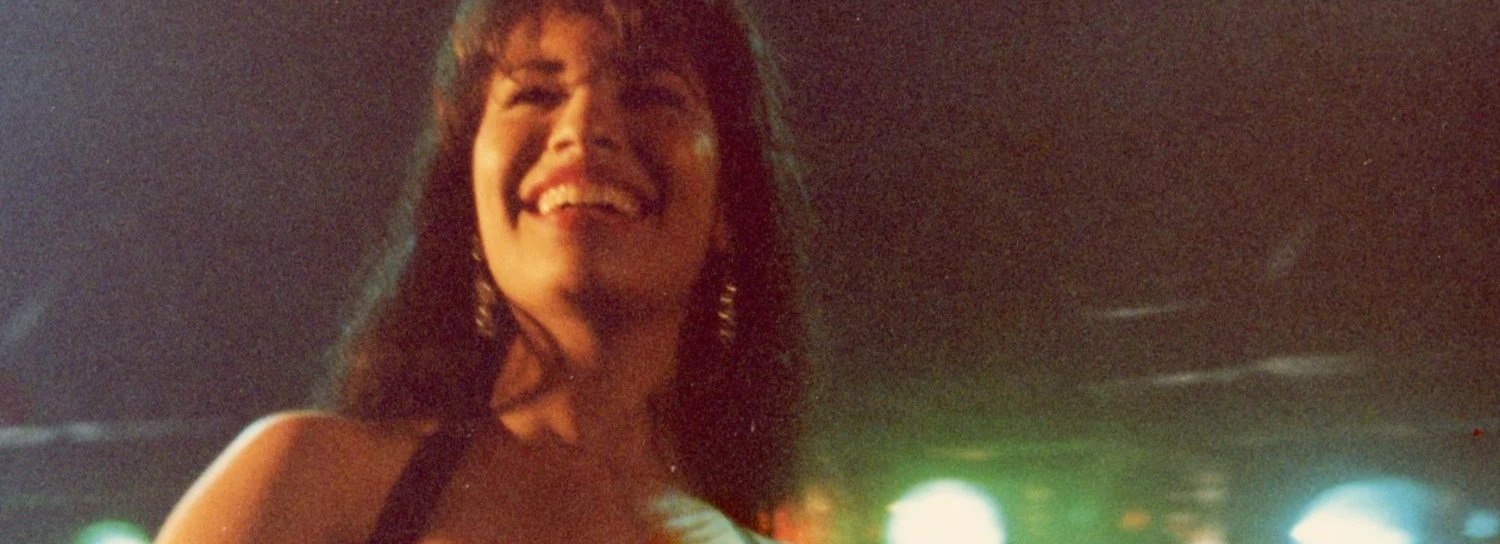
SELENA & LOS DINOS
(Isabel Castro, USA, 2025, 117 min. In English and Spanish with English subtitles)
The second feature by director Isabel Castro (Mija), winner of the U.S. Documentary Special Jury Award for Archival Storytelling at the 2025 Sundance Film Festival, chronicles the rise of Selena Quintanilla—the “Queen of Tejano Music”—and her family band, Selena y Los Dinos, from performing at quinceañeras to selling out stadium tours. Celebrating Selena’s life and enduring legacy, the film features never-before-seen footage drawn from the family’s personal archives.
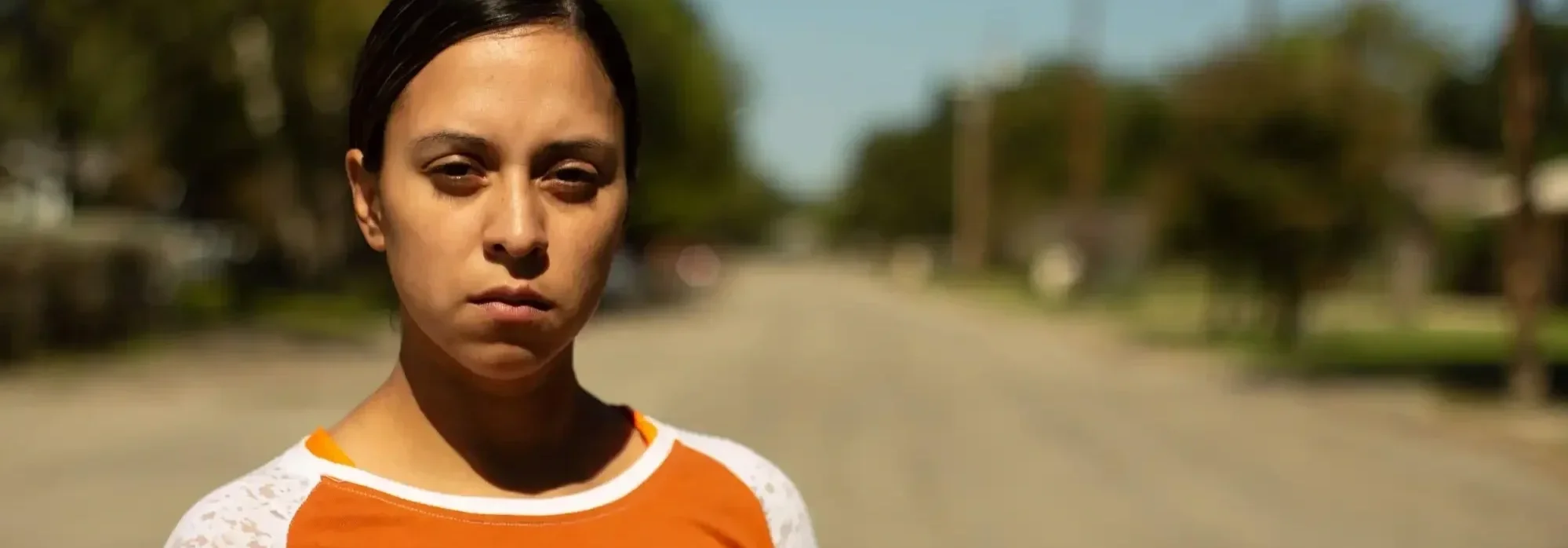
UVALDE MOM
(Anayansi Prado, USA, 2025, 86 min. In English)
When a school mass shooting rocks a town in Texas, a mother desperate to protect her children is thrust into the public eye. As she speaks out against a broken system, the Uvalde community challenges the authorities that failed to protect its children. Conflicting narratives emerge, prompting a U.S. Department of Justice investigation. One year later, amid grief and unresolved questions, the community continues to demand accountability and change. This heartbreaking and stirring documentary by Anayansi Prado had its world premiere at the SXSW Film Festival.
LATIN AMERICAN CINEMA JURY
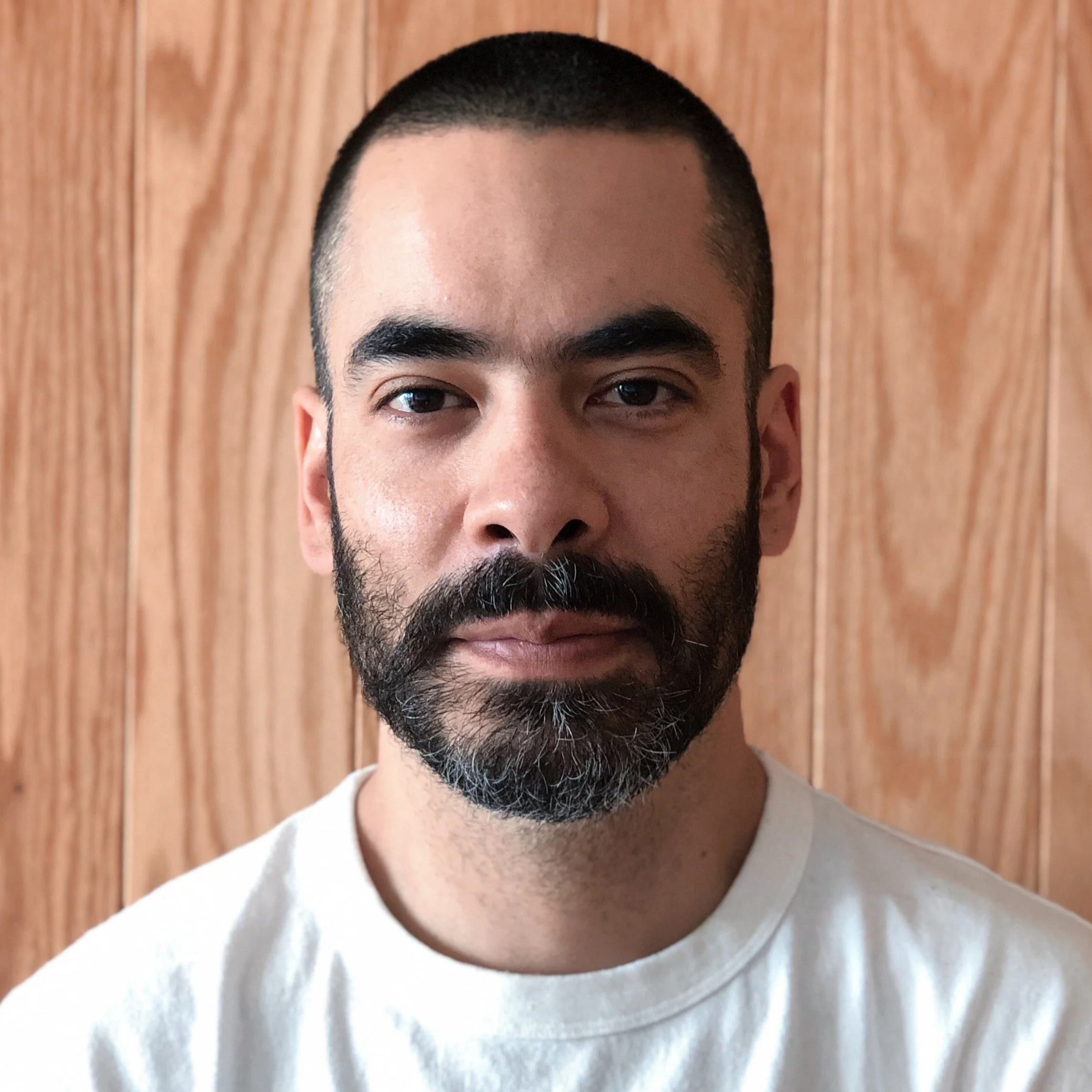
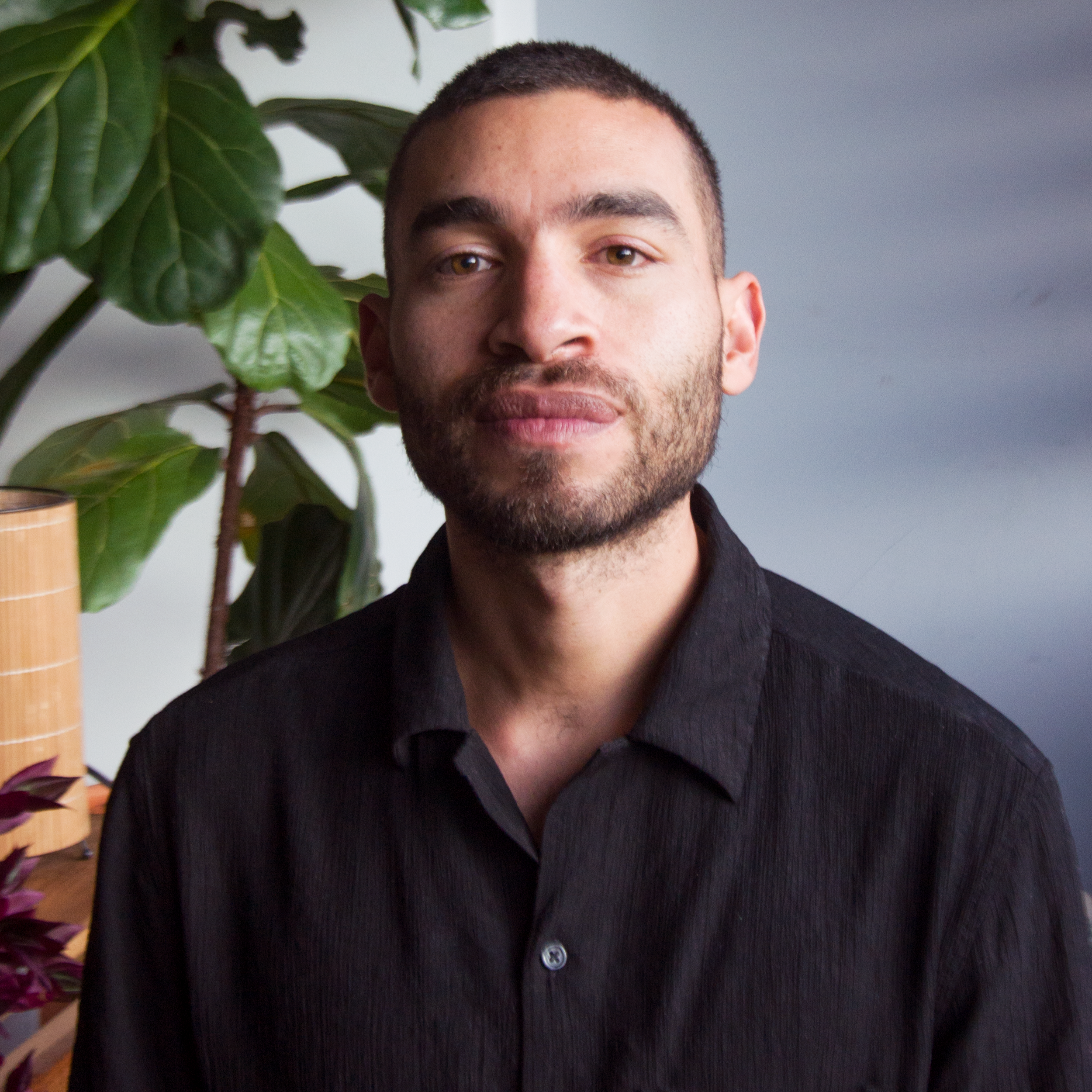

Juan Pablo Bastarrachea holds a BA in Audiovisual Communication and a postgraduate degree in Cultural Management. He has worked in film festivals and showcases in Mexico since 2004, including FICCO, Cinema Global, and Distrital. In June 2012, he co-founded Cine Tonalá in Mexico City’s Roma neighborhood with a group of friends—an independent cinema network that has since expanded through sister projects in Bogotá, Tijuana, and Querétaro. He has produced documentaries and experimental works with directors such as María José Cuevas and Camila José Donoso. Bastarrachea has served as a juror at the Monterrey International Film Festival, Rio de Janeiro’s Filmmakers’ Week, and the Cuenca International Film Festival. He teaches the Distribution Seminar at the Escuela Superior de Cine in Mexico City and has been a tutor in several editions of Locarno Academy LATAM. He is currently developing multiple audiovisual adaptation projects as a producer, working with intellectual property.
Luis Felipe Raguá Miranda is a program advisor at Cinemateca de Bogotá and a programmer for Lichter Filmfest Frankfurt International and Alternativa Film Festival. He holds an MA in Preservation and Presentation of the Moving Image from the University of Amsterdam and an MA in Anthropology from Universidad de los Andes (Colombia). He has led and participated in curatorial and preservation projects at Museo Reina Sofía (Spain), Eye Filmmuseum and LIMA Institute for Media Art (Netherlands), and the Spanish Film Showcase (Colombia), among others. Formerly, he served as program coordinator at the Bogotá International Film Festival (BIFF).
Márcia Vaz is a Brazilian film programmer, cultural manager, and researcher. She is currently Film Programming and Curatorial Manager at Instituto Moreira Salles (IMS), Brazil, and has over 20 years of experience working in cultural institutions, film festivals, and the film industry. Her curatorial practice moves between classic cinema, contemporary production, and Global South perspectives. She has curated retrospectives of filmmakers including Marlon Riggs, Billy Woodberry, Adélia Sampaio, Adirley Queiroz, Jorge Bodanzky, and Agnès Varda. She holds a BA in Audiovisual Studies from UNESP. In 2025, she was selected for Courants du Monde, a residency program of the French Ministry of Culture, where she conducted research at Ateliers Médicis and the Centre Georges Pompidou on La Cinémathèque idéale des banlieues du monde, a project conceived by filmmaker Alice Diop. She regularly serves on selection committees and juries for film festivals and is a reviewer for Firelight Media (USA).
U.S. LATINX CINEMA JURY