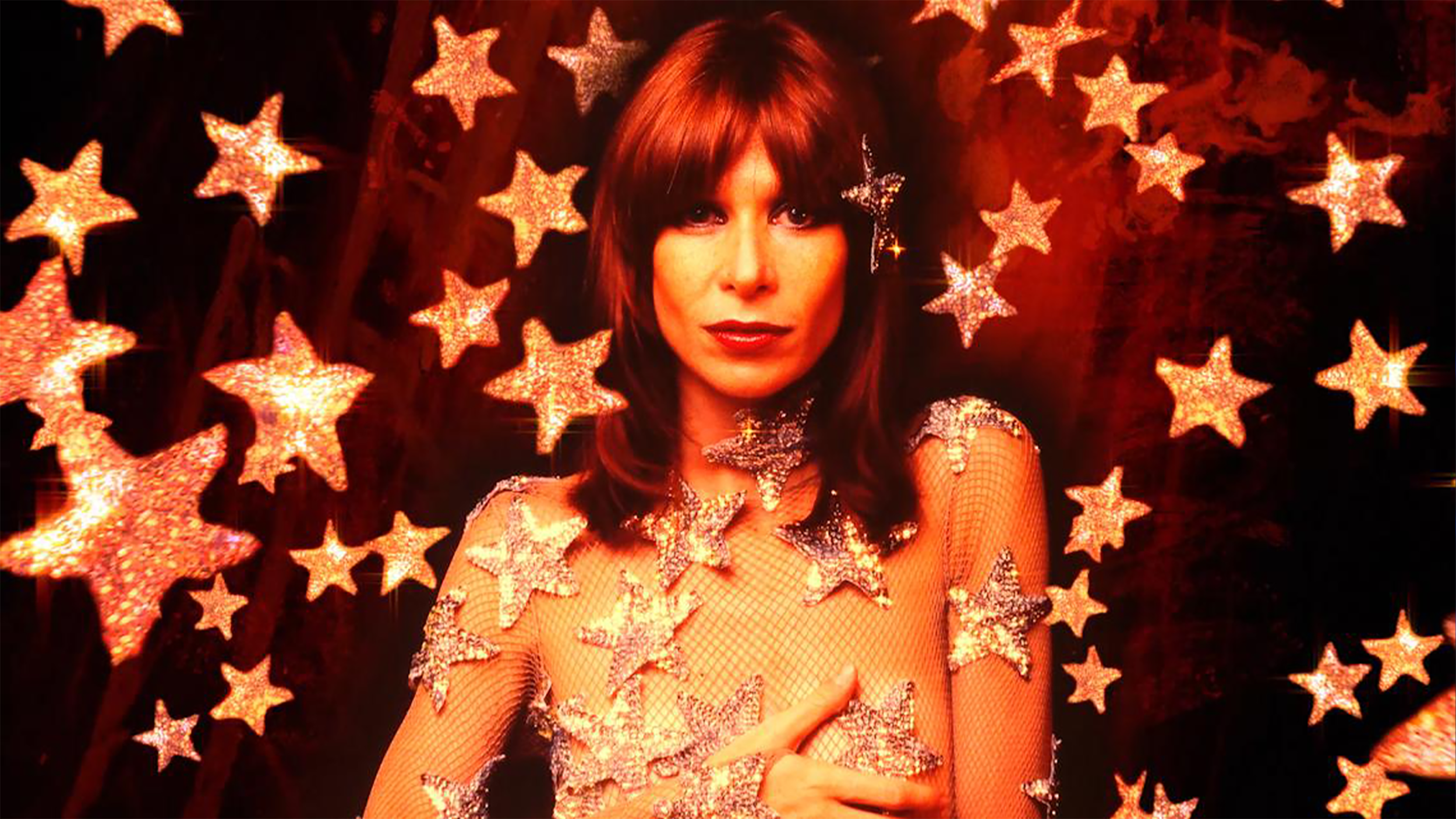
Ritas by Oswaldo Santana and Karen Harley
By Guili Barki Minkovicius
Few figures in Brazilian culture occupy as many different identities as Rita Lee. Rock pioneer, television personality, writer, activist, and pop icon, she has remained a constant presence across generations, with each audience carrying its own version of who she was. Building a documentary around a figure so deeply claimed by different fans is no easy task. Ritas does not shy away from that challenge.
Developed over seven years, Ritas began with the acquisition of the rights to Lee’s autobiography. Rather than relying on the conventional architecture of talking-head interviews, the film lets Rita narrate her own life through archival recordings, home videos, and personal reflections. The result is less a comprehensive biography than a portrait assembled from multiple, often contradictory, versions of the artist herself.
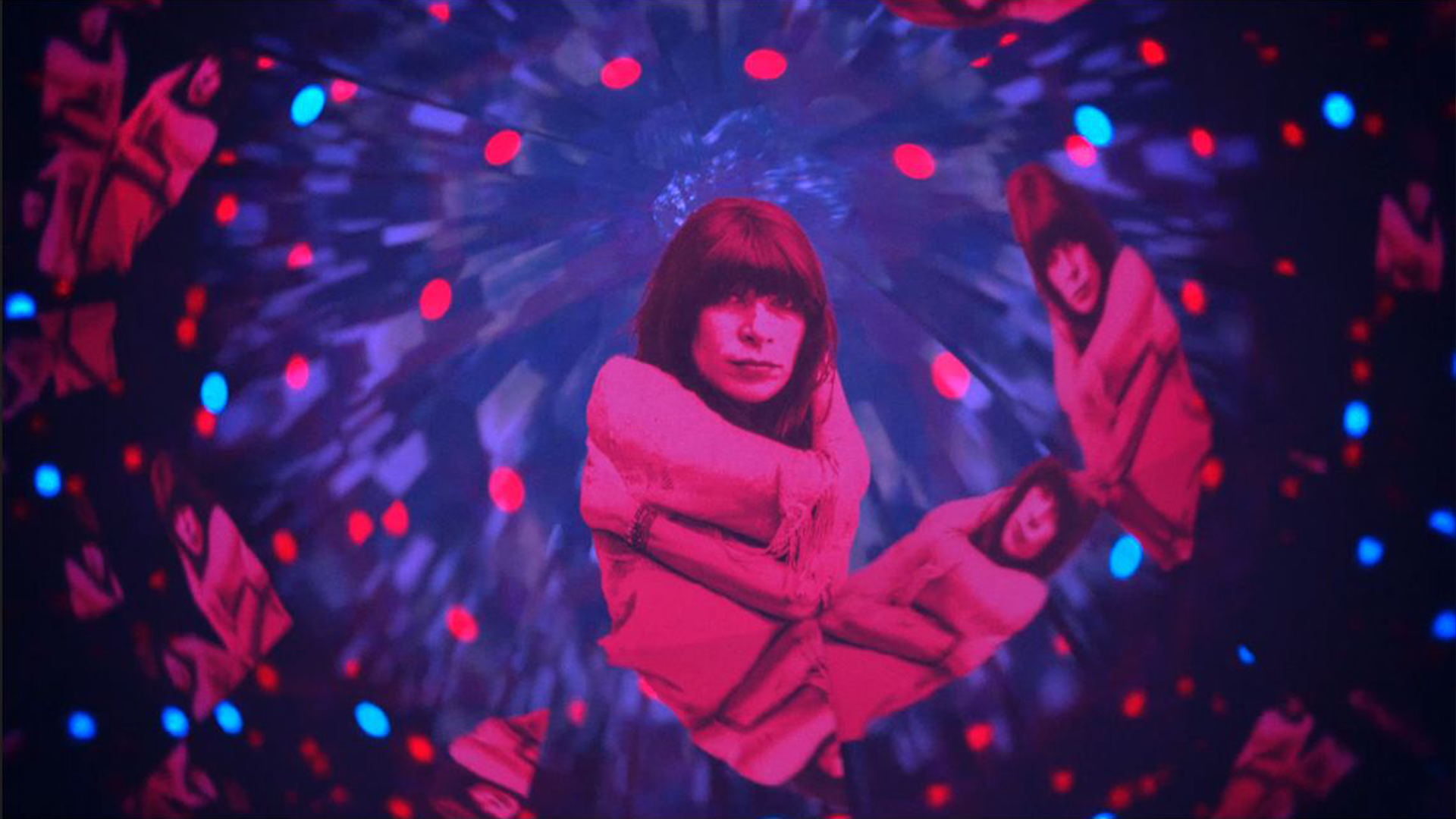
Visually, the film embraces that multiplicity. Working with layered textures, archival materials, animation, and a kaleidoscopic visual language, co-directors Oswaldo Santana and Karen Harley along with their collaborators build a form that mirrors the many “Ritas” the title suggests. The production itself also changed course over time, including Santana’s transition from editor to director and the challenge of completing the film after Rita Lee’s death in 2023.
In anticipation of the film’s U.S. premiere at Museum of the Moving Image in New York City, TropicalFRONT spoke with Santana about the film’s long development, the editorial decisions behind letting Rita tell her own story, and the process of shaping a documentary around one of Brazil’s most enduring cultural figures.
I’d like to start at the beginning of the project. My understanding is that it originated in 2018, when the rights to Rita Lee’s autobiography were acquired. How did the film evolve over those years, especially after Rita passed away? How did her death transform the film?
The project began in 2018, and the initial push came from Karen Harley, who was directing and editing at the time. The central interview with Rita—the one that gives the film its overall structure—was conducted by Karen; I wasn’t involved in that stage.
As is often the case with documentaries, the project evolved organically through research and experimentation. At a certain point, I was invited to come in and “shake up” the edit. Some of those ideas worked, others didn’t. We reached the end of a second editing process, with me editing under Karen, but then the project paused so everyone could rethink some of the film’s formal and narrative approaches.
When it resumed, I came back as director. Karen had stepped away for various reasons, which is something that happens on long-running projects. I was given complete creative freedom to start experimenting again, so I launched a new visual research process using photographs that hadn’t been incorporated before and brought in Ricardo Magrão as production designer.
The film gradually took the form it has today. Then Rita was diagnosed with cancer. Until then, we had been in close contact with her and her family, meeting every week or two to discuss new sequences. Once the diagnosis came, those conversations understandably stopped. I continued working, but there was always uncertainty about how the family would feel about the project afterward.
When Rita passed away, I honestly questioned whether the film should continue at all. Shortly afterward, Roberto de Carvalho called me on a Sunday morning. He wanted me to know that Rita had watched the latest cut I had sent, liked it, and had given her blessing for us to move forward. Even though we hadn’t spoken directly for over a year, I had continued sending updated cuts as the film progressed.
That conversation changed everything. It also helped the family recognize the sense of loss felt by fans who had never known Rita personally but had grown up with her. From that point on, the project moved forward until completion.
You had already edited Tropicália, and you also edited Ritas. It feels like this is a film that benefits from having a director who thinks like an editor. Could you talk a little about that?
Editing has always been my background, and my work has always been closely connected to music. I’ve edited feature films, music videos, concert visuals, and theater productions. Rhythm is something that deeply attracts me in audiovisual storytelling.
Having worked on Tropicália gave both Rita and Roberto confidence in me before I joined the project.
There’s actually a funny story about that. When Fernando Fraiha, Biônica Filmes’ partner and the film’s screenwriter and executive producer, invited me onto the project, he warned me that I’d first have to meet Rita and Roberto. I jokingly called it a job interview with Rita Lee.
I introduced myself, and the very first question Roberto asked was, “What’s your zodiac sign?” It completely caught me off guard. I answered that I’m a Leo, and Rita immediately turned to Roberto and said, “See? I told you.” That instantly broke the ice. I think I got the job right there.
Of course, they had already seen and enjoyed Tropicália, and I believe my background working with music and audiovisual language ultimately helped both my editing and directing on Ritas.
The film opens with Rita talking about changing her own birthday, which immediately establishes its tone. It feels as though she’s the one guiding the narrative, even though there’s obviously extensive editing, directing, and curatorial work behind it. Was this idea of letting Rita tell her own story already present in the autobiography, or did it emerge during the filmmaking process?
One of my favorite comments came from someone leaving a screening who told me the film felt like “spending a Sunday afternoon with Rita Lee.” I thought that perfectly captured what we were trying to achieve.
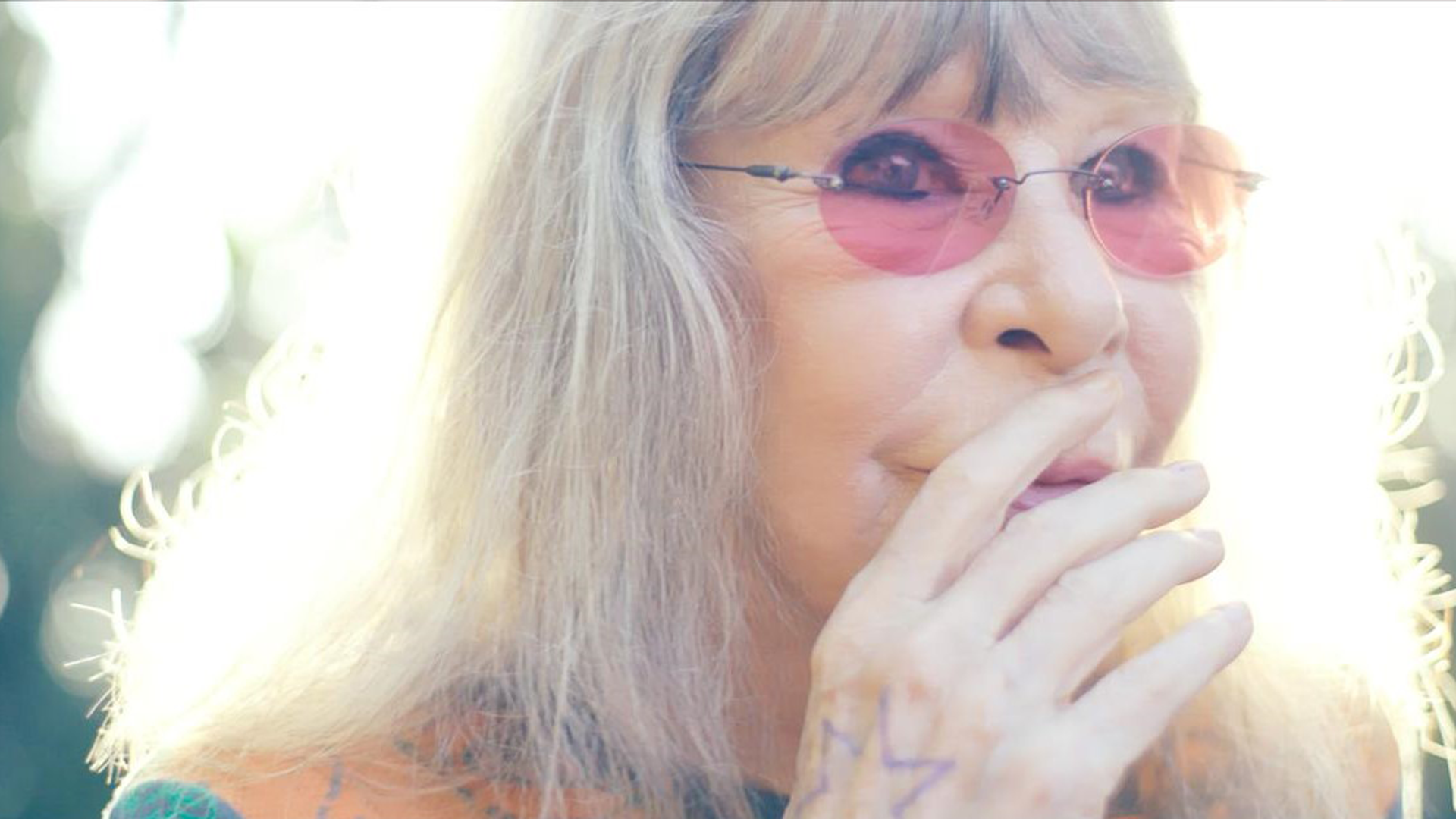
I think we reached that tone largely because of the generosity of Rita and her family. Alongside the conventional archival footage from television networks, they began sharing deeply personal home movies—weddings, vacations, the kids in the pool. Those images revealed Rita’s humor, spontaneity, and personality in a way that public footage never could.
We loved that material so much that we kept asking for more, including recent recordings from her own cellphone. We even gave her a production phone so she could continue filming herself. She would simply open the camera and start talking, showing her everyday life, her pets, whatever was on her mind.
At one point, those recordings became so compelling that they almost overwhelmed the rest of the film, so together with Rita, Roberto, and the producers, we worked to find the right balance.
The decision to let Rita narrate her own story was there from the moment the autobiography rights were acquired. She had an extraordinary narrative voice. She could speak about difficult subjects with remarkable clarity while always maintaining her characteristic humor and irony.
At one stage, we even explained to João, one of her sons, that we weren’t planning to interview people like Gilberto Gil or Caetano Veloso. They would appear through archival footage, but we didn’t feel we needed new interviews because Rita herself was more than capable of telling her own story.
Ritas by Oswaldo Santana and Karen Harley
Rita Lee is almost a universally beloved figure in Brazil, and everyone has their own favorite version of her—whether from Os Mutantes, her solo career, or another phase. One of the biggest challenges must have been deciding what to leave out, since it’s impossible to include everything. How did you make those choices?
Every film needs a point of view. You simply can’t tell an entire life in ninety minutes or two hours.
That was something I struggled with for a long time. Then the answer came through the title itself: Ritas, in the plural. Instead of trying to tell everything, the film would explore the many different versions of Rita that coexisted within the same person. Once I embraced that idea, I felt free to focus on revealing as many facets of her as possible.
I was also very concerned about the fans. Rita went through so many different artistic phases that I knew it would be impossible to satisfy everyone. One of the first things I did was ask our researcher, Eloá, to organize meetings with fan clubs. We actually had two dinners where I showed parts of the research and some edited sequences so I could better understand how devoted fans related to Rita.
Music selection was another major part of the process. Sometimes a song works because its lyrics directly support the narrative. Other times, it works because of the emotional response it evokes, even though those emotions vary from person to person.
During the film’s release, I was honestly worried people would ask why certain songs or moments had been left out. Surprisingly, that never really happened. I think the film succeeds in giving audiences the Rita they miss without trying to tell absolutely everything.
Ritas by Oswaldo Santana and Karen Harley
The animated sequences are beautiful and give the film such a distinctive visual identity. How did that process come together?
Rita spent five or six decades in front of cameras, so there was an extraordinary amount of archival material. She became famous very young with Os Mutantes and continued documenting her life throughout the years—even during her more reclusive period, she remained incredibly active on Twitter. Whenever we thought certain footage didn’t exist, we’d somehow find it. Eloá even uncovered previously unseen footage of Rita dressed as Our Lady, which had only existed as a photograph until then. It was almost an archaeological process.
The challenge was figuring out how to connect all those materials, especially older sequences where we only had still photographs. How do you sustain two minutes of storytelling with photographs alone?
That’s when I brought in Ricardo Magrão, who had also been the production designer on Tropicália. We developed the visual concept together and arrived at the idea of the kaleidoscope—a way of expressing the many different facets of a single person.
Ricardo spent more than a year developing that visual language alongside me. He also brought in Gabriel, a brilliant animator known for his work on major animated features, who combines organic techniques with digital animation.
I wanted the film’s artistic language—from the animated photographs to the textures—to reflect someone who spent sixty years constantly reinventing herself and pushing boundaries. I wanted the film itself to embody some of that same boldness.
Finally, are there any films or works you’d recommend to viewers who want to explore this universe further after watching Ritas?
Without question, my biggest reference was Tropicália, directed by Marcelo Machado. That’s where I first met much of the research team and Ricardo Magrão, and Rita herself also appears in that film.
Specifically about Rita, I’d also recommend Biograffiti: Ovelha Negra, directed by Roberto de Oliveira. It’s a very different documentary, made in another era and with a different approach, but it’s incredibly rich in its interaction with Rita. We even incorporated a few excerpts from it into Ritas.
Those would be my two recommendations: Tropicália and Biograffiti: Ovelha Negra.
Ritas will make its U.S. premiere on Sunday, July 12, at 3pm at Museum of the Moving Image in Queens, New York City, co-presented by Brasil Summerfest. Tickets and more information: https://movingimage.org/event/ritas/