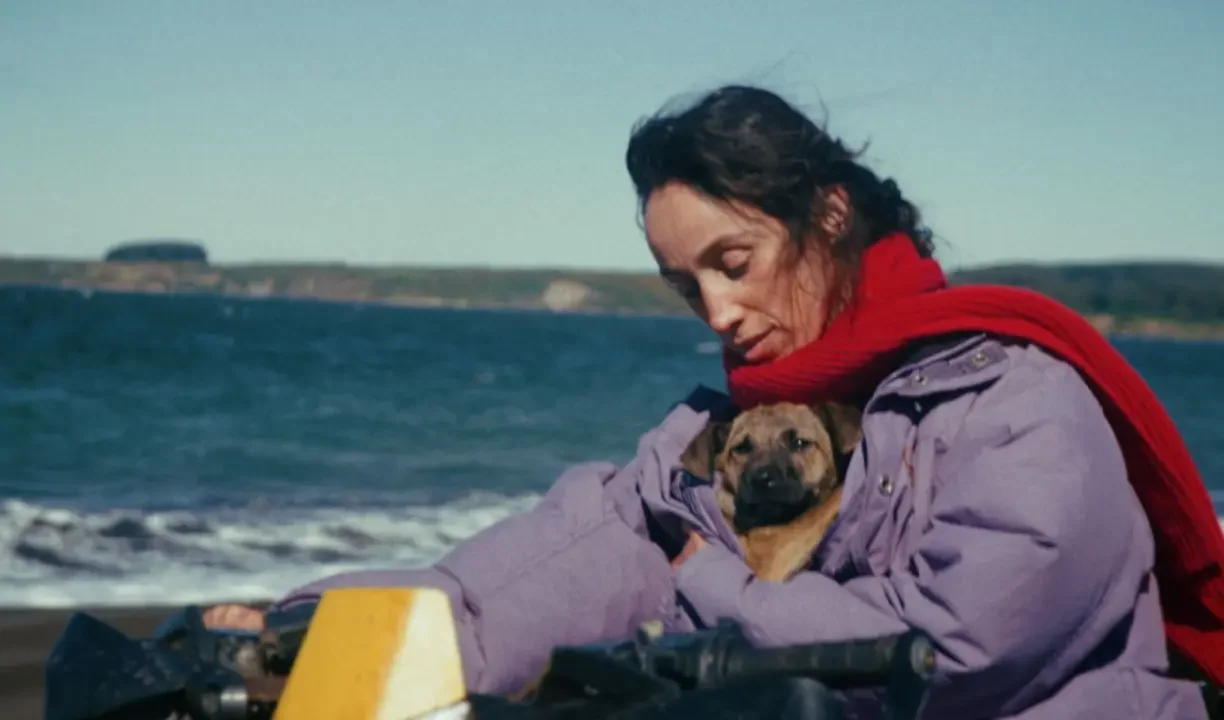
La perra by Dominga Sotomayor
The 79th edition of the Cannes Film Festival began yesterday on the French Riviera, heralding eleven days of premieres and international competition. As the festival unfolds along the Croisette, the Latin American contingent arrives with a slate of films balancing historical weight with contemporary urgency.
As in previous years, Cannes continues to devote a disproportionately small number of slots to the region, and 2026 is no exception. Still, the titles premiering across the official selection and parallel sidebars reflect a cinema deeply engaged with both its myths and present-day realities, bringing together celebrated auteurs and emerging visionary voices.
The Un Certain Regard section, known for championing formally daring cinema, hosts two of the most anticipated Latin American titles of the festival. Chilean director Manuela Martelli presents The Meltdown / El deshielo, a follow-up to her acclaimed 1976. Set in the 1990s, the film follows a young girl whose vacation at a remote Andean hotel takes a haunting turn after the disappearance of a German skier, forcing her to confront truths buried beneath the mountain snow.
Joining her in the section is Costa Rican filmmaker Valentina Maurel (I Have Electric Dreams) with Forever Your Maternal Animal / Soy tu animal materno. In this raw existential drama starring Mexican Academy Award-nominated actress Marina de Tavira (Roma), Maurel explores the friction of return as a woman traveling from Europe back to her homeland becomes trapped between her family’s crises and an overwhelming urge to flee.
The Directors’ Fortnight further bolsters the region’s presence with three vital features spanning South America’s geographic and stylistic range. Argentine auteur Lisandro Alonso returns with Double Freedom / La libertad doble, a sequel to his 2001 landmark debut La libertad. Revisiting woodcutter Misael, the film offers a meditative exploration of time and solitude that promises to be a major event for longtime followers of Alonso’s slow cinema.
From Chile, Dominga Sotomayor (Too Late to Die Young) presents La perra, an adaptation of Pilar Quintana’s visceral novel exploring the suffocating dynamics of desire and survival on a remote island. Rounding out the section is Venezuelan director Jorge Thielen Armand with Death Has No Master / La muerte no tiene dueño, the story of a woman returning to her family’s cacao plantation after thirty years, grappling with the ghosts of a landscape transformed by time and decay.
The Guatemalan short Madrugada by Sebastián Lojo will also world premiere in the Directors’ Fortnight. It follows a gardener in Guatemala City, hides a secret: he is a vampire. By day he lives with his wife, and young son; by night he feeds in the shadows. Together, the parents try to shield the boy from the curse.
In Critics’ Week, Mexican filmmaker Bruno Santamaría Razo presents Six Months in a Pink and Blue Building / Seis meses en el edificio rosa con azul, his fiction feature debut. Set in 1990s Mexico City and shot on 16mm, the autobiographical coming-of-age drama follows an eleven-year-old boy whose awakening feelings for his best friend collide with the news of his father’s HIV diagnosis. Thirty years later, the adult Bruno revisits and reconstructs memories he could not fully understand as a child.
Beyond the competitive sections, the Cannes Première sidebar highlights a significant work of nonfiction from Argentina. Co-directed by Juan Cabral and Santiago Franco, The Match / El partido offers a meticulous reconstruction of the legendary 1986 World Cup clash between Argentina and England; while the Haitian film Marie Madeleine by Géssica Généus follows a free woman who lives from prostitution and moves through the nights without submitting to the rules of those who claim to save souls.
The festival’s Out of Competition and Special Screenings programs round out the selection with high-profile works from established filmmakers. Cuban actor Andy García brings his long-gestating passion project Diamond to the screen, a contemporary neo-noir set in Los Angeles featuring a powerhouse cast that includes Demian Bichir.
Diego Luna returns to the director’s chair with Ashes, an adaptation of Brenda Navarro’s visceral novel Eating Ashes. The film follows a young Mexican woman’s disillusioning journey to Madrid, offering a poignant and often bitter portrait of migration and the fractures of the contemporary immigrant experience.
The Cannes Classics section also features two landmark Latin American restorations that underscore the region’s enduring cinematic legacy. Argentine filmmaker Leopoldo Torre Nilsson returns to Cannes nearly seven decades after the original premiere of La casa del ángel in the festival’s official selection, now presented in a newly restored 4K version. Widely regarded as one of the foundational works of modern Argentine cinema, the 1957 film marked the beginning of Torre Nilsson’s celebrated collaboration with Beatriz Guido and helped establish him as one of the first Latin American auteurs to gain major international recognition.
The sidebar will also host the 20th-anniversary presentation of a new 4K restoration of Guillermo del Toro’s Pan’s Labyrinth / El laberinto del fauno, personally supervised by the director from the original 35mm negative. First unveiled at Cannes in 2006, the film remains one of the defining fantasy works of the 21st century and a landmark of contemporary Mexican cinema.
The festival’s short film selections offer a sharp look at the region’s shifting landscapes and internal ghosts. In the main competition, Federico Luis returns with For the Opponents / Para los contrincantes, following a young boy in Mexico City’s Tepito neighborhood chasing a boxing dream, while Colombian director Theo Montoya presents Thunder Platoon / Pelotón trueno, set in early aughts, Commander Montoya, at the forefront of the fight against the FARC, gathered his troops to celebrate his promotion to General. But as night fell, the party is interrupted by a violent storm.
And the La Cinef selection includes Laser-Car / Laser-Gato by Brazilian director Lucas Acher follows a socially anxious teenager, who spends one chaotic night roaming São Paulo to save his crush’s critically injured cat—after a laser pointer prank goes horribly wrong—as guilt and paranoia push him toward a breaking point.
The 79th edition of the Cannes Film Festival runs May 12–23, 2026.