Everything Else Is Noise by Nicolás Pereda
The 64th New York Film Festival (NYFF) starts on Friday, September 25 at Film at Lincoln Center, showcasing an exceptional slate of productions from Latin America across its Main Slate, Currents, and Spotlight sections, including films from Argentina, Brazil, Colombia, and Mexico.
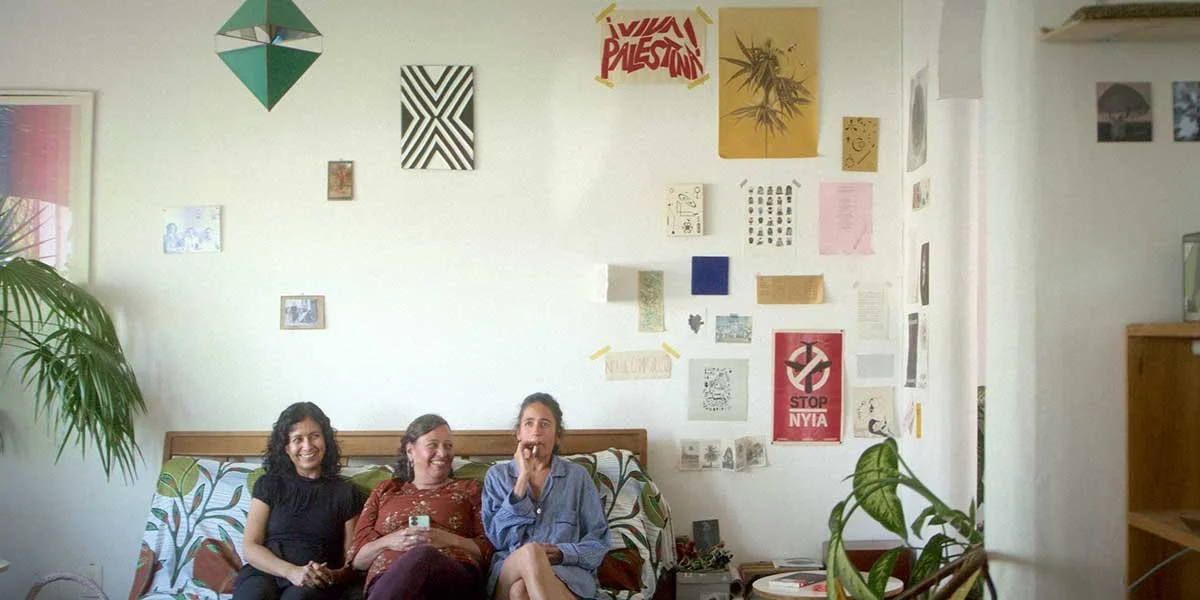
In the Main Slate, Everything Else Is Noise / Lo demás es ruido by Mexican director Nicolás Pereda comes to Lincoln Center for its U.S. premiere after launching at the Berlinale, taking the Grand Prix at BAFICI, and playing the Toronto Film Festival’s Wavelengths program. Returning to NYFF after his 2024 entry Lázaro at Night / Lázaro de noche, Pereda’s latest is a deadpan comedy set largely within a Mexico City apartment.
When a contemporary music composer agrees to a television profile that quickly unravels due to power outages, a barking dog, and unexpected family disruptions, a routine interview gives way to a witty examination of creative labor, artistic prestige, and gender dynamics. The film reunites Pereda with his signature ensemble—including Teresita Sánchez, Luisa Pardo, Lázaro G. Rodríguez, and Francisco Barreiro—for a precise, minimalist study of artistic ambition.
Also in the Main Slate, Double Freedom /La libertad doble marks Lisandro Alonso’s long-awaited return to the world of his landmark debut, La Libertad, twenty-five years after it screened at NYFF. Reconnecting with non-professional actor Misael Saavedra—the solitary woodcutter from his 2001 film—Alonso expands what initially appears as a companion piece into a profound study of time, labor, and aging. Moving from solitary rhythms into a broader story on family obligations and personal duty, Alonso seamlessly blurs the boundary between documentary realism and fiction.
In the Currents section, dedicated to innovative approaches to cinematic form, three Latin American features showcase the region's formal diversity. Brazilian artist and filmmaker Ana Vaz presents Hanabi, a diaristic journey through Japan anchored by Yoko Hasuke’s essay "Journal of a Radioactive Brain." Shot over a decade on 16mm and video with a densely layered soundscape, the film weaves the lingering threat of ecological disaster—from Tohoku to Fukushima—into a kaleidoscopic inquiry on human survival and imagination.
Argentine filmmaker Mariano Llinás (La Flor) brings Life of Jorge Luis Borges / Biografía de Jorge Luis Borges, a sprawling, three-part "sorta-documentary" dedicated to his literary touchstone. Having long transposed Borges’s labyrinthine narrative gambits into cinema alongside his collective El Pampero Cine, Llinás approaches the titan of letters through a cheeky research project. Unpacking archives, private collections, rediscovered drafts, and poems, the film materializes the literary phantom across Geneva, Brooklyn, and Iceland in a playful celebration of cartographical wanderings.
Mexican auteur Carlos Reygadas (Silent Light) presents Heil Jupiter!, an atmospheric work of feral cinematic expression. Set along a rugged coastline where crashing waves meet monumental rock formations, the film follows two young couples whose shifting realities unfold under the gaze of a mysterious entity observing from high above. Moving between the modern and the primitive, the corporeal and the mythic, Reygadas sets stark elemental beauty in challenging contrast with depictions of authoritarian power.
Latin American cinema also leaves a strong imprint across the festival’s short film selections. In the Spotlight section, Brazilian director Kleber Mendonça Filho unveils the world premiere of South of Tehran. Born out of conversations with Iranian filmmaker Jafar Panahi during NYFF63, the eight-minute film inaugurates NYFF Encounters—a new annual commissioning initiative inspired by Agnès Varda’s 1967 short on Pier Paolo Pasolini—offering a prismatic reflection on cinema and memory.
Joining Mendonça Filho in Spotlight Shorts, Colombian director Camilo Restrepo brings the world premiere of A Stolen Movie / Una película robada. Reappropriating a 1960s General Motors promotional video depicting a Chevrolet expedition across the Darién Gap, Restrepo considers the unequal flows of people and property between the Americas.
In Currents Shorts (Program 6: Out of the Present), Mexican-Austrian filmmaker Mara Chávez and doris duhennois present Morne Fortune. Assembling testimonies on celluloid and digital scraps, the essayistic short challenges received histories to construct an alternative monument to forgotten Black freedom fighters in St. Lucia.
Film descriptions adapted in part from official NYFF64 program notes.