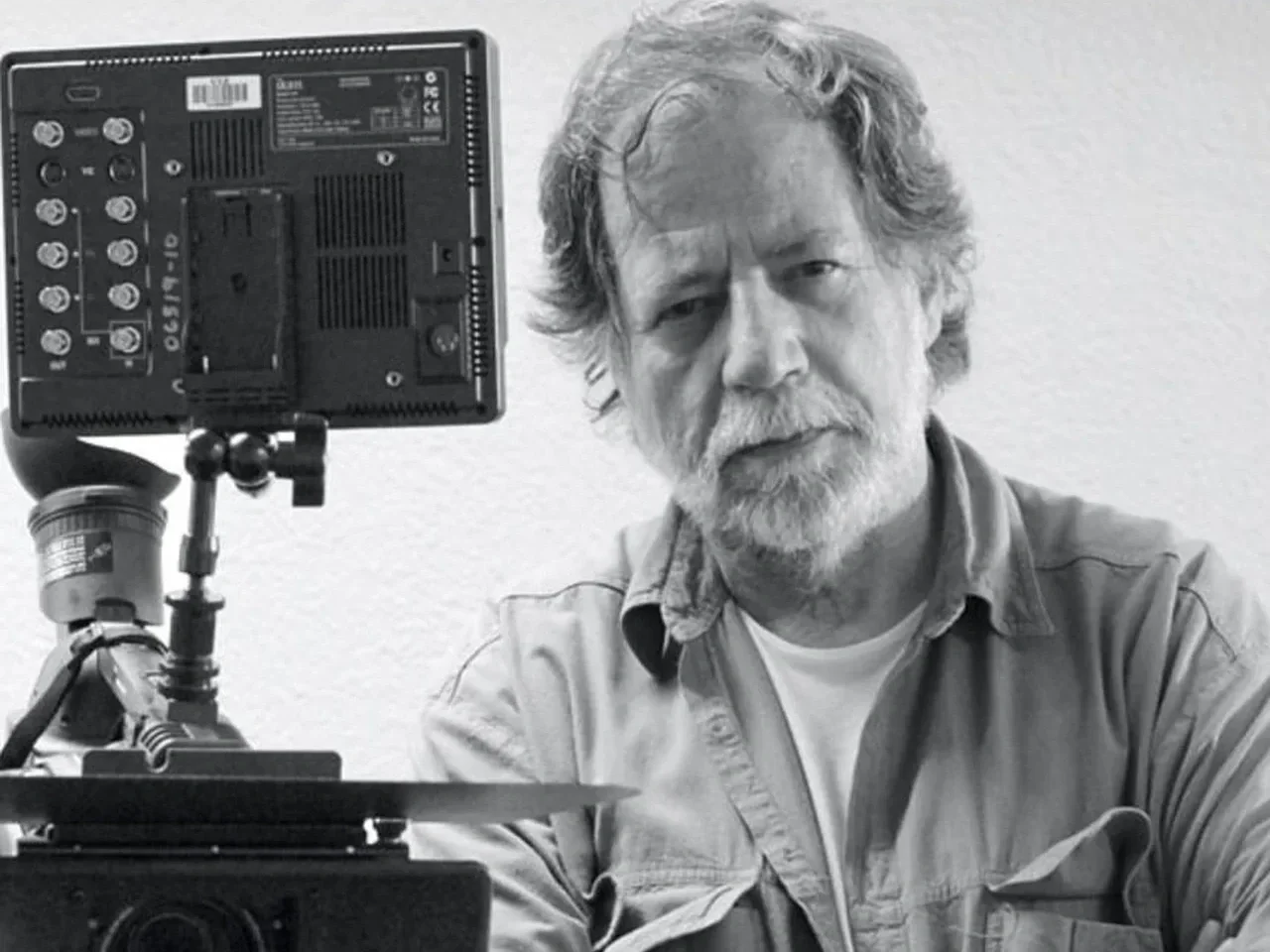
Henner Hofmann, the celebrated Mexican cinematographer, producer, educator and tireless advocate for the craft of visual storytelling, died on Friday, January 30, in Cuernavaca, Mexico a the age of 75.
Born in Mexico City in July 1950, he studied at the Centro Universitario de Estudios Cinematográficos (CUEC) at the Universidad Nacional Autónoma de México (UNAM) and began his career documenting Mexico’s diverse indigenous communities, a formative experience that would inform his deeply humanistic approach to cinematography.
In 1977, together with Alfonso Muñoz, Gonzalo Martínez Ortega, Nacho López, Óscar Menéndez, and Juan Rulfo, he co-founded the Archive of Ethnic Communities, producing more than 45 documentaries focused on Mexico’s Indigenous communities. This initiative led to his first project as a cinematographer, Under the Same Sun and on the Same Land, released in 1979.
Hofmann’s distinguished body of work spans more than 25 feature films and television projects. He earned Mexico’s Ariel Award for Best Cinematography for La leyenda de una máscara (José Buil, 1991) and again for Juego limpio (Marco Julio Linares, 1995), and brought his visual sensibility to international productions including Honey, I Shrunk the Kids (Joe Johnston, 1989), Ground Control (Richard Howard, 1998), Flight of Fancy (Noel Quiñones, 2000) and Vampires: Los Muertos (Tommy Lee Wallace, 2002).
Other film credits include Jornaleros (Eduardo Maldonado, 1978), Confidencias (Jaime Humberto Hermosillo, 1982), Nocturno a Rosario (Matilde Landeta, 1992), Jonah and the Pink Whale / Jonás y la ballena rosada (1995), and Ave María (Eduardo Rossoff, 1999).
Beyond his achievements behind the camera, Hofmann was a foundational figure in the Mexican cinematography community. In 1994, he helped establish the Mexican Society of Cinematographers (AMC), uniting leading cinematographers—including Gabriel Figueroa, Jorge Stahl, and Pepe Ortiz Ramos—with younger colleagues, and later served as its president until 2004.
As an educator and later director at the Centro de Capacitación Cinematográfica (CCC) between 2008 and 2016, he mentored and inspired countless filmmakers, championing hands-on experience and inclusivity in film education. As director of the prestigious international school he was credited as executive producer of numerous key films made by students of the school including We Are What We Are / Somos lo que hay by Jorge Michel Grau (2010), The Tiniest Place / El lugar más pequeño by Tatiana Huezo (2011), and The Life After / La vida después by David Pablos (2013).
Recognized internationally, Hofmann became a member of the American Society of Cinematographers (ASC) and received the ASC’s first Certificate of Recognition for his contributions to cinematography education. His legacy lives on through the many artists he taught and the vibrant visual language he helped nurture in Mexican cinema. He is survived by his wife Maria, their son Sebastián and daughter Natalia.