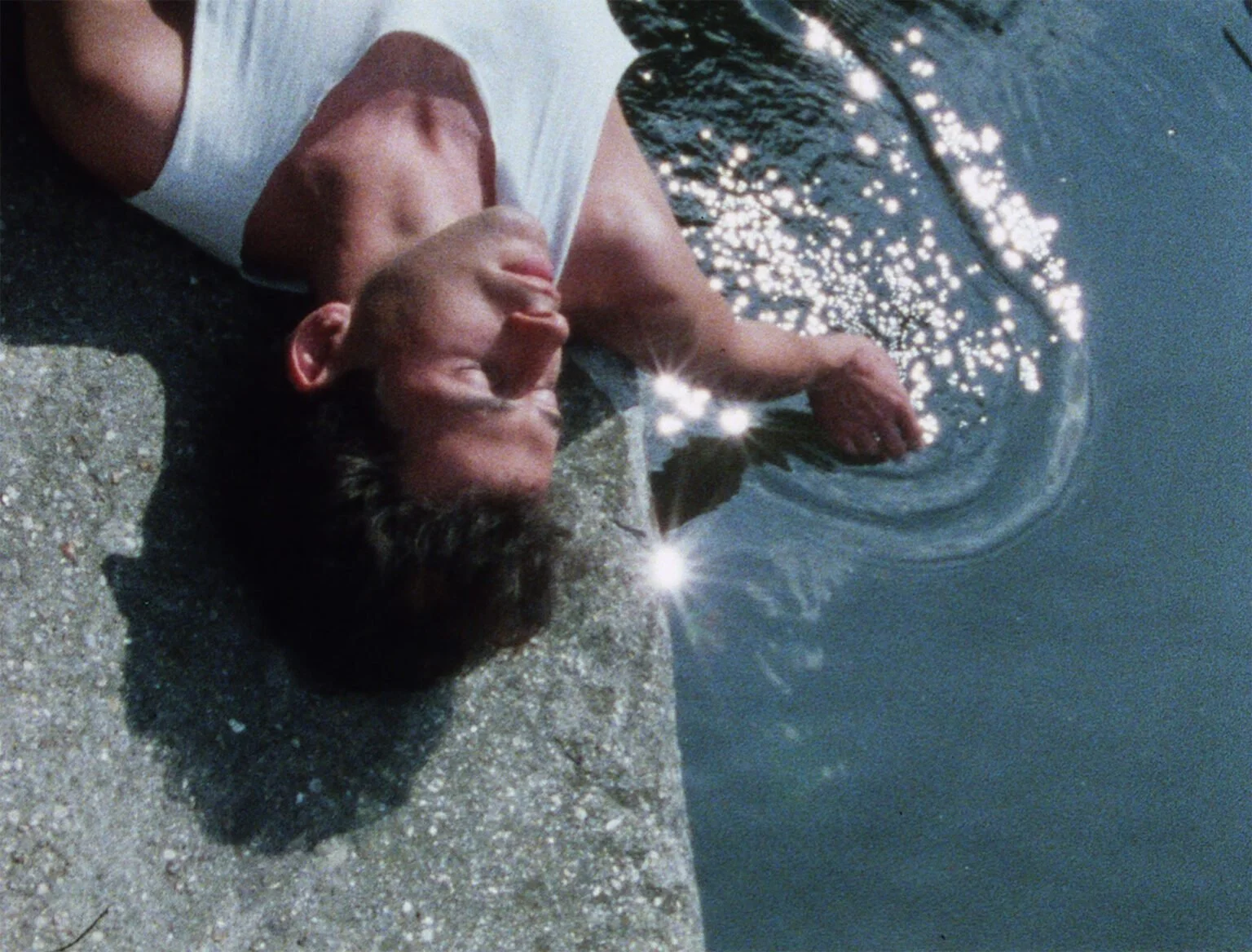
This spring, the Museum of Modern Art offers a rare and long-overdue encounter with one of the most singular voices of experimental cinema. On view May 14–26 in New York City, Teo Hernández: A Pomegranate Orchard and the Bitter Well, organized by Carlos Saldaña and Francisco Algarín Navarro, is the first monographic presentation in the United States dedicated to the late Mexican-born, Paris-based filmmaker Teo Hernández.
A central figure of the queer avant-garde in 1970s and ’80s Paris, Hernández created a vast and deeply personal body of work—more than 150 films, primarily shot on Super 8—that collapses the boundaries between diary, myth, portraiture, and performance. His cinema is at once intimate and ecstatic, grounded in the body while reaching toward the spiritual, where gesture, movement, and light become the primary carriers of meaning.
Born in Mexico in 1939 and later settling in Paris after years of travel, Hernández developed a radically tactile approach to filmmaking—one that rejects linear narrative in favor of a cinema of sensation. For him, the camera was not a recording device but an extension of the body itself, a tool to register presence, desire, and transformation.
The MoMA series brings together 19 films spanning his career, tracing key through-lines in his practice—from early works steeped in mythological and folkloric imagery to the intensely personal explorations of autobiography, urban wandering, and dance that define his later films. Highlights include Salomé (1976–82), a lush and irreverent reimagining of biblical iconography through a queer, baroque lens, as well as a selection of works that foreground Hernández’s unique approach to movement and duration, where the camera itself seems to breathe, drift, and pulse.
Equally significant is the series’ attention to the collaborative ecosystem that shaped Hernández’s work. Screenings incorporate films made with the MétroBarbèsRochechou Art collective and close collaborators such as Michel Nedjar and Jakobois, offering insight into a vibrant artistic community where cinema emerged as a shared, lived practice.
Hernández’s life and work were cut short by AIDS-related complications in 1992, but his films endure as a testament to a radically embodied cinema—one that resists categorization and continues to resonate with urgent force. At a moment when questions of identity, memory, and the politics of the body remain central, this series reintroduces a filmmaker whose work feels both deeply rooted in its time and strikingly contemporary.