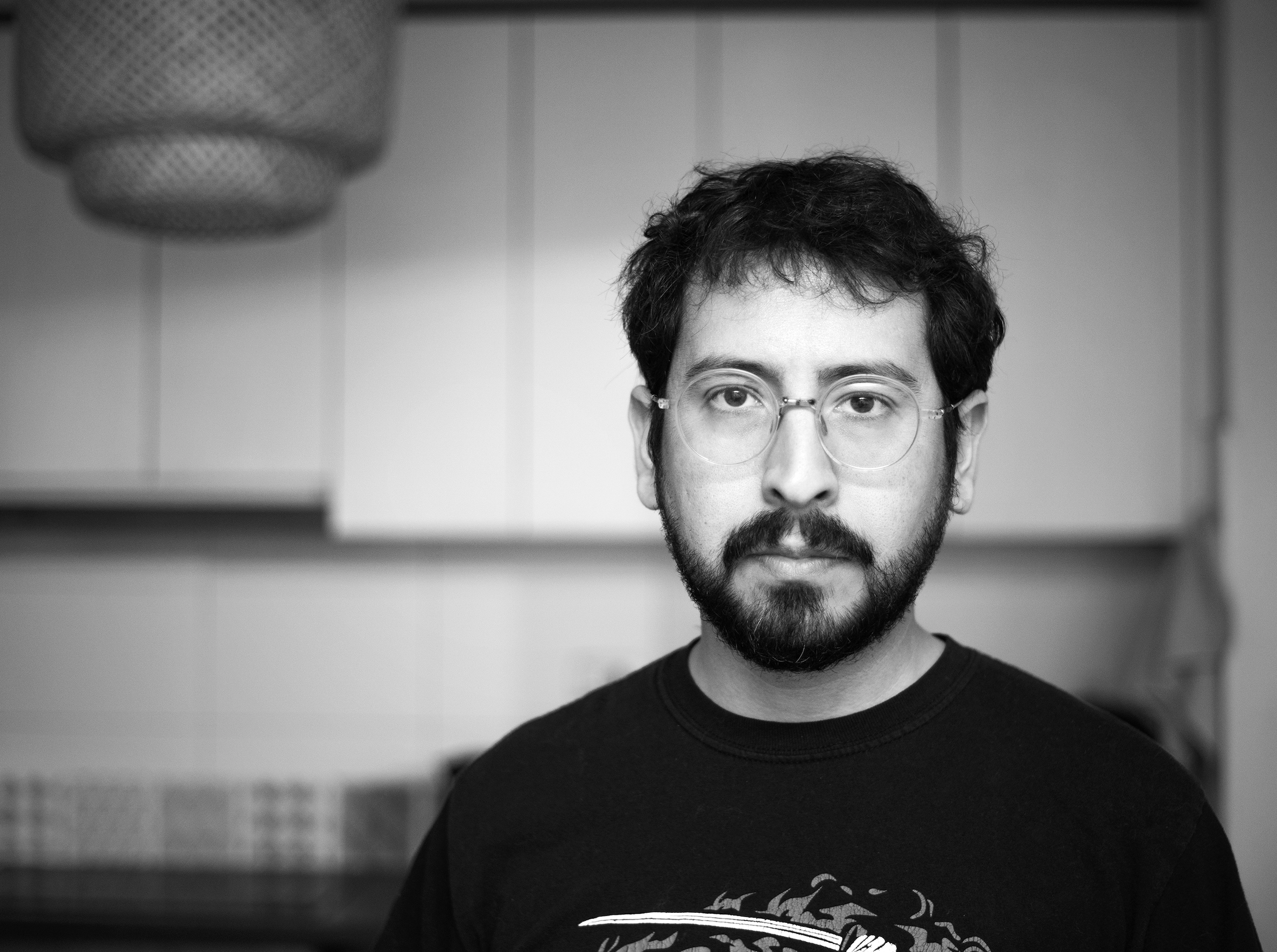
Director Diego Soto
By Natalia Hernández Moreno *
In A Heart As Willing / La corazonada, the inventive second feature by Chilean director Diego Soto, Nieves runs a modest inn with her son in the Chilean countryside, leading a quiet life shaped by routine and deferred dreams. When a wandering motorcyclist arrives and falls for her, the prospect of a late-blooming romance offers an unexpected glimpse of happiness—yet their relationship seems destined to falter. Everything changes with the arrival of a filmmaker who casts them in her adaptation of Shakespeare’s The Tempest, drawing them into the creative process and gradually blurring the boundaries between performance and reality.
Playful, sensitive, and deeply human, the film crafts a meditation on love, aging, cinema, and the mysterious ways stories transform those who inhabit them. Starring Soto’s real-life aunt and uncle—non-professional actors playing fictional alter-egos of themselves—A Heart As Willing treats cinema not as an abstract exercise in meta-storytelling, but as a tender, living intervention into real life.
Ahead of the film’s U.S. premiere at Anthology Film Archives, I chatted with Soto about directing his family, discovering Shakespeare’s The Tempest mid-shoot, the dizzying visual rhythm of romance, and the political choice to make cinema for local audiences rather than an imaginary arthouse spectator.
The heart of A Heart As Willing rests on the unique dynamic you achieve with your family—specifically your aunt and uncle. How did the idea of involving them originate, and how did you approach directing non-professional actors to explore love through fictional alter-egos?
It was a somewhat disordered process. I had worked with them on my first 60-minute feature, where we tested this methodology: not just using non-professional actors, but taking their actual lives and worlds as the foundation to imagine a fictional path. Both of them have a presence and personality that really shines on camera, so I kept tracking what they were up to in their everyday lives.
At one point, I realized it was time to collaborate again. In real life, they had just installed a swimming pool at their rural home in central Chile to rent out to vacationers, and my uncle had recently joined a motorcycle group, complete with the full leather jacket. Those two vivid images immediately gave me something to build on.
Around that time, I realized the core subject had to be love. Our generation has gone through an important process of questioning traditional romantic narratives, yet that questioning doesn't stop us from falling in love. I wanted to explore that tension between the physical reality of emotion and the fictional stories we invent to express it. Since my aunt and uncle have been together forever in real life, my premise was: What if we separate you narrative-wise and force you to meet for the first time at this advanced stage of life? We wanted to see if, through these alter-egos, that spark of falling in love could happen again.
Midway through, the narrative introduces a theatrical layer: a director casting them in Shakespeare’s The Tempest. How did Shakespeare enter this process, and how did you navigate writing, editing, and shooting across your eight-day schedule?
We shot the film over eight weekend days spread out between December and March, simply because neither the cast nor the crew had to work on weekends. Because we had gaps between shooting days, I would take the footage home and start editing. The editing process effectively became the writing process for the next shoot.
While pondering where to take the story next, I went to see a production of The Tempest at the theater and noticed immediate parallels. Prospero is a scholar of magic who orchestrates a plan for two young people to fall in love—he puts a perfume in the air, sets spirits to sing music—yet, despite his magic, all he can do is generate the conditions for love and wait to see if it happens. That is precisely how film directors operate.
I started mapping characters from the play onto my family. But the most fun part was bringing Shakespeare directly into their rural Chilean setting. I wanted to hear those classic lines recited by my family in their everyday Chilean accents, with all the vertigo of handling texts that none of us completely understood, to see if injecting more theatricality would paradoxically heighten the documentary reality of what was happening between them.
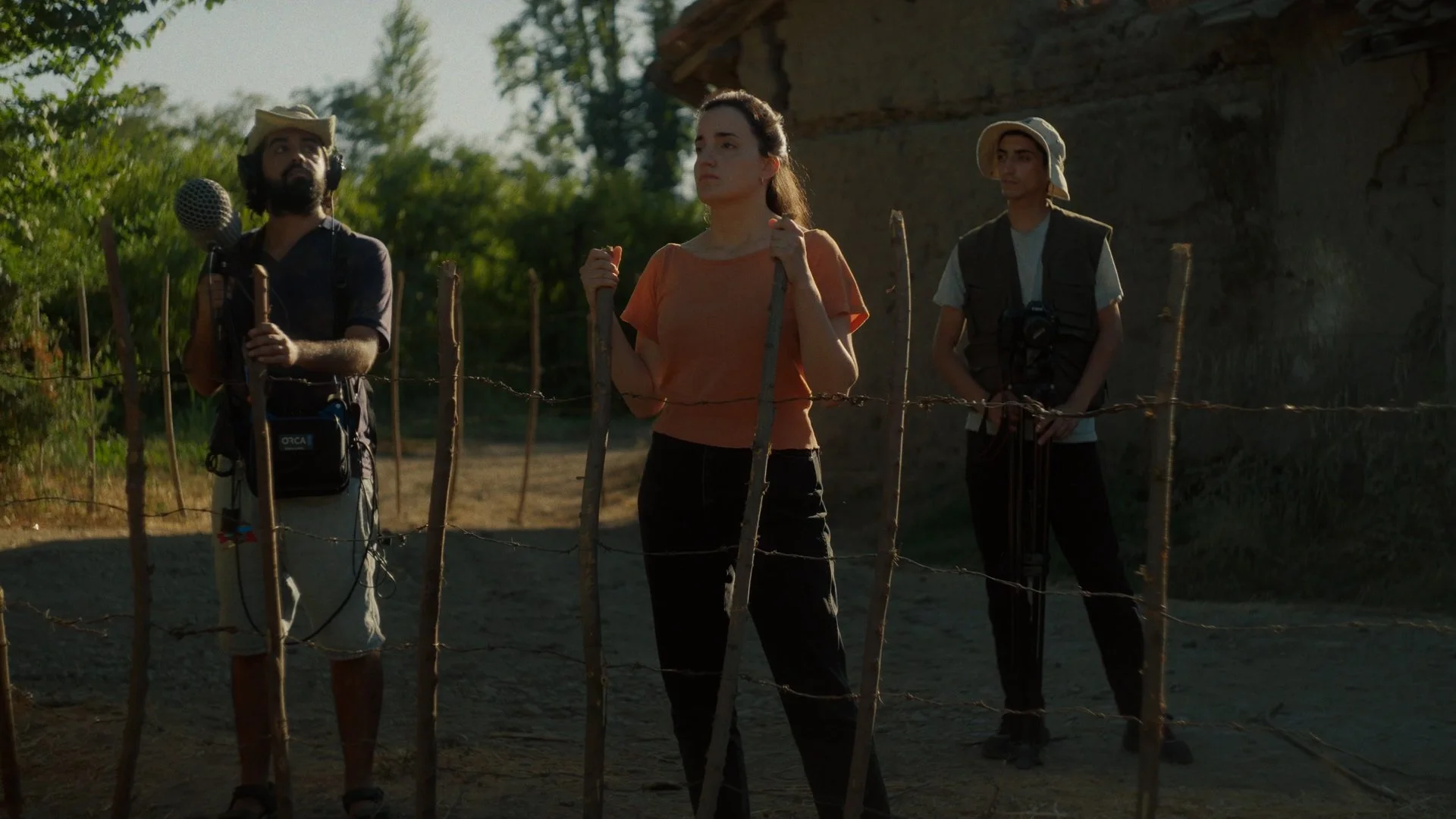
A Heart as Willing by Diego Soto
The space of the house and the countryside feels like an isolated universe—almost like Prospero's island. How did you approach the blocking, visual composition, and movement within this intimate space?
The "island" in our film functions as a spatial configuration of isolation, arrival, and departure. My aunt and uncle inherited the house from my grandparents, so it carries an immense emotional weight for me. It is their intimate home, but through their pool business, it also becomes a transitory space for outsiders passing through.
Visually, we chose telephoto lenses to abstract the location. You never actually see the house in its entirety or fully understand how the rooms connect. During the shoot, we also discovered a key visual motif by accident. We didn’t have a camera dolly, so my cinematographer, Manu, suggested doing a circular pan to simulate a tracking shot. We filmed my aunt walking in a circle for an hour, fine-tuning the speed.
Later, during our first assembly meeting with our editor, Manuela, she remarked that the film felt like a carousel. That dizzying, revolving movement—so tied to the sensation of falling in love—became the visual key that unlocked the rest of the film, from the motorcycle rides to the characters' physical back-and-forth.
Watching your film brought to mind another Chilean title we recently presented in Lost & Found, José Luis Torres Leiva’s When Clouds Hide the Shadow, which also uses a film shoot to explore displacement, encounters, and meta-cinematic reflection with great sensitivity. How do you see your work in conversation with this tradition of Chilean docu-fiction?
I'm deeply honored by the comparison to José Luis—his work is a major point of reference for us. There is a clear tradition in Chilean cinema, tracing back to Raúl Ruiz, that understands reality isn't something you tackle head-on. Ruiz used to say that "nature likes to hide itself," meaning certain phenomena can only be approached obliquely; if you face them directly, they vanish.
For us, the documentary tradition in Chile is our main touchstone, even though we make fiction. We wanted to acknowledge that fiction is a fundamental part of our real, everyday lives. Exposing the mechanics of filmmaking wasn't about intellectual posturing; it was a survival strategy for making a feature on a micro-budget in eight days. On day one, I told the team: The moment we step out of the car, everything is part of the movie.
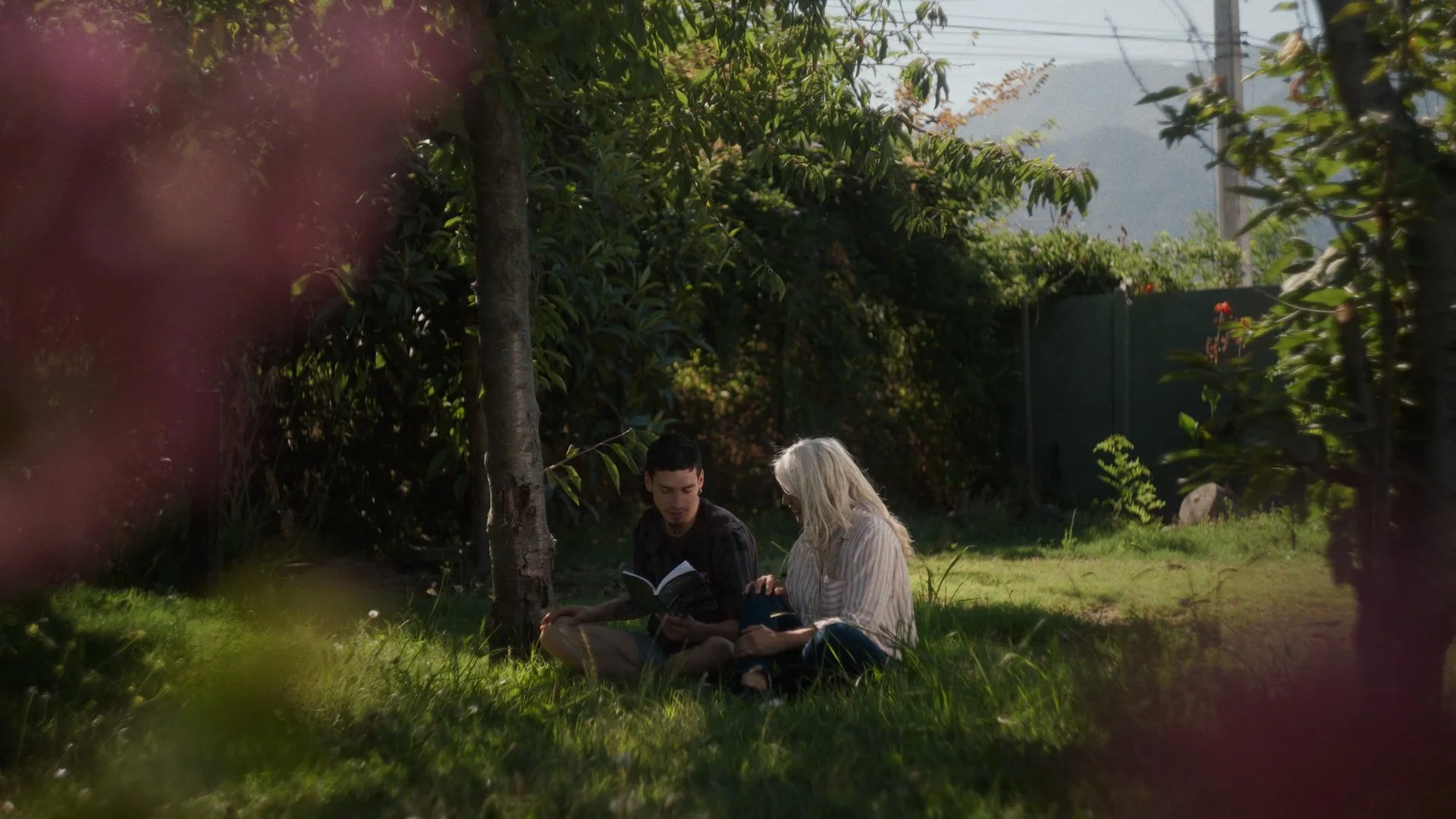
A Heart as Willing by Diego Soto
One scene that really stayed with me is when the camera pans across the table setup, lingering over details like the sliced salami, cubed cheese, and palta (avocado). It’s such a specific domestic ritual that instantly communicates care and hospitality. How did that sequence come together, and what role do these quiet, local details play in the film?
That scene with la once is so important to me. In Chile, la once is a fundamental ritual of our daily life. We dedicated a deliberate pan across the table to show that spread with real care and detail.
For a Chilean audience, that table is full of immediate signals. The message of that table is that Nieves is making her absolute best effort to welcome this visitor—she brought out the salami, the cubed cheese, and the palta (avocado). It communicates warmth, affection, and hospitality through a very specific local code.
When you film those small, concrete details, you are trusting the audience to decode emotional care through physical reality. It’s not just food on a table; it is a character opening her world to someone else.
Meta-cinema can sometimes feel cerebral, but A Heart As Willing grounds its reflexivity in profound warmth. How do you balance playing with cinematic form while making films that resonate locally rather than catering to international festival expectations?
Winning the Audience Award at the Valdivia Film Festival was deeply gratifying because the film connected across very different crowds. Cinephiles enjoyed the meta-narrative games, while general audiences were moved by the romance and emotional truth.
There is a tendency in Latin American cinema to make films for an imaginary European spectator, which forces directors to strip away the richest, most specific details of their surroundings to "universalize" the story. We did the exact opposite. When you screen a film internationally, people might question telling a classic love story, but this isn't an abstract romance—these are two real bodies, carrying their class history, their faces, and their lived realities on screen. We wanted to make a film that my family would love, while also inviting any viewer to reflect on what cinema can do when it looks closely at real life.
A Heart As Willing will have its U.S. Premiere on Wednesday, September 30, at 7pm at Anthology Film Archives, as part of Lost & Found: Cine(ma)s Latinoamericanos Re-unidos, co-programmed by Matías Piñeiro and Carlos A. Gutiérrez.
This interview has been translated from Spanish and has been edited for length and clarity.
*Natalia Hernández Moreno is the Associate Director of Cinema Tropical, and frequent collaborator for TropicalFRONT.