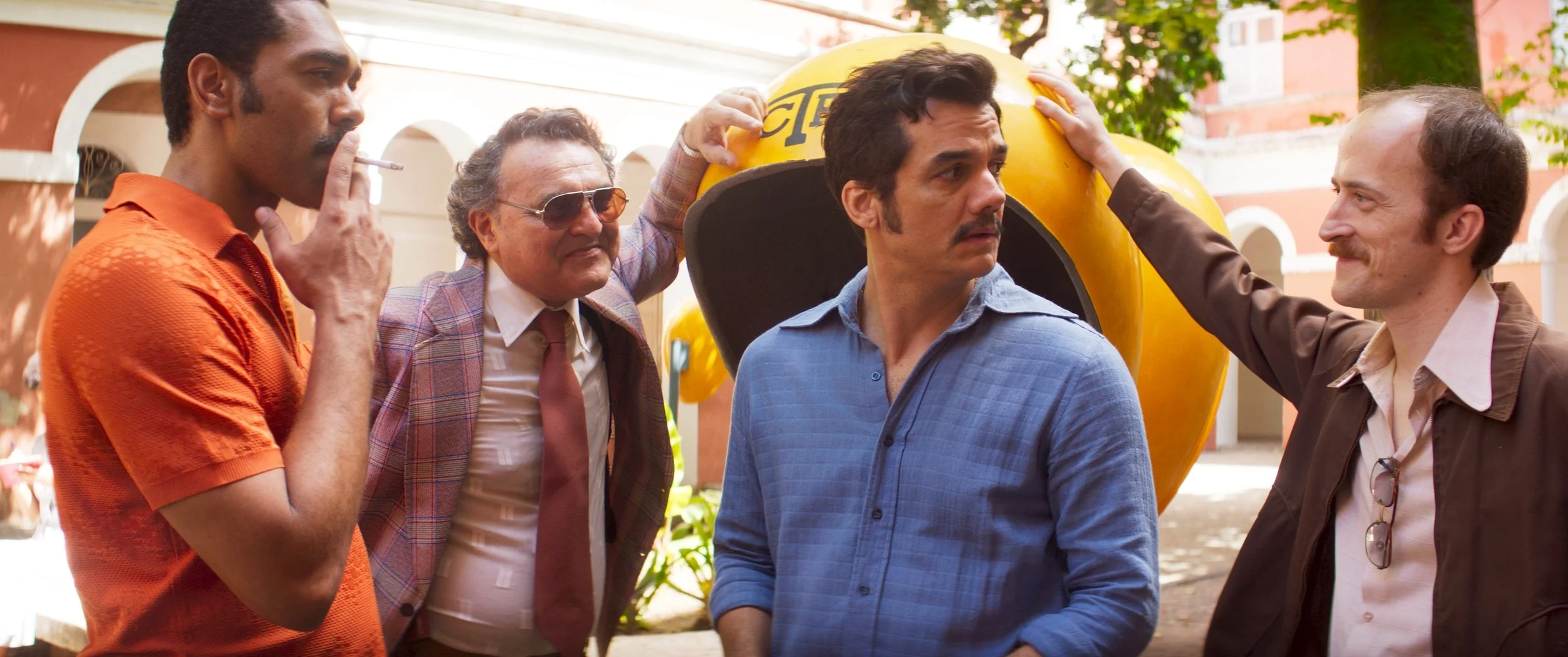
With its U.S. box office surpassing the $1 million mark, Kleber Mendonça Filho’s The Secret Agent / O Agente Secreto has secured a place in a remarkably small and historic group. The film becomes only the fifth Brazilian title ever to reach this milestone in the United States, joining I’m Still Here / Ainda Estou Aqui (Walter Salles, 2024), City of God / Cidade de Deus (Fernando Meirelles, 2002), Central Station / Central do Brasil (Salles, 1998), and Dona Flor and Her Two Husbands / Dona Flor e Seus Dois Maridos (1976).
The achievement is notable not only for its rarity, but also for what it suggests about the enduring—if often fragile—relationship between Brazilian cinema and U.S. audiences. Spanning nearly five decades, the films in this group reflect vastly different moments in Brazil’s cultural, political, and cinematic history: from the popular eroticism and social satire of Dona Flor and Her Two Husbands, to the humanist intimacy of Central Station, the global shockwave created by City of God, and the recent resurgence of Brazilian films on the U.S. arthouse circuit with I’m Still Here.
Mendonça Filho’s political thriller The Secret Agent, starring Wagner Moura, continues to expand both its theatrical footprint and its U.S. domestic gross three weeks after opening in New York City. Boosted by Golden Globe nominations, Oscar shortlists, and end-of-year lists, the Brazilian film is poised to continue growing throughout awards season.
Set in 1977, the film follows a widower who arrives in Recife, a city as vibrant as it is violent. A technology researcher, he suddenly becomes an unwitting target in the heart of the dictatorship’s political maelstrom. On the run from mercenary killers, haunted by ghosts of the past, and confronting the ruthless, mischievously militant spirit of the city, his primary goal is to escape Brazil with his young son. With the help of a mysterious woman and her compatriots in the growing underground resistance, he navigates a tense, unpredictable world of danger and deception.
At a time when box office narratives are often dominated by franchise cinema and English-language productions, moments like this serve as a reminder of the long, uneven, but persistent presence of Brazilian cinema in the U.S. exhibition landscape. The Secret Agent’s accomplishment is both a contemporary success story and part of a much longer continuum—one that underscores how exceptional, and how hard-won, such milestones remain for films from the region.