Following its acclaimed world premiere at the Toronto International Film Festival (TIFF), The Hummingbird Paints Fragrant Songs, the new documentary feature co-directed by Èlia Gasull Balada (editor, Son of Monarchs, The Rebellious Life of Mrs. Rosa Parks) and Matteo Norzi (Icaros: A Vision), will have its U.S. premiere as the Opening Night Film of DOC NYC 2026, America’s largest documentary festival, taking place November 11–26.
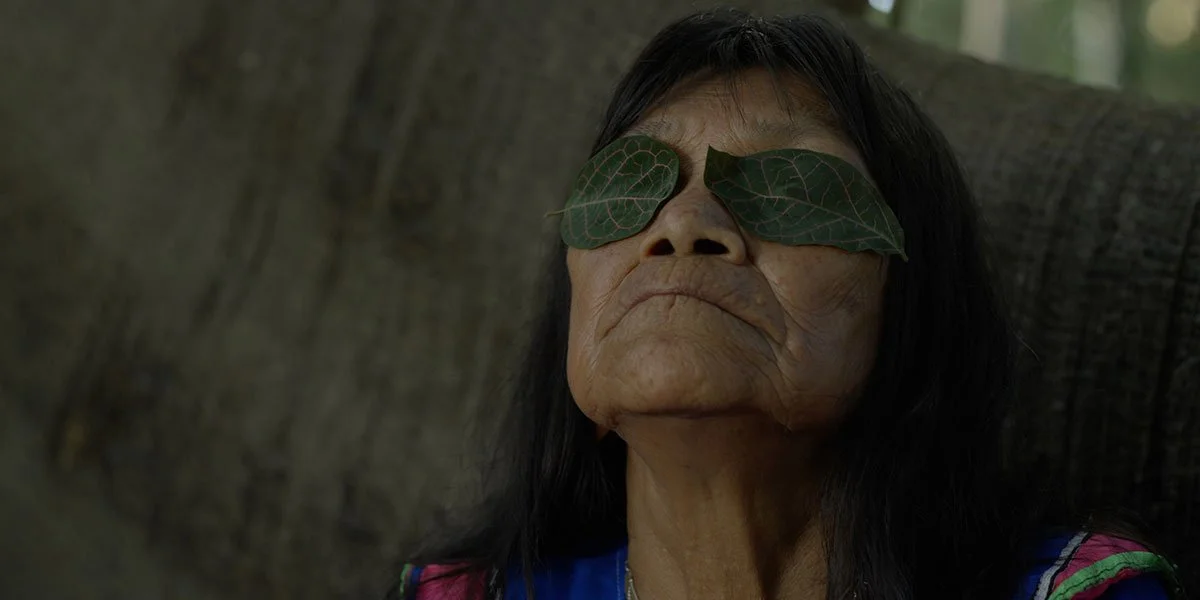
The film centers on 75-year-old Sara Flores (Shipibo birth name Soi Biri), a master practitioner of kené—the intricate visual language of the Shipibo People of the Peruvian Amazon, rooted in the concept of kéenti (to love or care for). After decades of working in relative obscurity, Flores finds herself embraced in her seventies by the global contemporary art world—collaborating with White Cube gallery, fashion house Dior, and being selected as the first Indigenous artist to represent Peru at the 61st Venice Biennale.
Yet behind this late-life acclaim lies a stark paradox: her growing prominence in the global contemporary art world comes at a time when her ancestral territory faces mounting threats from environmental destruction, illegal land grabs, and state neglect.
Moving beyond conventional documentary portraiture, Gasull Balada and Norzi create a richly immersive cinematic experience inspired by Flores's artistic practice. Just as kené translates unseen spiritual geometries into intricate visual patterns, the film draws on the rhythms, textures, and spiritual dimensions of the Amazonian world. Its striking imagery contrasts the organic landscapes of the rainforest with the monumental architecture of Western art institutions, reflecting the tensions between Indigenous liteways and the institutions of the Global North.
Sound plays an equally essential role in the film's distinctive cinematic language. Sound designers María Alejandra Rojas and Arturo Salazar weave the resonances of Amazonian insects and the surrounding natural environment into the soundscape, alongside, in place of a score, ritual songs known as icaros performed during a single night of ceremony by Elisa Vargas Fernández (performer, Tár) and her son Fredi Luis Sánchez Vargas. The result is an evocative auditory tapestry that brings the spiritual cosmology of the Shipibo People vividly to life.
Through this interplay of sound, image, and form, the film follows Flores on a deeply intimate, political, and spiritual journey—from a health crisis and an ayahuasca vision linking her body to the ecological devastation of her homeland, to her participation alongside young Indigenous land defenders at the United Nations, culminating in a major solo exhibition at the Museo de Arte de Lima, where she unveils a new body of work around the flag for her Shipibo Nation. More than a portrait of an extraordinary artist, The Hummingbird Paints Fragrant Songs becomes a cinematic extension of her practice, transforming filmmaking into an act of decolonial resistance, Amazonian sovereignty, and Indigenous futures.