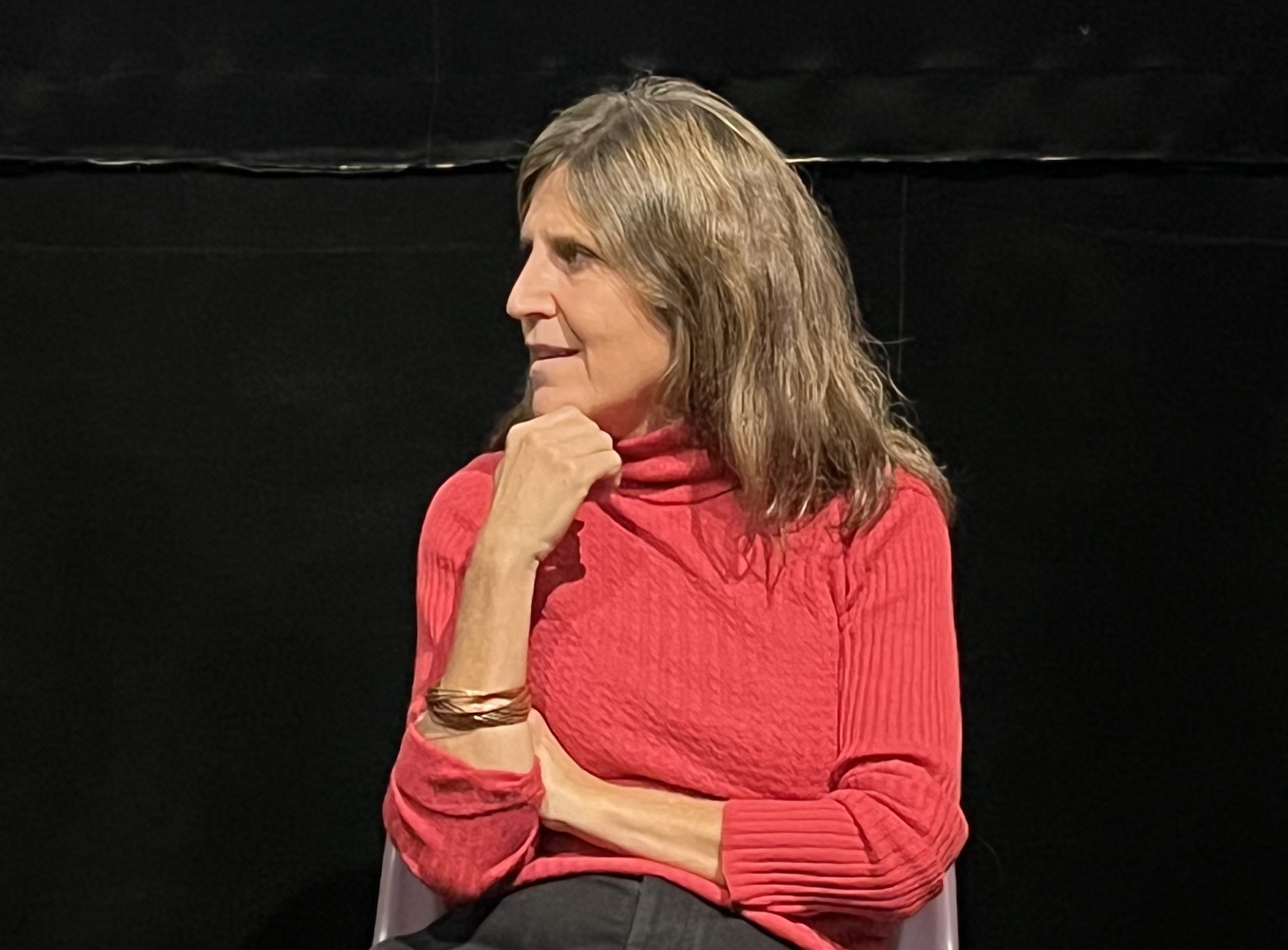
Director Nuria Ibáñez Castañeda at Anthology Film Archives. Photo: Daniela López Amézquita
Set along a remote, luminous stretch of Mexico's Baja California coast, Nuria Ibáñez Castañeda’s El Guardián follows Basilio, a caretaker hired to oversee a seemingly tranquil expanse of shoreline. Beneath the idyllic surface lies an isolated community bound by implicit codes, where illicit economies and everyday life quietly overlap. Guided by a steady moral compass, Basilio attempts to navigate his duties with integrity, only to find that ethics and justice are far more elusive than they appear.
Marking her fiction feature debut after acclaimed documentaries such as The Naked Room / La habitación desnuda and A Wild Stream / Una corriente salvaje, Ibáñez Castañeda crafts a gripping, haunting meditation on labor, social class, and survival. Through subtle depth of field, atmospheric pacing, and a landscape that is as hostile as it is visually arresting, the film examines the fragile boundaries between duty, isolation, and moral compromise in contemporary Mexico.
In conversation with Cinema Tropical’s Natalia Hernández Moreno following the U.S. premiere of her film at Anthology Film Archives in New York City, Ibáñez Castañeda discussed transitioning from documentary to fiction, her intuitive collaboration with non-actor Basilio, and how open spaces become complex emotional landscapes.
This conversation has been edited and translated for length and clarity.
Natalia Hernández Moreno: Nuria, congratulations on a wonderful film and welcome back. El Guardián marks your fourth feature film, but your first venture into fiction after three documentaries. Even so, the texture and sensibilities of documentary filmmaking remain strongly palpable in your craft. How did that transition feel, and how do you navigate the play between reality and fiction?
Nuria Ibáñez Castañeda: The transition actually felt very natural because this project grew directly out of my previous documentary, A Wild Stream, which is where I first met Basilio.
While filming that documentary, I observed Basilio's daily routine, but there was an entire layer of his life happening off-camera—specifically his phone conversations with his boss, who wasn't paying him, as well as calls with his family. At the time, I didn't record those calls or consider them material for that documentary. But with distance, I realized how potent those exchanges were. They captured something fundamental about social class disparities in Mexico, a dynamic that has always driven my work.
Since Basilio no longer lived at that beach, returning to capture that reality required fiction. Interestingly, my original background was actually in screenwriting and narrative fiction, not documentary. So returning to fiction to explore everything that had existed outside the frame of the documentary felt like a seamless homecoming.
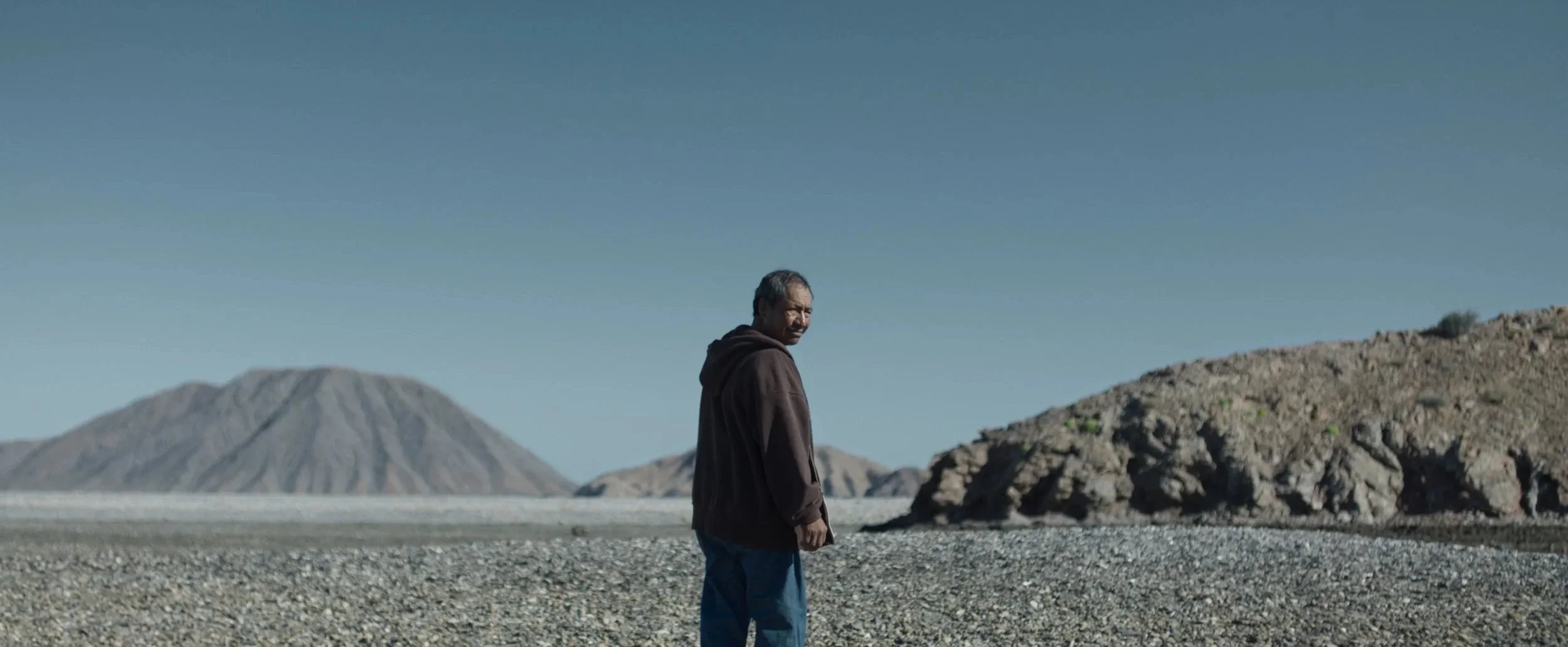
El Guardián by Nuria Ibáñez Castañeda
Since Basilio is effectively playing a character inspired by himself within a fictional construct, how did you approach the script? Did he contribute to the writing or adapt his lines during filming?
I wrote the script with his voice echoing in my head—anticipating his phrasing, his rhythm, and how he speaks. However, the script contained actions that the real Basilio would never actually do in his own life, such as formally reporting someone to the authorities. At the same time, it incorporated genuine aspects of his personality, like his humor and the way he mixes up the letters he was supposed to send to his lovers.
I chose never to show him the written script. I didn't want him overthinking the text or feeling constrained by written lines. Instead, I presented the ideas and scenarios to him, allowing him to interpret them in his own words.
What moved me most was his complete dedication to the process. He fully embraced the "game" of fiction. He treated it with immense discipline and seriousness—he was always the first on set, present in every scene, and completely committed to the work.
Visually, the film plays beautifully with depth of field and scale. The landscape is breathtaking, yet there is an underlying tension—addressing themes of migration, non-belonging, and digital mediation through phone screens. Rather than relying on dialogue to spell things out, you allow the geometry of the frame and the quiet of the landscape to carry the narrative's true weight. How did you conceptualize the framing of the landscape here compared to your past work?
In A Wild Stream, which was shot on the exact same beach (Playa La Gringa), the landscape was always pushed into the background—kept out of focus behind the individuals. For El Guardián, I wanted to invert that relationship entirely.
Here, the landscape takes on a primary, almost imposing presence. Basilio spends long stretches in silence, isolated in this vast terrain. I wanted the environment to reflect his internal world. Baja California is strikingly beautiful, but it can also be profoundly hostile and contradictory. Shifting the depth of field allowed the territory to become an active character rather than just a passive setting.
Looking back, there is a distinct spatial evolution across my films: I moved from the enclosed, claustrophobic interior of a children’s psychiatric ward in The Naked Room, to using the beach as a soft-focus backdrop in A Wild Stream, and finally to El Guardián, where this luminous, hostile coastal expanse steps into the foreground as the primary protagonist.
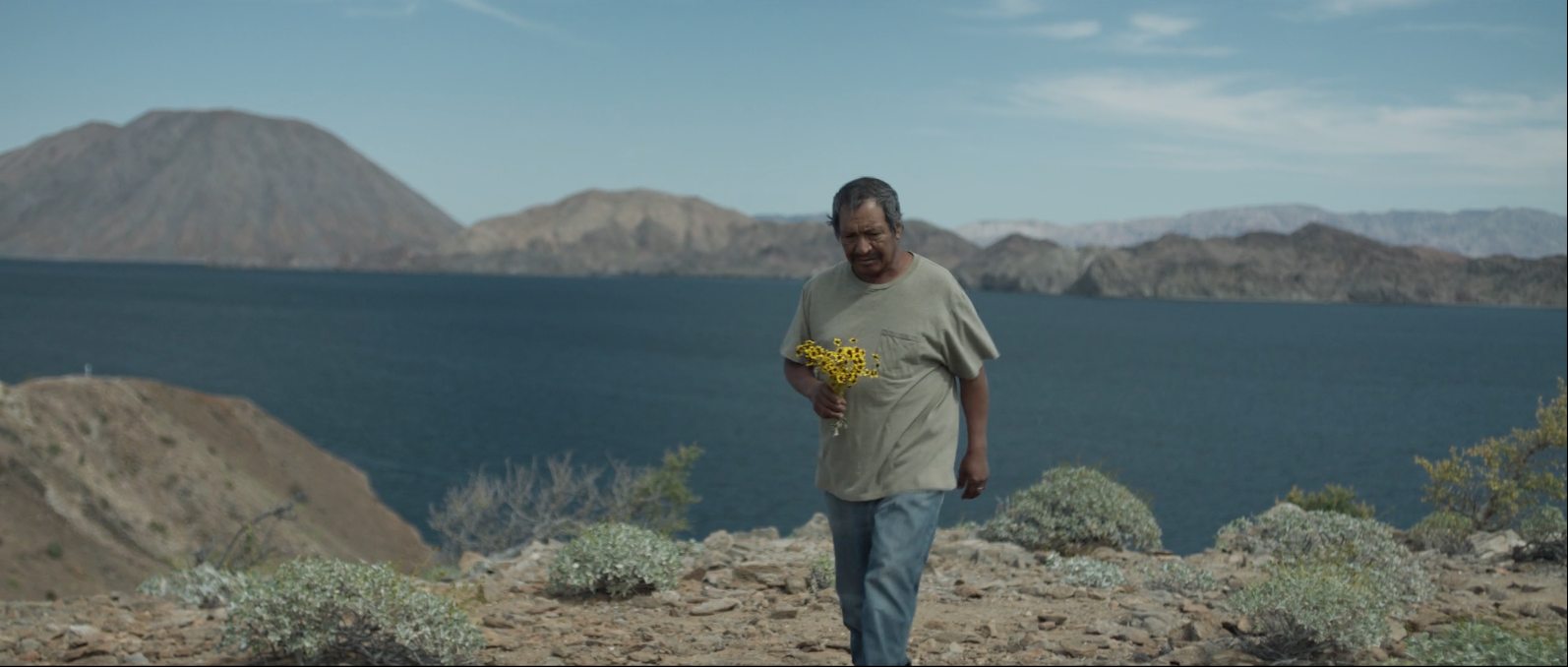
El Guardián by Nuria Ibáñez Castañeda
Audience Member: What originally drew you to this remote area of Baja California, and how did you first encounter Basilio?
My previous documentary, The Naked Room, was filmed entirely inside a single room of a children's psychiatric hospital in Mexico. It was an extremely confined, interior film. After finishing it, I attended a film festival in Tijuana and felt an urgent desire to make something in a wide-open space. I decided to travel around Baja California.
Initially, I intended to make a documentary about a local family guarding a remote bay. But when I returned months later with a production budget, the family was gone. Basilio was the only person there.
Rather than abandoning the project, I decided to film the person who was actually in front of me. That accident led to A Wild Stream, which focused on the relationship, conversations, and quiet sensuality between two men living in the middle of nowhere. That chance encounter ultimately laid the groundwork for El Guardián years later.
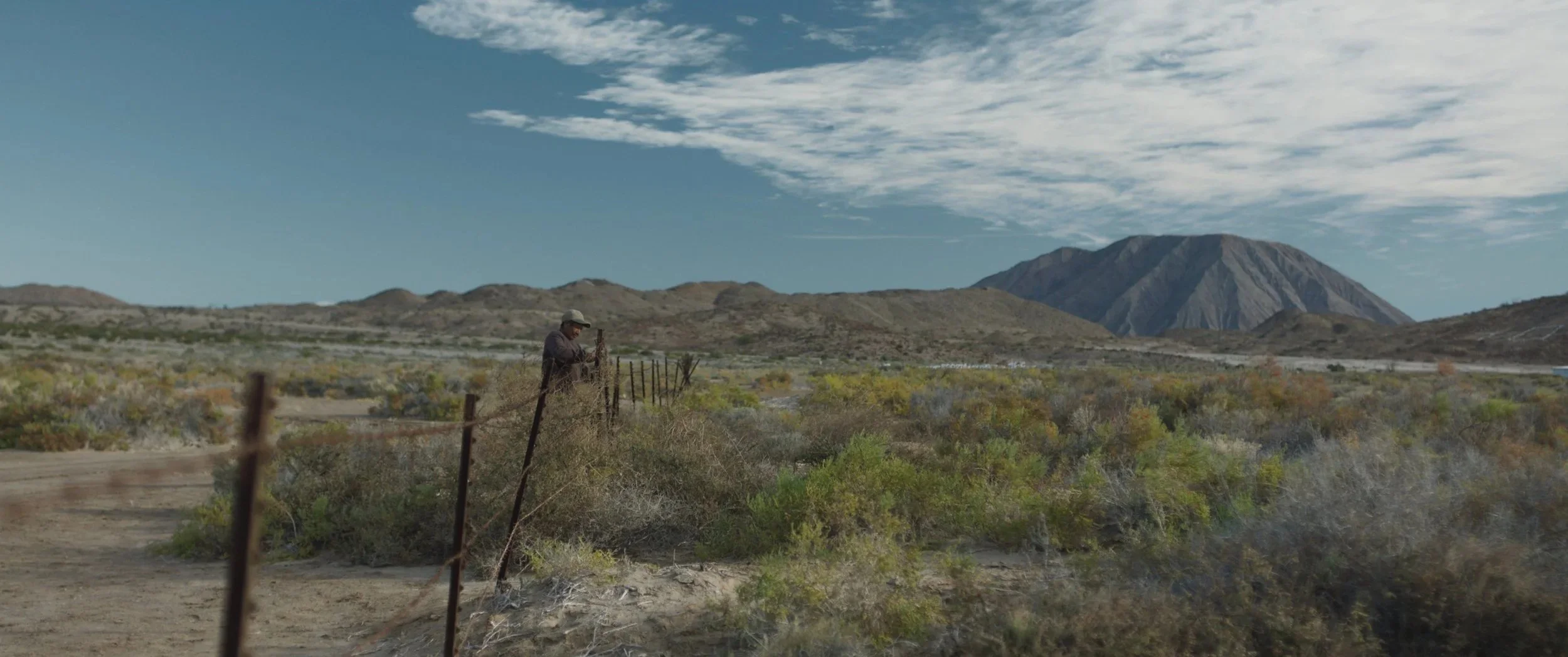
El Guardián by Nuria Ibáñez Castañeda
Audience Member: Could you talk about the unseen boss on the phone, the critique of class relations, and how you arrived at the film's final scene?
The unseen boss acts as a spectral presence throughout the film. You never see his face, but his voice on the phone establishes the invisible, rigid hierarchies of social class that define daily life in Mexico.
At the same time, the project stems from a deep personal friendship with Basilio. He is someone who has faced immensely painful and difficult circumstances, yet he possesses an extraordinary, contagious joy for life. That vitality directly shaped the ending of the film.
The final scene where Basilio sings was not in the original script. While we were shooting, we visited a local bar, and he spontaneously began to sing with such raw emotion and presence that I immediately knew: this is where the film has to end.