The Official Story by Luis Puenzo
By: Mariana Giacobbe
Last March marked the 50th anniversary of the military coup that ushered in a 16-year dictatorship in Argentina, one the most brutal episodes of state violence in the region and the country’s history. The regime gave rise to the category of the desaparecidos (the disappeared) and deployed systematic torture against civilians, leaving society with a lasting imperative: Nunca más—never again.
The consequences of that period remain deeply felt today. Thousands of desaparecidos are still unaccounted for to the date, and many of the children who were abducted and illegally appropriated continue to live without knowledge of their true identities. The Mothers and Grandmothers of Plaza de Mayo continue their work to recover these stolen identities, with 140 restored to date.
Cinema has played a crucial role in documenting both the atrocities of the dictatorship and its enduring consequences, from the granularity of everyday paranoias to the complex machinery of repression. In doing so, it has sustained the citizen’s commitment to truth, memory, and justice, demonstrating the power of film to shape collective consciousness across generations.
On the 50th anniversary of the coup that forever altered Argentina’s history, we highlight twelve feature films that carry forward this urgent call for Nunca más, not only in Argentina, but in the face of authoritarianism around the world.
THE OFFICIAL STORY / LA HISTORIA OFICIAL
(Luis Puenzo, Argentina, 1985, 112 min. In Spanish with English subtitles)
Streaming on Kanopy, Prime, YouTube Play, and Apple TV
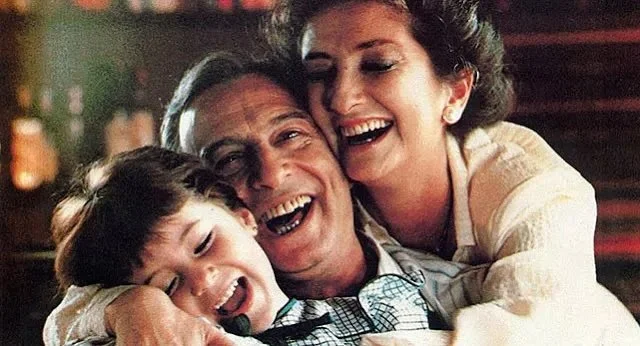
The Official Story is Argentinian director Luis Puenzo’s masterpiece, and the first Latin American film awarded with the Academy Award for Best Foreign Language Film in 1986. Set in the final months of the Argentinian Military Dictatorship in 1983, The Official Story focuses on Alicia (Norma Aleandro), a high school history teacher who is leading a comfortable life with her husband, Roberto (Héctor Alterio), a businessman with ties to the military, and their adopted daughter. When Alicia begins to wonder about the identity of the child’s birth parents, she finds herself suspecting that her daughter may be the child of people abducted or killed by the military government's brutal crackdown on leftist groups. The feature film’s production began in 1983, and had to be shot clandestinely due to threats made to the crew and their families.
LAS MADRES: THE MOTHERS OF PLAZA DE MAYO / LAS MADRES DE PLAZA DE MAYO
(Las madres de plaza de mayo, Susana Muñoz and Lourdes Portillo, USA, 1985, 64 min. In Spanish with English subtitles)
Streaming on Kanopy.
During Argentina's last authoritarian period (1976–83), the military regime enforced a brutal campaign of state-sponsored terror, resulting in the disappearance and death of tens of thousands of political dissidents. In an act of defiance, a courageous group of women gathered weekly at Buenos Aires' Plaza de Mayo to demand the truth of what had happened to their sons and daughters. Through archival footage and intimate interviews, this Academy Award–nominated documentary captures the women’s evolution from grieving mothers to fierce political icons.
GARAGE OLIMPO
(Marco Bechis, Argentina/France/Italy, 1999, 98 min. In Spanish and Italian with English subtitles)
Maria is a militant activist in an organisation opposed to the military dictatorship in Argentina. She teaches reading and writing in the shanty towns and lives with her mother in an old and run-down residence in which her mother rents out some of the rooms. One of the lodgers, Felix, a young and timid man, is in love with Maria. He seems to have no past nor family and he looks after a garage – at least this is what he says. One morning, Maria is carried off, in front of her mother, by a military squad dressed in civilian clothes. The young woman is taken to the Olimpo garage, one of the numerous torture chambers which haunt Buenos Aires to the general indifference of the population. In order to make Maria talk, Tigre, the head of the centre, gives her to one of his best men: Felix, the lodge. The film was screened at the 1999 Cannes Film Festival in the Un Certain Regard section. Marco Bechis, the director, was an elementary school teacher in Argentina at the time of the military regime, and was abducted by the dictatorship and sent to the torture camp “Club Atletico,” where he spent 15 days that informed the context for Garage Olimpo.
THE BLONDS / LOS RUBIOS
(Albertina Carri, Argentina, 2003, 83 min. In Spanish with English subtitles)
Streaming on Kanopy
Crossing the line between documentary and fiction filmmaking, Carri enlists an actor, her parents’ former comrades, fading photographs and happy Playmobil dolls to investigate her parents’ untimely end. In the end, merging fact, rumor and imagination, Carri succeeds in reconstructing both her parents' history and her own construction of them. Emotionally fraught and intellectually provocative, THE BLONDS has resonance far beyond the tragic history of Argentina’s last military dictatorship.
THE INVISIBLE EYE / LA MIRADA INVISIBLE
(La mirada invisible, Diego Lerman, Argentina/France/Spain, 2010, 97 min. In Spanish with English subtitles)
Streaming in Tubi and SlingTv.
Nominated for Best Feature Film and Best Director in the 2nd edition of the Cinema Tropical Awards, this moody drama is set in 1982 during the final days of Argentina’s civic–military dictatorship. It follows a repressed assistant teacher at an elite Argentine private school who accepts unquestioningly the school’s rigid code of conduct and identification with the nation-state. But the headmaster’s warning about the “cancer of subversion” and the need for total surveillance soon feed an obsession with one of her students, precipitating a spiral of degradation and disciplinary breakdown that parallels a popular rebellion beyond the school’s walls.
SILENCE IS A FALLING BODY / EL SILENCIO ES UN CUERPO QUE CAE
(Agustina Comedi, Argentina, 2018, 72 min. In Spanish with English subtitles)
Streaming in Dafilms and GuideDoc
Directed by Agustina Comedi, Silence Is a Falling Body delves into her father Jaime’s past. The reconstruction of his intimate life as a father undresses a clandestine history—not only that of a political activist, but also that of a gay man living under Argentina’s civic–military dictatorship (1976–1983), a regime that persecuted both leftist militants and sexual dissidents. Before marrying Agustina’s mother, Jaime had been in a relationship with another man for over a decade; in Catholic Argentina of the 1980s, his true identity remained a family secret shaped by repression and silence.Narrated through Jaime’s home videos, which portray a typical middle-class family life unfolding under and after the dictatorship, the film moves between the 1970s and 1990s, intertwining the personal and the political. Testimonies from his friends—lesbian, gay, and trans—recount the multiple forms of violence faced by the LGBTQ+ community during those years, while also tracing the networks of intimacy, parties, and emotional alliances that became forms of resistance. Shortlisted for the Cinema Tropical Awards (2018), the film becomes an exercise in individual and collective memory, questioning the meaning of desire and freedom under and beyond state terror.
THE PRIZE / EL PREMIO
(Paula Markovitch, Argentina/Mexico/France/Poland/Germany, 2011, 115 min. In Spanish with English subtitles)
Streaming on Apple TV, Tubi, and Roku
The most-awarded Mexican film of 2011 (in co-production with Argentina), winner of numerous international prizes including Best Film at the Morelia Film Festival, The Prize tells the story of an anxious young mother and her precocious daughter who flee Buenos Aires for the temporary seclusion of a ramshackle cottage on a remote beach. Her political activist’s life-in-hiding is jeopardized after her seven-year-old daughter is selected to participate in a local school’s patriotic essay contest. Set during the years of Argentine dictatorship and its infamous last military regime (1976–83), director Paula Markovitch draws on her own experiences to capture the lacunae of childhood’s social and psychological worlds in this exquisitely acted and atmospheric drama about innocence in tumultuous times.
CLANDESTINE CHILDHOOD / INFANCIA CLANDESTINA
(Benjamin Avila, Argentina, 2012, 112 min. In Spanish with English subtitles)
Streaming on Prime, Apple TV, Tubi, Roku, and Plex
Argentina, 1979. After years of exile, Juan (12) and his family come back to Argentina under fake identities. Juan’s parents and his uncle Beto are members of the leftist Montoneros Organization, which is fighting against the military junta that rules the country. Because of their political activities they are being tracked down relentlessly, and the threat of capture and death is constant. However, Juan’s daily life is also full of warmth and humor, and he quickly and easily integrates into his new environment. His friends at school and the girl he has a gigantic crush on, Maria, know him as Ernesto, a name he must not forget, since his family’s survival is at stake. Juan accepts this and follows all of his parents’ rules until one day he is told that they need to move again immediately, and leave his friends and Maria behind without an explanation. Blending live action with animation, Clandestine Childhood offers a singular perspective on the dictatorship through the eyes of a child, foregrounding the intimate stakes of political struggle.Premiered at Cannes’ Directors’ Fortnight, the film was an official selection at festivals including Toronto, San Sebastián, Rio de Janeiro, and Philadelphia, and won Best Film at the Huelva Film Festival.
SYMPHONY FOR ANA / SINFONÍA PARA ANA
(Sinfonía para Ana, Ernesto Ardito and Virna Molina, Argentina, 2017, 119 min. In Spanish with English subtitles)
Starring Isadora Ardito, Rocío Palacín, Rafael Federman, Ricky Arraga, Vera Fogwill, and Rodrigo Noya, Symphony for Ana follows Ana and Isa, two inseparable high school friends coming of age in the turbulent months leading up to Argentina’s 1976 coup d’état. Raised with the conviction that life is about finding true love and changing the world, their adolescence unfolds at the intersection of political awakening and intimate desire.With grainy footage from the days of military dictatorship to Juan Perón coming back to power, directors Ernesto Ardito and Virna Molina portrayed Argentina before the coup in 1976 and after. At just fifteen years old, Ana finds her heart caught between competing loyalties—romantic, ideological, and existential—forcing her toward a decision shaped by a rapidly darkening national reality, with irreversible consequences.
THEATRE OF WAR / TEATRO DE GUERRA
(Lola Arias, Argentina/Spain, 2018, 82 min. In English and Spanish with English subtitles)
Streaming on Prime
A selection of Cinema Tropical’s Shortlist of 2018 as one of the Best Latin American Films of the Year and winner of the Best Director Award at the Buenos Aires International Film Festival (BAFICI), Lola Arias’ debut documentary feature Theatre of War is a delirious essay on how to represent war, performed by former enemies. In 1982, Argentina’s military dictatorship tried to overcome its inevitable decline by declaring war on the UK, reviving a centuries-long nationalist claim over Britain’s occupation of the Malvinas Islands. The war ended with a previsible British victory and took about 1.000 lives, both British and Argentinean. In Theatre of War, made almost 40 years after the conflict while the sovereignty of the islands is still in dispute, Lola Arias brings together three British and three Argentine veterans who spent months together discussing their war memories and then rehearsing their re-enactment, using theater to activate the remnants of a war that began precisely as a spectacle.
ROJO
(Benjamín Naishtat, Argentina/Belgium/Brazil/Germany/France/Switzerland, 2018, 109 min. In Spanish with English subtitles)
Streaming on Apple TV, YouTube Play, Pluto, Tubi, and Fandango
Set in Argentina, on the eve of the nation’s descent into a military dictatorship in the mid-1970s, Naishtat’s hypnotic and neo-noir drama follows Claudio, a renowned middle-aged lawyer living a seemingly picture-perfect life in a deceptively peaceful provincial city. One night, a stranger starts insulting Claudio in a restaurant for no apparent reason. The patrons support him; the stranger is humiliated and removed. Later that night, the stranger—determined to wreak a terrible vengeance— intercepts Claudio and his wife, Susana. Claudio then starts to move down a path of no return involving death, secrets, and silences—further complicated by the arrival of a Chilean private detective. Rojo was a part of Cinema Tropical’s shortlist of 2019 as one of the Best Latin American Films of the year.
CORPORATE ACCOUNTABILITY / RESPONSABILIDAD EMPRESARIAL
(Jonathan Perel, Argentina, 2020, 68 min. In Spanish with English subtitles)
Streaming on Prime
Corporate accountability is a systematic and forensic study of Argentina’s long, brutal dictatorship and, particularly, of the insidious support given to the repressive regime by a wide range of still operating national and multi-national companies. In accompaniment to a series of long-held shots, each taken in the early morning outside the gate of corporate buildings, Perel reads highlights of the report of corporate collaboration and abuse written by Argentina’s Ministry of Justice and Human Rights. A slow cinema essay that gives raw emotional depth to indelible fact, Corporate Accountability was a part of Cinema Tropical’s shortlist of 2020 as one of the Best Latin American Films of the year.
ARGENTINA, 1985
(Santiago Mitre, Argentina, 2022, 140 min. In Spanish with English subtitles)
Streaming on Prime, Apple TV, and Tubi
Nominated for Best International Feature at the 2023 Academy Awards, Argentina, 1985 is inspired by the true story of public prosecutors Julio Strassera and Luis Moreno Ocampo, who took on the unprecedented task of investigating and prosecuting those responsible for Argentina’s bloodiest military dictatorship.Set in the early years of the country’s fragile return to democracy, the film follows Strassera and Moreno Ocampo as they confront the lingering power of the military, assembling a young and largely inexperienced legal team for what becomes a David-versus-Goliath battle. Working under constant threat to themselves and their families, they race against time to build a case that will hold the junta accountable and deliver long-awaited justice to its victims.The courtroom drama about courage, collective action, and the possibility of justice in the aftermath of state terror was shortlisted by Cinema Tropical as one of the Best Latin American Films of 2022.
THE TRIAL / EL JUICIO
(Ulises De La Orden, Argentina, 2022, 177 min. In Spanish with English subtitles)
Streaming on Apple TV, Prime, and Pragda Films
Winner of the 14th Cinema Tropical Award for Best Documentary Film and composed entirely of never-before-seen courtroom footage, The Trial offers a gripping and unfiltered account of the historic prosecution of Argentina’s military junta—the first major trial for crimes against humanity since the Nuremberg Trials. At its center are the testimonies of survivors and relatives of the disappeared, who recount, in devastating detail, the machinery of state terror: harassment, looting, kidnappings—including the abduction of high school students during the “Night of the Pencils”—the systematic theft of newborn babies, torture, rape, and mass killings. Facing them in court are nine former military leaders, among them the de facto president Jorge Rafael Videla, as the defense attempts to justify the so-called “Dirty War” as a necessary response to subversion.
TRANSFERS / TRASLADOS
(Traslados, Nicolás Gil Lavedra, Argentina/Uruguay, 2024, 90 min. In Spanish with English subtitles) Streaming on Apple TV and Prime
Transfers is a documentary that investigates the notorious “death flights” conducted during Argentina’s last civic-military dictatorship (1976-1983). With testimonials by former prisoners, relatives and experts, extensive archive material, animations and moving re-enactments, Traslados completes the jigsaw of witnesses, science and coincidences that prove the existence of the most cruel and effective way of killing and disappearing people executed by Argentina’s last Civic-Military Dictatorship in 1976-1983.