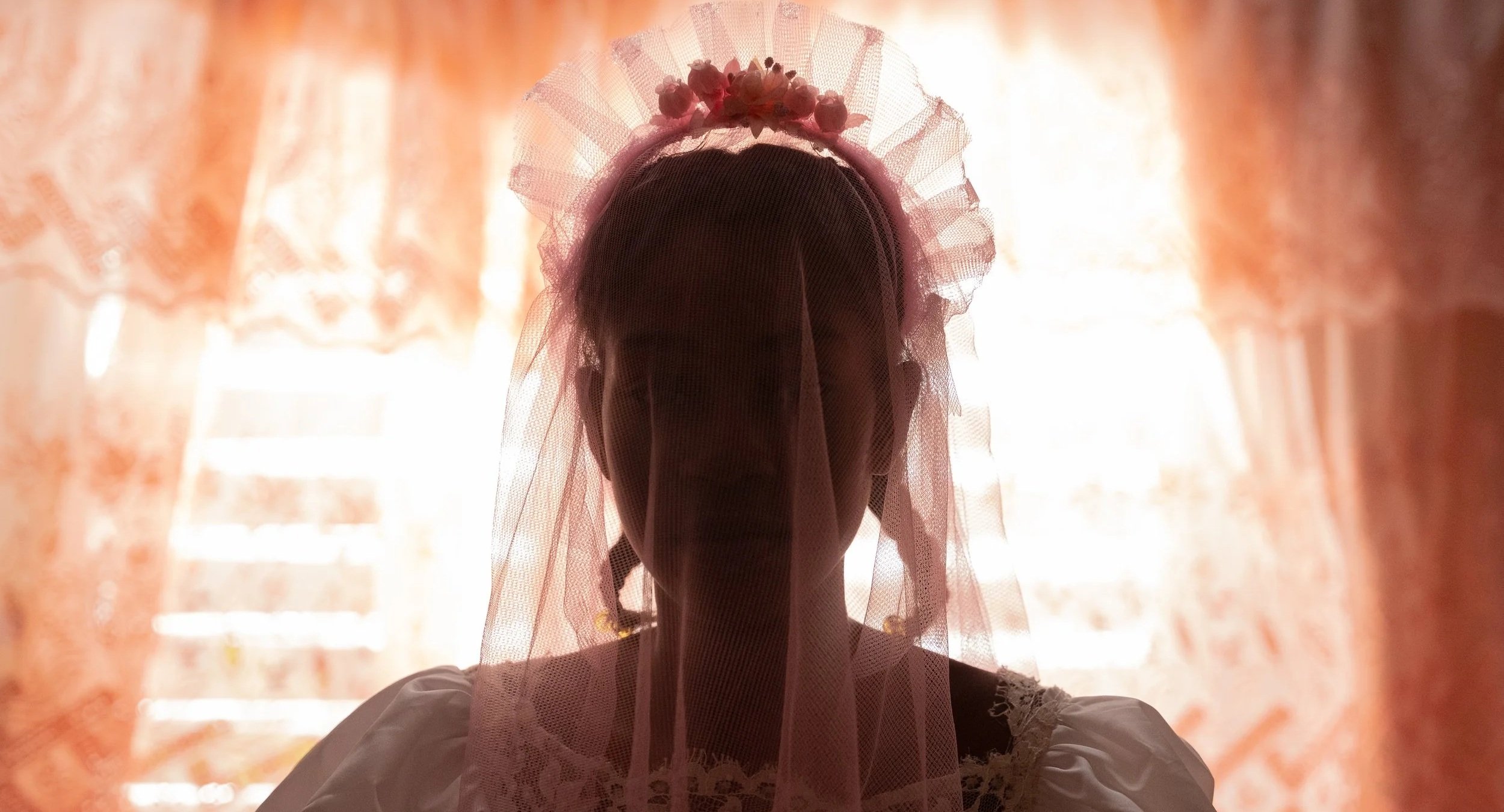
Scarlet Girls by Paula Cury
By Natalia Hernández Moreno
In the Dominican Republic, the law still speaks with a 19th-century voice. Against a backdrop of total criminalization—reaffirmed by the 2025 Penal Code—the act of choosing becomes a ghost in the national conversation. It is this climate of "institutional violence" that Paula Cury navigates in her documentary Scarlet Girls / Niñas Escarlata, a film that moves through the weight of forced motherhood and the quiet violence of stigma.
The film recently solidified its impact by winning Best Documentary and Best Direction at the 2026 Guadalajara International Film Festival. Rather than leaning on the sterile clarity of statistics, Cury builds a "film fabric" out of what remains unsaid. The work is woven from five testimonies: four women who lived through clandestine procedures, and a mother whose daughter was denied cancer treatment because she was pregnant. We hear their voices, but we never see their faces—a choice that transforms a legal necessity into a haunting formal strategy of invisibility.
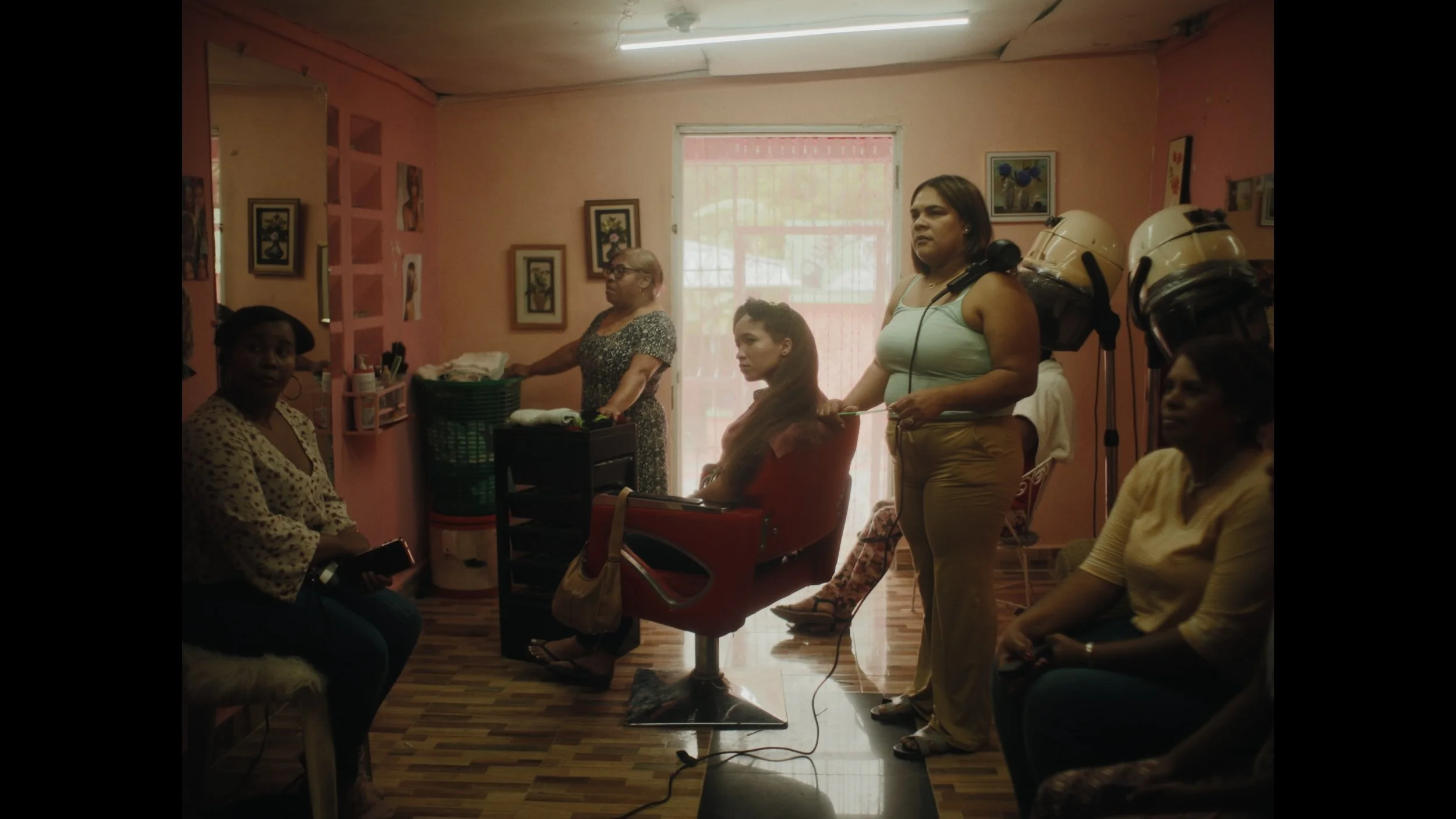
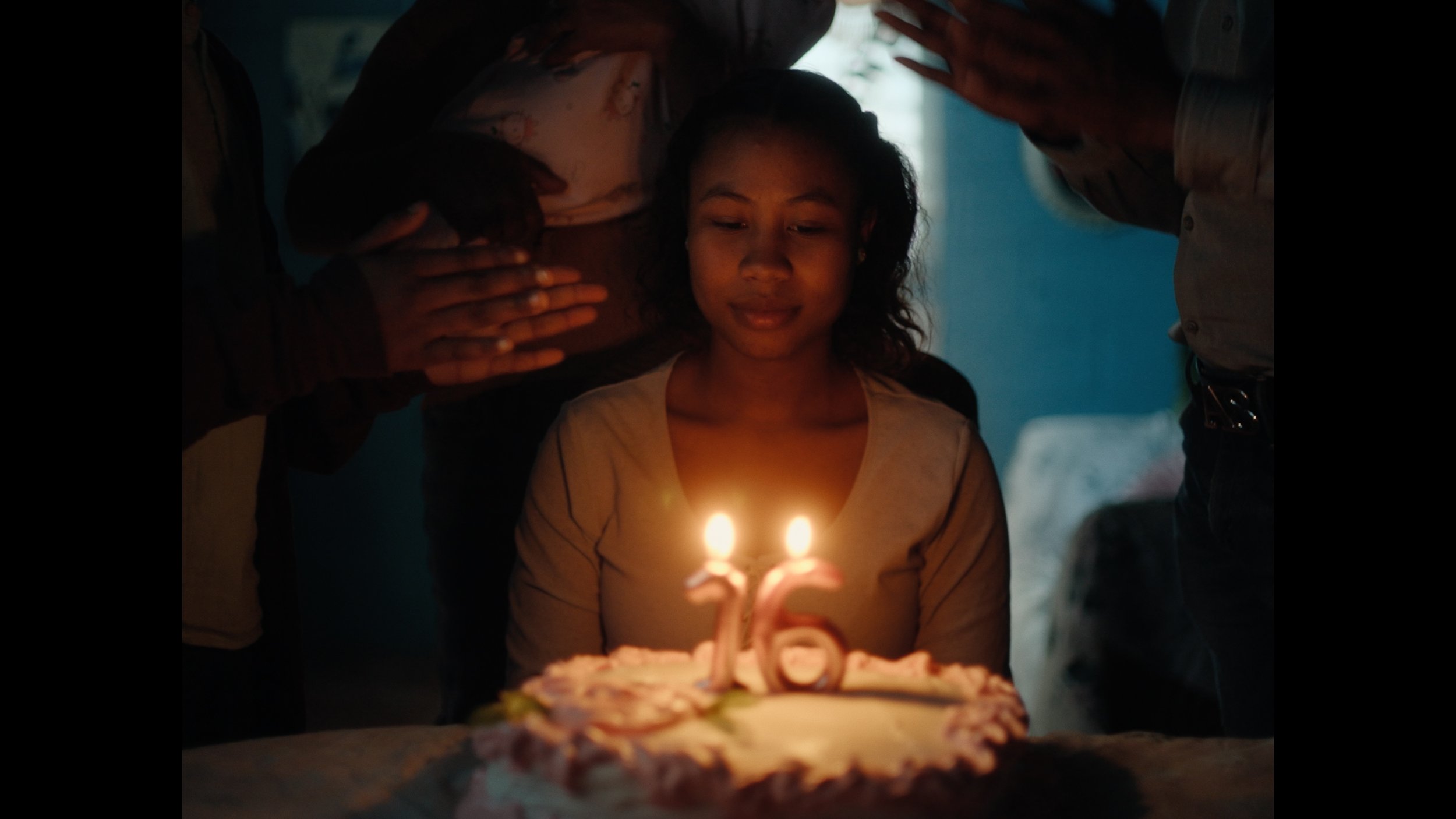
By obscuring the protagonists, Cury forces our gaze toward the rhythms of the everyday. Their words wash over observational, direct-cinema scenes of non-actresses in domestic spaces and spectral landscapes, recalling the formal richness and hybrid tradition of the Latin American documentary scene. In this space, the ordinary acts as a palimpsest where intergenerational trauma is both buried and exposed.
Following its world premiere at CPH:DOX and its North American debut at SXSW, Scarlet Girls arrives as a poetic autopsy of systemic silence. I spoke with director Paula Cury and producer Samuel Didonato about the film’s sensory textures, the delicate process of building safety for forbidden stories, and the potential of cinema to serve as a site of collective healing.
The film’s logline is a question—an invitation to avoid simplistic answers. How do you approach, in the first instance, a topic that society refuses to discuss?
Paula: For me, it was always a priority to protect the real identities of these women. However, it wasn't so much for legal reasons—since in the Dominican Republic, despite our legislation, there are no known cases of women being imprisoned for having an abortion. The greater problem is the social stigma. The main issue is how that stigma fuels a fear that prevents women from accessing safe abortions.
Theoretically, if any woman had wanted to show her face, she could have. However, for us, keeping their identities hidden was a statement of principle. As a viewer, one always wants to "see," and generating that relative discomfort was part of the film's formal purpose. We are essentially saying: “We also want to know who they are, but the law does not create a safe framework for them to reveal themselves.”
Scarlet Girls by Paula Cury
Speaking of that logic, how did you find these testimonies, and how did you build a sense of safety for them to share their stories?
P: We found most of the participants through an open call we launched a few years ago. We received over 100 responses. In our first outreach, we were very specific: we explained the current legislation and the purpose of the documentary. That transparency built trust. All interviews took place in private, individual settings.
I believe being clear from the start helped establish that safe space. My previous work also played a role; before Scarlet Girls, I made a short film dealing with similar themes, which served as a testament to my commitment to the subject.
It reminds me a lot of Eduardo Coutinho’s Playing / Jogo de Cena, which also starts with a newspaper ad and uses a hybrid logic between reality and fiction to blur the lines of performance.
Paula: Yes, exactly! That was one of my direct references.
The "gaze" sequence at the end also reminds me of Ana María García’s La operación. What other Latin American documentary references were present during the conception of this idea?
P: The references were very diverse. From Latin America, two stood out: Tatiana Huezo’s Tempest and Petra Costa’s Elena. Although Elena has nothing to do with this theme, I love its play with form—an intimate portrait with such poetic language. I also looked at Maria Augusta Ramos’s Juízo and Everardo González’s Devil's Freedom, as I was researching projects that handled the anonymity of their protagonists in different ways.
Other influences, perhaps further removed in theme but close in form, were Clio Barnard’s The Arbor and Chantal Akerman’s News from Home. From Akerman, I was interested in the ability to build a very specific and moving story using very simple observational imagery.
Beyond the political urgency of Scarlet Girls, the visual and sonic experimentation is very rich. It feels like an immersion into the "haze" of clandestine abortion. Could you expand on how you worked with Nana Báez (Cinematography), Well Mejía Peña, and Nayuribe Montero (Sound) on the idea of the film as a "fabric"?
P: Nana and I have known each other for years. When the project was in development, I already knew she would be the cinematographer. We worked closely starting from the initial teaser; our friendship allowed us to visually translate the trauma that hides beneath a surface that appears beautiful or aesthetic.
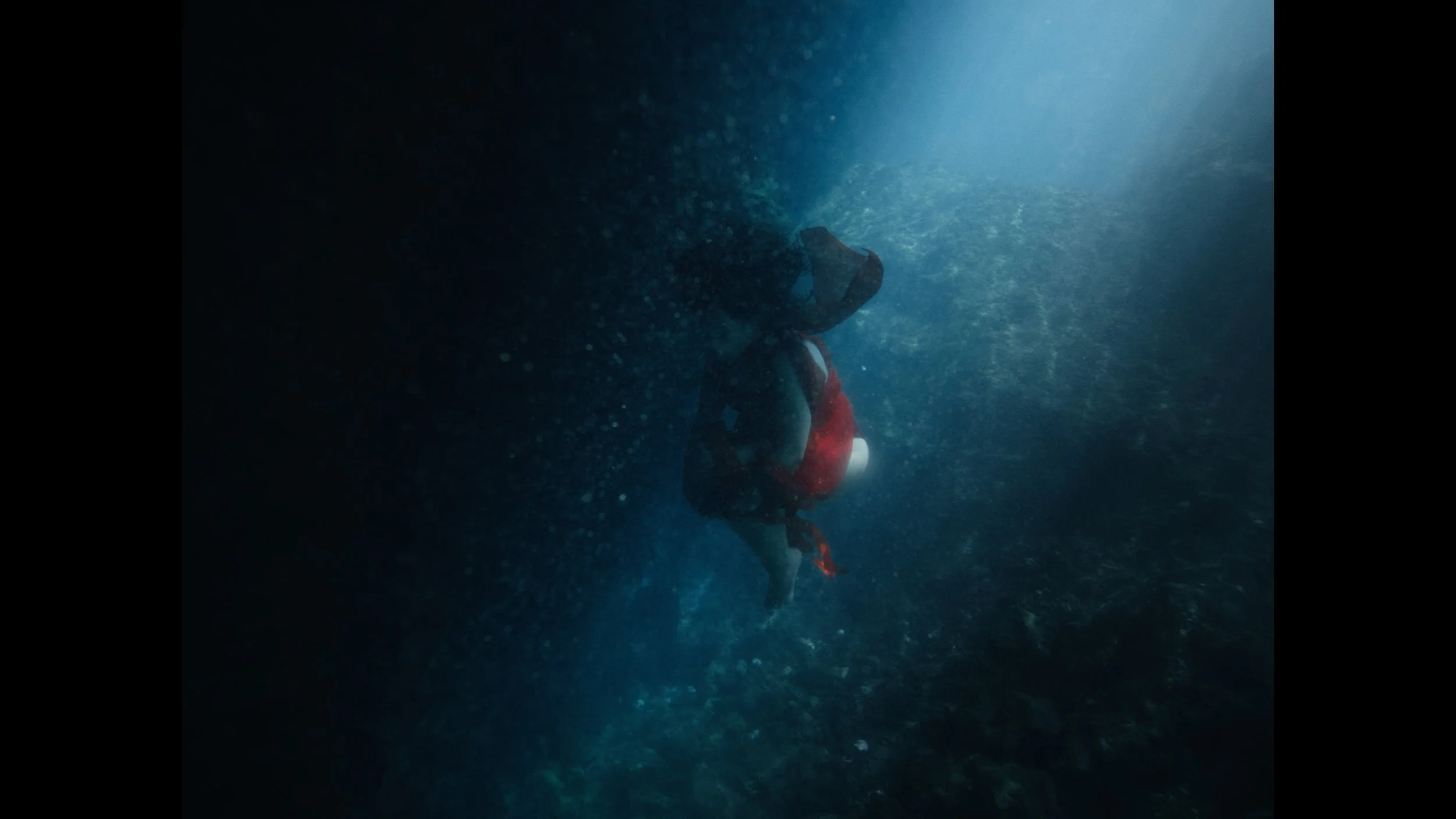
Regarding sound, it was key to capture direct sound even in the scenes we filmed underwater. We wanted to have all possible material so that in post-production, we had a wide range of options. For me, cinema is an audiovisual medium where what you hear is just as important as what you see.
Scarlet Girls by Paula Cury
Samuel, how did you get involved, and what drew you to Paula’s proposal?
Samuel: We met in San Antonio de los Baños (Cuba) while I was producing a thesis documentary by a Brazilian director, comparing the experience of accessing abortion in Cuba to Brazil. Paula was developing her project and invited me to collaborate, I was immediately drawn to her approach to portray the reality of these women without falling into common conventions of "poverty porn."
She treated violence with bravery and transparency. Perhaps what interested me most was that she didn’t treat abortion from a purely "factual" angle. We already know the statistics; the project sought to reach an emotional level. That idea of the "film fabric"—interweaving the soundtrack and the photography—aimed for something powerful and beautiful that communicated through feeling.
As producers, what material challenges enriched the documentary later on?
S: The pandemic delayed the entire process, but that indisputably helped us. It gave us more time to work with the testimonies and dedicate enough space to the script to emphasize the poetic language.
P: The extra time allowed us to process everything and write for a full year alongside Claudia Gaillard. It was an obstacle that ultimately helped the film.
After the world premiere at CPH:DOX and the North American premiere at SXSW (in Texas, of all places, where talking about reproductive rights is urgent), what were the first reactions?
P: In Copenhagen and Geneva, the theaters were completely full. That tells us that this is a fundamental conversation that draws significant attention even in places where abortion legislation isn't under threat. We know collectively that we cannot be complacent, seeing what has happened in the United States.
In Austin, Texas, where abortion is banned, I was mentally prepared for someone to stand up and speak out against us, but that moment never came. The people who attended are on the right side of history; they understand the issue and support a woman's right to choose. It was very moving to meet people from pro-choice foundations in Texas.
Scarlet Girls by Paula Cury
What do you anticipate for the Latin American premieres in Guadalajara and the presentation in the Dominican Republic?
S: In Guadalajara, it will be special because we have a Mexican co-producer and much of the team will be there to celebrate. It’s an ideal space for a documentary like this. From there, we want to expand the film’s route throughout Latin America.
P: In the Dominican Republic, we don’t have a release date yet, but it’s where there has been the most interest. People are constantly writing to ask where they can see it. I’m dying to show it, though I know it might make people uncomfortable. That is the goal: to cause reflection.
A film like this wouldn't be complete without an impact campaign. More than influencing legislation—which is a massive ambition—I see its potential to be healing. We discovered that 20% of the women who shared their testimony had never spoken about their experience with anyone. They lived it in silence due to stigma. If this film can make those women see themselves reflected and realize they aren't alone, that is enough for me.
S: We also are planning an impact campaign to reach audiences in different ways, particularly making it accessible digitally. We want it to be a starting point for discomfort and, simultaneously, a source of support.