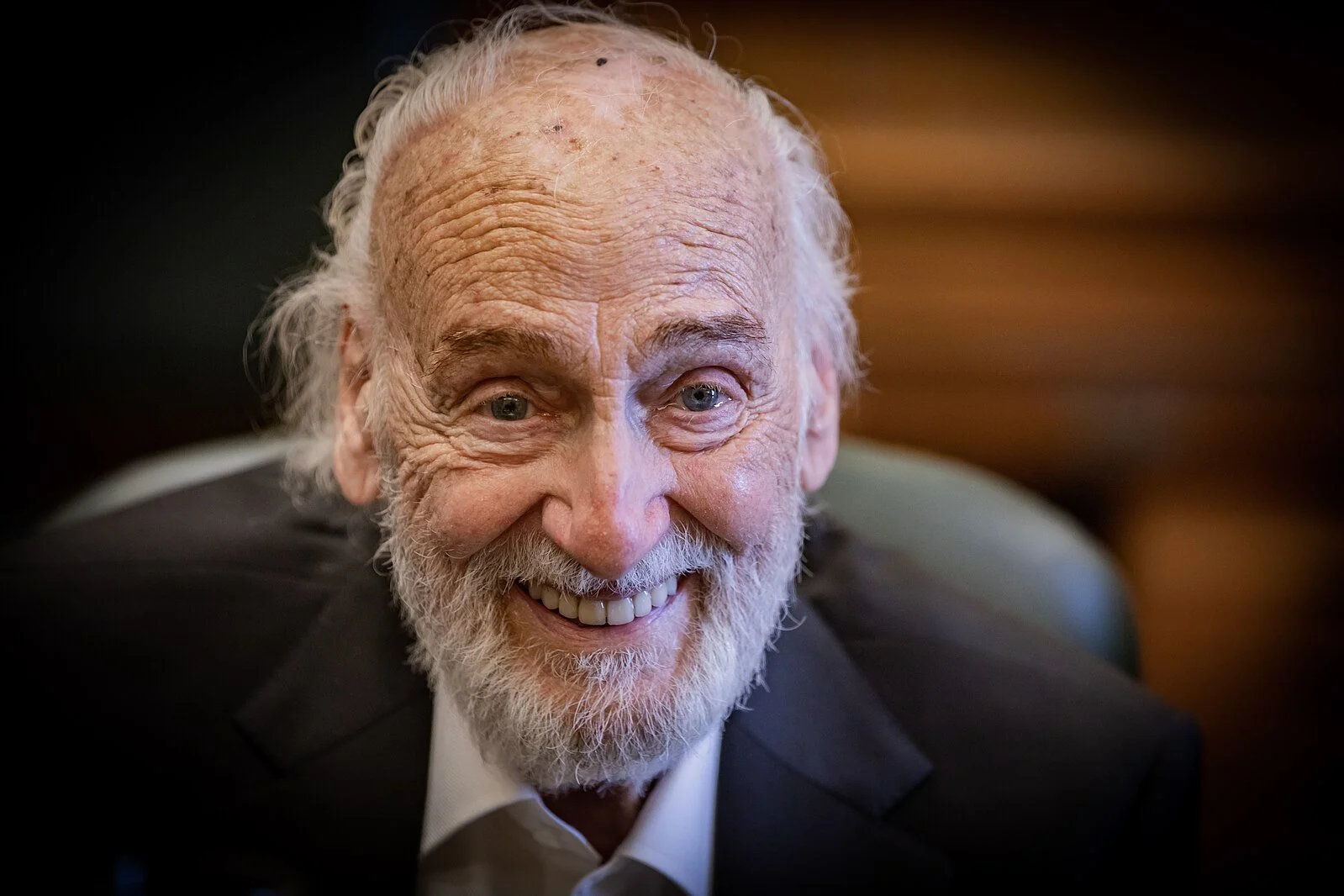
Héctor Alterio, one of the most essential actors in the history of Argentine cinema and theater, died today at the age of 96 in Madrid, Spain, where he lived and worked for decades after going into exile in the 1970s. He had a prolific and celebrated career and was one of the most revered figures in Argentine cinema, theater, and television.
He worked with numerous prestigious filmmakers, including Leopoldo Torre Nilsson, Manuel Antín, Sergio Renán, Carlos Saura, Luis Puenzo, Marcelo Piñeyro, María Luisa Bemberg, and Juan José Campanella, and acted in four of the first five Argentine films ever nominated for the Academy Awards, including the Oscar-winning The Official Story / La historia oficial and Son of the Bride / El hijo de la novia.
Born Héctor Benjamín Alterio Onorato on September 21, 1929, in Buenos Aires to Italian parents, he emerged as a defining presence of Argentine cinema, forging a body of work that bridged classical theater, New Argentine Cinema, and exile-era filmmaking. His acting debut came in the 1948 play Cómo suicidarse en primavera (“How to Commit Suicide in Spring”). After completing drama school, he founded the Nuevo Teatro company in 1950, where he remained active until 1968, playing a key role in transforming Argentina’s theater scene during the 1960s.
His feature film debut came in 1965 with Alfredo Mathé's Every Sun Is Bitter / Todo sol es amargo, and he went on to work in numerous films, including Don Segundo Sombra (1969) by Manuel Antín, The Knight of the Sword / El Santo de la Espada (1970) by Leopoldo Torre Nilsson, Rebellion in Patagonia / La Patagonia rebelde (1974) by Héctor Olivera—which won the Silver Bear at the Berlin Film Festival—and The Truce / La tregua (1974) by Sergio Renán, which became the first Argentine film to be nominated for an Academy Award for Best Foreign Language Film.
As Argentina descended into political terror, Alterio became one of the many artists forced into exile following threats. He settled in Spain in 1975, a rupture that reshaped his artistic trajectory but never diluted his identity. From exile, Alterio built a formidable second career, becoming a cornerstone of Spanish cinema and theater while continuing to work with filmmakers committed to memory, resistance, and historical reckoning.
In Spain, he played Anselmo in Carlos Saura’s landmark 1976 psychological drama Cría Cuervos, which won the Grand Prix at the Cannes Film Festival and was selected as the Spanish entry for the Best Foreign Language Film at the 49th Academy Awards. The following year, he acted in To an Unknown God / A un dios desconocido by Jaime Chávarri and Elías Querejeta, earning the Best Actor Award at the San Sebastián Film Festival. Other Spanish film credits include Pascual Duarte (1976) by Ricardo Franco, Asignatura pendiente (1977) by José Luis Garci, and The Nest / El nido (1980) by Jaime de Armiñán, which was nominated for an Academy Award.
With the return of democracy to Argentina in the 1980s, Alterio worked in films produced in both countries and in co-productions. In 1984, he starred as Adolfo O’Gorman in Bemberg’s Oscar-nominated Camila, considered one of the best Argentine films of all time.
The following year, Alterio starred as Roberto Ibáñez in Puenzo’s historical political drama The Official Story, also starring Norma Aleandro. The film tells the story of a high school history teacher who enjoys a comfortable life with her husband, a businessman connected to the military, and their adopted daughter. When Alicia starts questioning the origins of her child, she comes to fear that her daughter may have been taken from parents who were abducted or killed during the government’s violent repression of leftist activists. The Official Story made history as the first Latin American film to win an Academy Award for Best Foreign Language Film.
He remained active in numerous film, theater, and television productions, collaborating with Argentine filmmaker Marcelo Piñeyro on the music biopic Wild Tango / Tango feroz (1993), the drama road movie Wild Horses / Caballos salvajes (1995), the crime thriller Ashes of Paradise / Cenizas del paraíso (1997) and the queer thriller Burnt Money / Plata quemada (2000).
In 2001, he reunited with Norma Aleandro in Juan José Campanella’s heartwarming dramedy Son of the Bride, also starring Ricardo Darín, which received an Oscar nomination. The film follows a middle-aged restaurateur navigating a midlife crisis while fulfilling his aging father’s wish to remarry his mother, who is suffering from Alzheimer’s, in the church wedding she always dreamed of.
In 2004, Alterio received the Honorary Goya Award presented by the Academy of Cinematographic Arts and Sciences of Spain. He is survived by his children, actors Malena and Ernesto Alterio, with whom he formed a rare intergenerational bridge between Latin American and Spanish cinema.