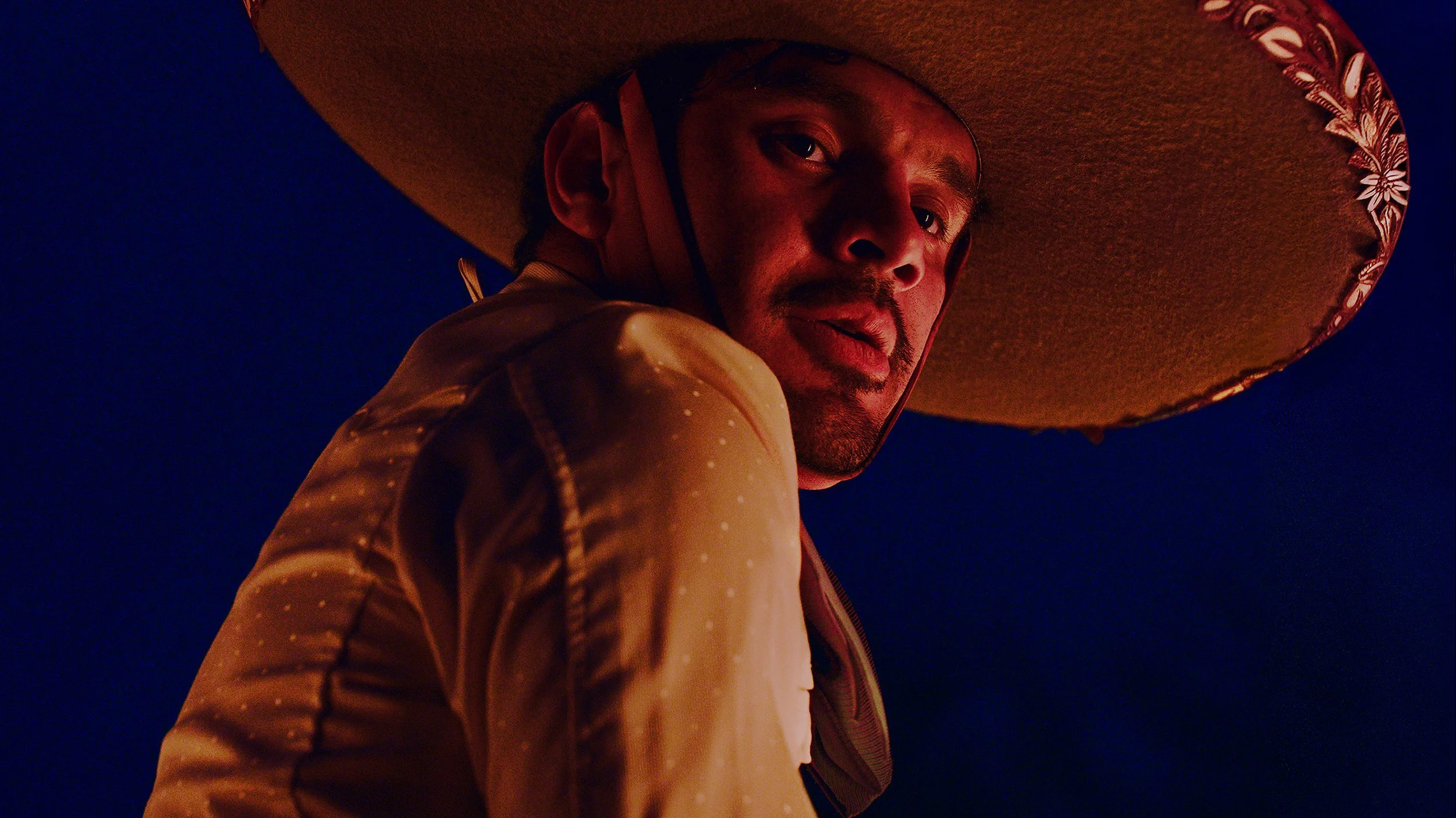
Jaripeo by Efraín Mojica and Rebecca Zweig
The Sundance Film Festival has announced the complete lineup for its 2026 edition, taking place January 22 – February 1, marking its final year in Park City and Salt Lake City, Utah, as well as online. The festival will feature a diverse selection of dramatic and non-fiction films by filmmakers from Latin America and the Latinx diaspora across four categories.
The Huntress / La cazadora, the Mexico-U.S. co-production directed by Suzanne Andrews Correa, will have its world premiere in the World Cinema Dramatic Competition. Inspired by true events and set in the border city of Juárez, Mexico, where violence against women occurs with impunity, the film follows an unlikely defender who emerges with a desperate call for change. Writer-director Suzanne Andrews Correa, a Sundance Shorts alum, returns with a harrowing portrait of a woman pushed to extremes by an oppressive culture of violence and silence.
Three Latinx films will have their World Premiere in the U.S. Dramatic Competition: Ha-Chan, Shake Your Booty!, directed by Josef Kubota Wladyka; Josephine, by Brazilian-American director Beth de Araújo; and The Musical, by Latinx filmmaker Giselle Bonilla.
Starring Cuban actor Alberto Guerra, Mexican-American actor Alejandro Edda, and Mexican actor Damián Alcázar, Ha-Chan, Shake Your Booty! follows Haru, who retreats from ballroom dancing after losing her partner in Tokyo. Encouraged by friends to return to the studio, she becomes drawn to the new teacher, sparking unexpected feelings.
In Josephine, after eight-year-old Josephine witnesses a crime in Golden Gate Park, she acts out in search of a way to regain control of her safety, while adults are helpless to console her. The film is a tense, empathetic portrait of a young girl wrestling with fear and anger she can neither escape nor fully understand after encountering violence.
In her colorful and constantly surprising feature debut The Musical, director Giselle Bonilla delivers a darkly funny, delightfully twisted ode to the inspirational power of spite. When a frustrated playwright and middle school theater teacher learns his ex-girlfriend is dating his nemesis, the school principal, he plots to sabotage the principal’s chances of winning the Blue Ribbon of Academic Excellence.
The NEXT section—a non-competitive programming category that highlights films with an innovative and renegade spirit—will feature the World Premieres of Jaripeo, by Efraín Mojica and Rebecca Zweig; the Puerto Rican animation feature TheyDream, by queer filmmaker William David Caballero; and If I Go Will They Miss Me, from U.S. Latino filmmaker Walter Thompson-Hernández.
A journey into Michoacán’s hypermasculine rodeos, Jaripeo explores memory, queer desire, and longing. Mojica and Zweig capture secret glances and fleeting touches through vérité and Super 8 footage, constructing rich portraits of queer rancheros whose memories and confidences come alive in stylized dreamscapes celebrating self-expression, desire, and belonging.
In TheyDream, director William David Caballero weaves decades of his family’s stories into a profoundly moving exploration of intergenerational healing through art. Using a distinctive blend of stop-motion animation, puppetry, and documentary-style interviews, Caballero transports audiences through his Puerto Rican family’s vivid memories and dreams, examining displacement, identity, and the American experience across generations.
If I Go Will They Miss Me follows twelve-year-old Lil Ant in Los Angeles as he struggles to connect with his father while seeing surreal, almost spectral visions of boys drifting around his neighborhood. Their presence reveals a link between father and son, laying bare the threads that bind family, legacy, and place.
In the U.S. Documentary Competition, American Pachuco: The Legend of Luis Valdez, by David Alvarado, chronicles the life of the acclaimed Chicano playwright and director. Alvarado brings audiences close to Valdez, charting his career milestones and enduring cultural influence. Employing vibrant stylistic choices—including split screens, rescued archival footage, and a pachuco narrator who interjects candid commentary—he paints a vivid portrait of the Chicano icon.
More than ten U.S. Latinx and Latin American short films will screen at the festival. Highlights include Once in a Body / Una Vez en un Cuerpo by María Cristina Pérez (Colombia); Marga en el DF by Gabriela Ortega (Mexico); La Tierra del Valor by Cristina Costantini (USA); Albartross by Amandine Thomas (USA/Mexico); Norheimsund by Ana A. Alpizar (Cuba/USA); Blue Heart by Samuel Suffren (Haiti/France); and The Liars / Los Mentirosos by Eduardo Braun Costa (Argentina).
Additional selections include Chilean-Belgian Felipe Bustos Sierra’s short Everybody to Kenmure Street and Venezuelan-Canadian Gabriela Osio Vanden’s documentary short Nuisance Bear. In the festival’s specialized programs, the Chilean short Sorrow Doesn’t Sleep by Night by Josefina Montino and Martín André will premiere in the Animated Short Film Program, while Um, by French-Colombian director Nieto, and the Peruvian short ¡Pika! by Alex Fischman Cárdenas, will screen in the Midnight Short Film Program.