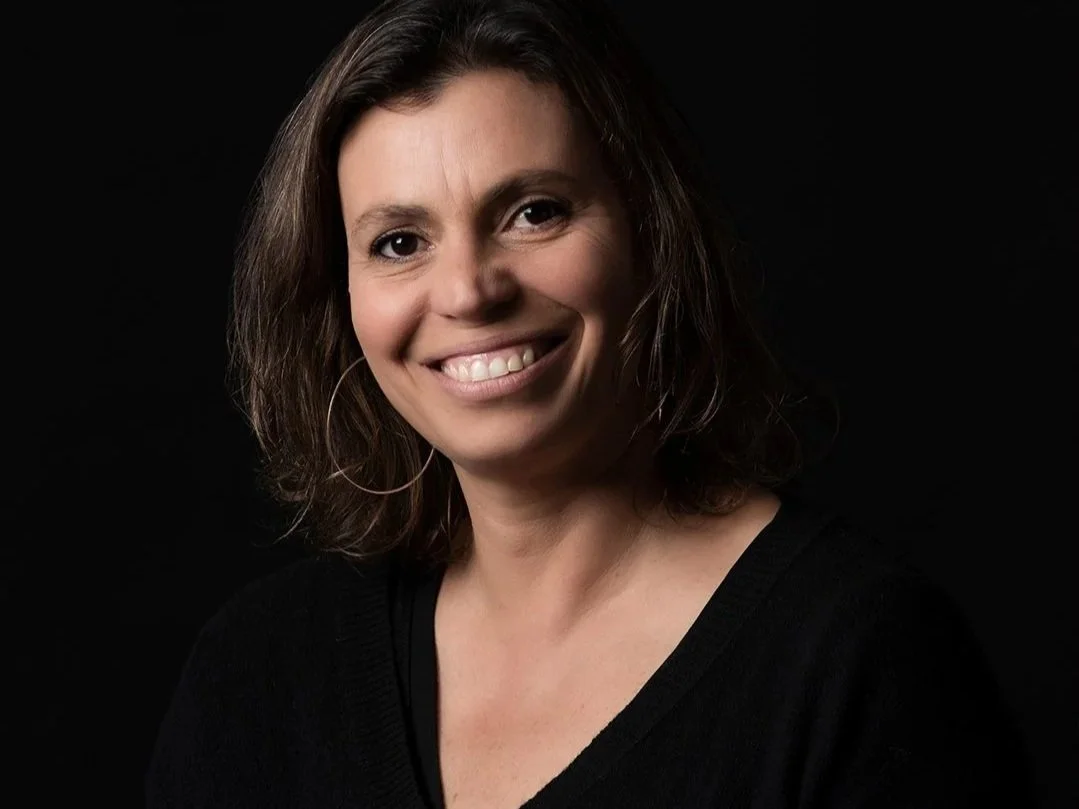
Esteemed Uruguayan producer Agustina Chiarino died on June 18 after a battle with cancer. She was 49. One of the most influential and beloved figures in contemporary Latin American cinema, Chiarino played a pivotal role in the international rise of the region's filmmaking over the past two decades. Through her work as a producer, co-producer, mentor, and industry leader, she helped bring some of Latin America's most acclaimed films to audiences around the world.
Born in Montevideo in 1977, Chiarino studied Political Science, earned a degree in Social Communication, and later completed a master's degree in Creative Documentary. After working as a partner at Control Z Films, she co-founded Mutante Cine alongside Fernando Epstein, one of Uruguay's most important production companies. In 2022, she launched Bocacha Films.
As a producer, Chiarino was behind a remarkable body of work that included Adrián Biniez's Gigante, The Midfielder and The Waves / Las olas; Pablo Stoll's Hiroshima and 3; Ana Guevara and Leticia Jorge's So Much Water, Alelí, and Don't You Let Me Go; Pablo Solarz's I Woke Up With a Dream; Miguel Calderón's The Disciple of Speed and Loss Adjustment; and the documentaries Bosco by Alicia Cano, Alter by Joaquín González, and To Say Goodbye by Carolina Sa.
She also served as co-producer on many of the most celebrated Latin American films of recent years, including Benjamín Naishtat's History of Fear, Ana Katz's My Friend from the Park, Gustavo Pizzi's Loveling, Marcelo Martinessi's The Heiresses, Alejandro Landes' Monos, Vanina Spataro's Shipwrecks, and Sebastián Peña Escobar's The Last. Films she produced and co-produced premiered at major international festivals including Cannes, the Berlinale, Venice, San Sebastián, Sundance, and Toronto, earning numerous awards and accolades.
Beyond her work in production, Chiarino was a tireless advocate for the development of the audiovisual sector throughout Latin America. She chaired Channel 10 Uruguay's National Production Department committee for eight years, taught at the International School of Film and Television in Cuba and at universities across Uruguay, and mentored emerging filmmakers through programs including Biennale College, BrLab, BioBioLab, BAM, and PUENTES, which she co-organized alongside European Audiovisual Entrepreneurs.
She also served as an evaluator and advisor for numerous international initiatives, including TorinoFilmLab, the Doha Film Institute, the Sundance Institute, Open Doors at the Locarno Film Festival, When East Meets West, and Ventana Sur. In 2024, she served as general consultant for Ventana Sur, Latin America's largest audiovisual market, during its edition in Montevideo.
A member of the Academy of Motion Picture Arts and Sciences and a founding member of the Uruguayan Film Academy, Chiarino was widely admired for her generosity, intelligence, and unwavering commitment to supporting filmmakers and strengthening the region's film industry.
Her passing represents a profound loss for Uruguayan cinema and for the Latin American community of filmmakers, producers, and industry professionals whose careers she helped shape. She leaves behind an extraordinary legacy that will continue to resonate across Latin American cinema for generations to come.