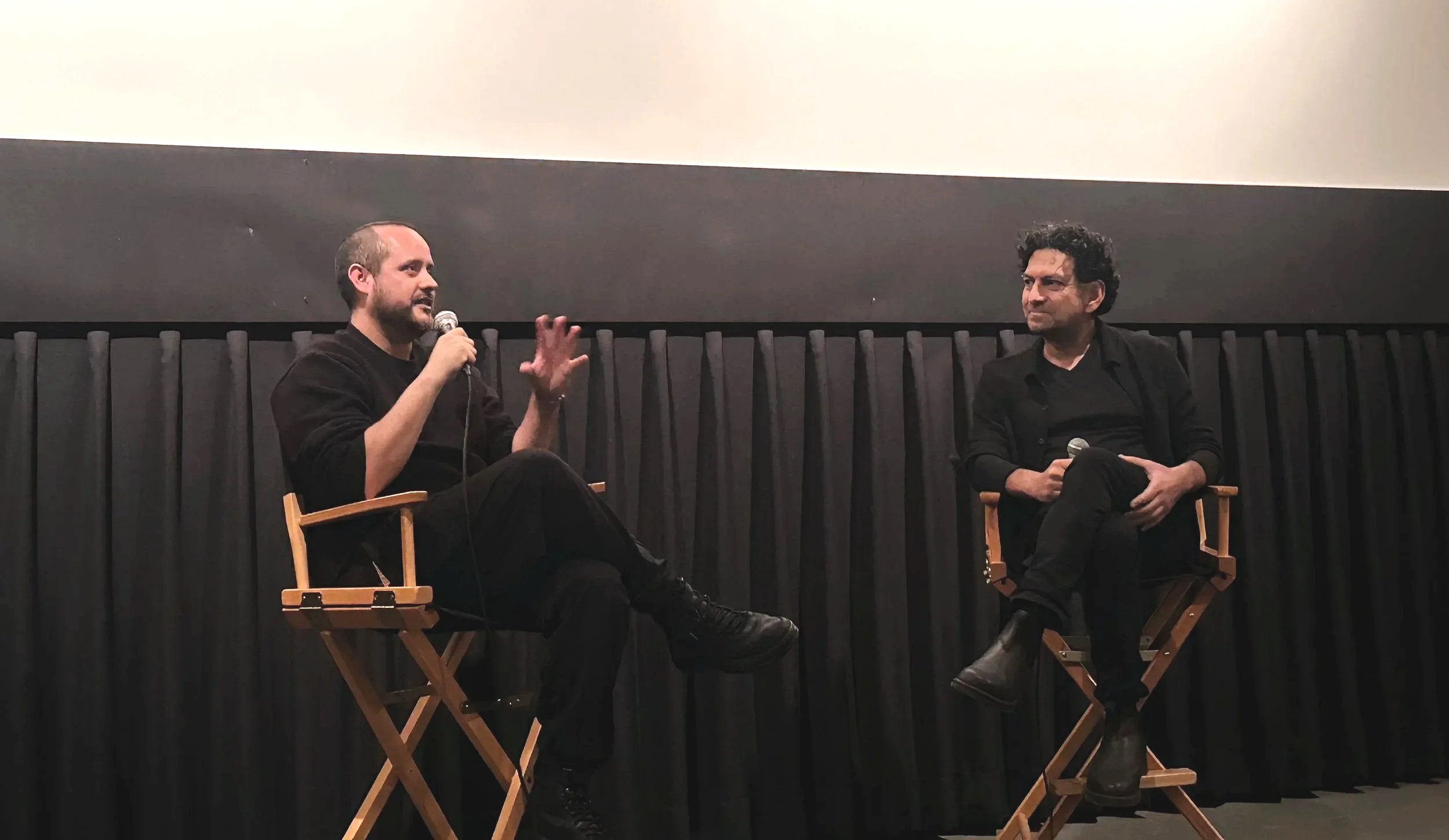
Punku director J.D Fernández Molero (left) and Cinema Tropical's Carlos A. Gutiérrez
On Wednesday, February 18, Punku, the latest film by Peruvian Rotterdam Tiger Award–winning writer-director J.D Fernández Molero (Videophilia), had its U.S. premiere at Anthology Film Archives in New York City—presented as part of ‘Lost & Found: Cine(ma)s Latinoamericanos Re-unidos’, co-programmed by Matías Piñeiro and Carlos A. Gutiérrez.
First unveiled in the Forum section of the 75th Berlinale and winner of the Grand Prix for Best Film at the New Horizons International Film Festival in Wrocław, Punku was recently named one of the Best Non-U.S. Releases in the annual Online Film Critics Society (OFCS) Awards last January 26, positioning Fernández Molero as one of the most singular voices working in contemporary Peruvian cinema.
Deep in the Peruvian Amazon lowlands, Meshia, a Matsigenka Indigenous teenager, discovers Iván, a boy who vanished two years ago and was presumed dead. Determined to save him, she travels upriver to a town, where he urgently needs eye surgery to halt an infection threatening his sight. As Iván wrestles with the trauma of his mysterious past, Meshia becomes entranced by urban life and enters a local beauty pageant, chasing fragile dreams of transformation. A quiet bond forms between them, but when a stranger with sinister intentions appears, their connection is put at risk.
In conversation with Cinema Tropical’s Carlos A. Gutiérrez, Fernández Molero spoke about his filmmaking process, the role of mixed formats in shaping representation, and the inspirations behind Punku.
Carlos A. Gutiérrez: Juan Daniel, great to have you here, and congratulations on your recent award for Best Director by the Peruvian Association of Film Critics. Across your work, you play a lot with formats, and each of your three feature films approaches them with a distinct aesthetic. Can you dive into that fascination—particularly with this film, where you move seamlessly between 16mm, Super 8, and digital formats?
J.D. Fernández Molero: When I began imagining this film, I was editing my first feature, Reminiscencias, in my grandfather's house—the same house that you see in the film, where Iván [the protagonist] lives. Reminiscencias is made out of home videos, mostly VHS material, and most of it is from Quillabamba, where my family is from. While watching all this footage of decades of life in Quillabamba, I felt like something was missing: another kind of memory that wasn’t material or immediate.
That’s when I began thinking about a kind of symphonic memory that is inside everyone. In Quechua, there’s a single word to name the here and now, that comprises time and space: Pacha. I thought of Super 8 and 16mm as formats capable of bringing these symbolic ideas to life. Digital formats often feel fake because they’re so sharp, so material. Placing them alongside celluloid and Super 8 creates a more interesting kind of exploration.
Overall, I enjoy switching between formats more than any single one. Sometimes it feels as if certain parts of the cinematic language are overlooked when we take it too seriously. What happens to your brain when you jump from Super 8 to TikTok? Something shifts in what you think is reality versus what you understand as that other thing that isn't reality. I like to play with formats to make this point.
Did you have a clear idea of the chapters of the film from the beginning?
Yes. Originally, the structure was based on the Tarot, on the 22 Major Arcana. Eventually, due to budget constraints and the need to simplify the film, I ended up going from zero (the Fool) to nine (the Hermit). Somehow, my unconscious gravitated towards these two strong archetypes, and the film moves traces that journey from being the Fool to becoming the Hermit.
In the end, the idea of the chapters stayed, but I didn't want them to be narrative chapters in the literary sense. I thought of them more architecturally, like moving through a building in which doors have different names or numbers, as in a hotel room.
In the Andean tradition, punku means a threshold or gateway. It can refer to natural elements, like waterfalls or rock formations that divide different territories, but also to gateways between this world and others. At the end, the use of chapters works as punkus within Punku itself, a way of using that symbolic language to create a constellation of different film spaces and connect them.
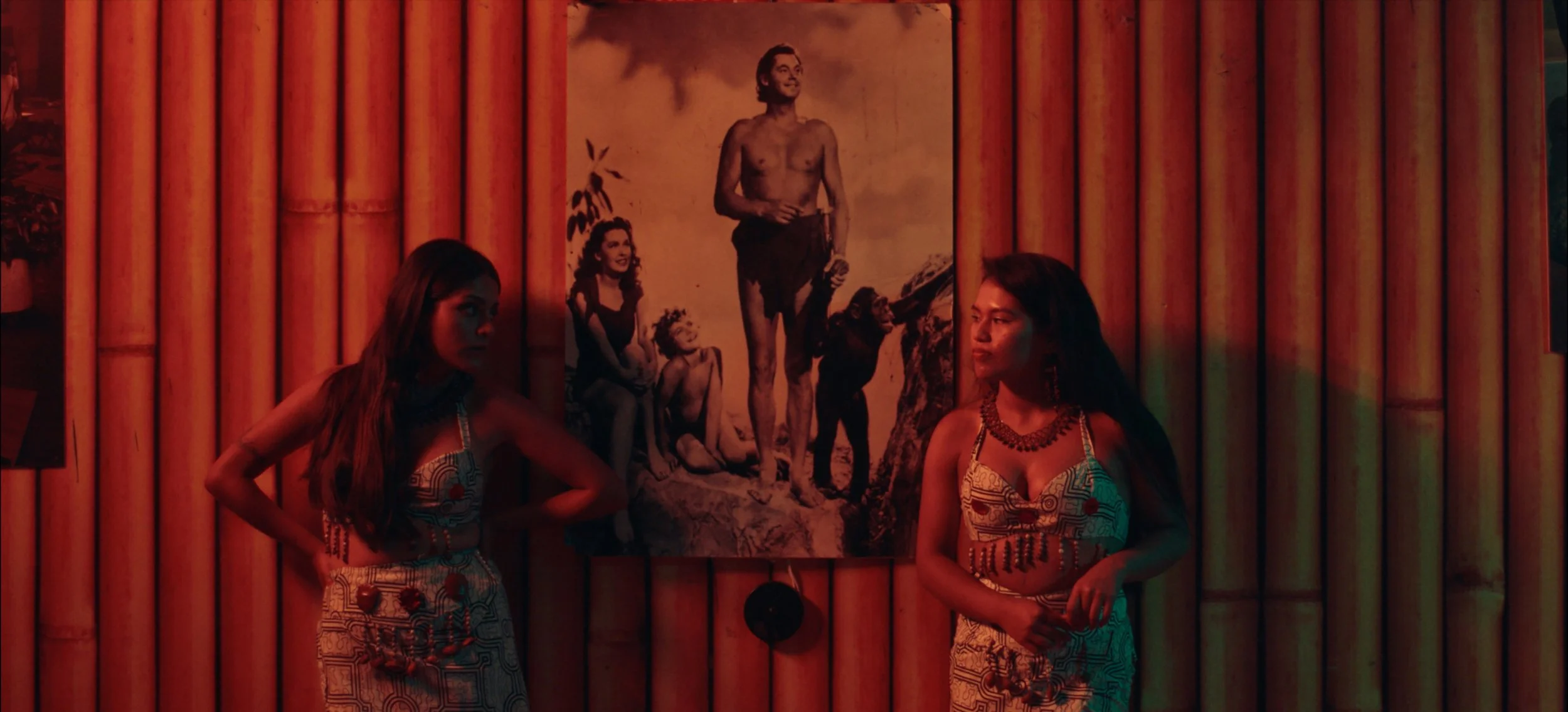
The film plays a lot with the oneiric, particularly in Iván’s story. I was particularly struck by the eye of the surgery sequence, which made me think of Buñuel’s Un Chien Andalou. The film plays a lot with Surrealism as well. Can you elaborate on those two elements?
Right now, we're at a temple of experimental cinema [Anthology Film Archives], and I feel like experimental cinema can sometimes be more faithful to non-rational experiences, like the spiritual or oneiric ones. To me, mixing fiction with experimental techniques feels more like life itself.
I tried to avoid a platonic relationship to the film’s story. I thought it was more interesting to speak with images. Part of the film comes from my family—this provides the where, the why, and the when. However, there's another side that is purely my own, a realm of exploration. Buñuel is, of course, a special part of that.
I think it was interesting to make these two sides talk: the social and traditional representation of this collective unconscious, and then this other personal, almost fetishistic dimension—the things that I like just because.
How did you come up with the idea for the main characters, Iván and Meshia?
Iván is a composite memory of my parents, other family members, and myself. Even the eye sequence at the beginning of the film is drawn directly from my own experience. When I was a kid, a rooster almost pecked my eye out because my grandfather raised fighting cocks, and I was taken to the same hospital Iván goes to in the film.
In that sense, I played with these memories and merged them with the film’s original narrative and what I think of as my own mythological background. I don't come from a traditional fiction background—my training is in experimental documentary, and that shaped the entire process.
We conducted around 500 documentary-style interviews of 5 to 15 minutes. I told participants that even if they weren’t cast, their stories could still influence the script. At the end, casting became a process of absorbing testimonies, mostly from younger people from a different generation. The first interview for the character of Iván was so perfect that I immediately knew: this is the character. That’s how I wrote him.
I let the casting actively influence the character building. When I finish a script, most elements are clear, but the characters are still like silhouettes. Once I finally see them, when casting happens, I begin adapting the script to make it real.
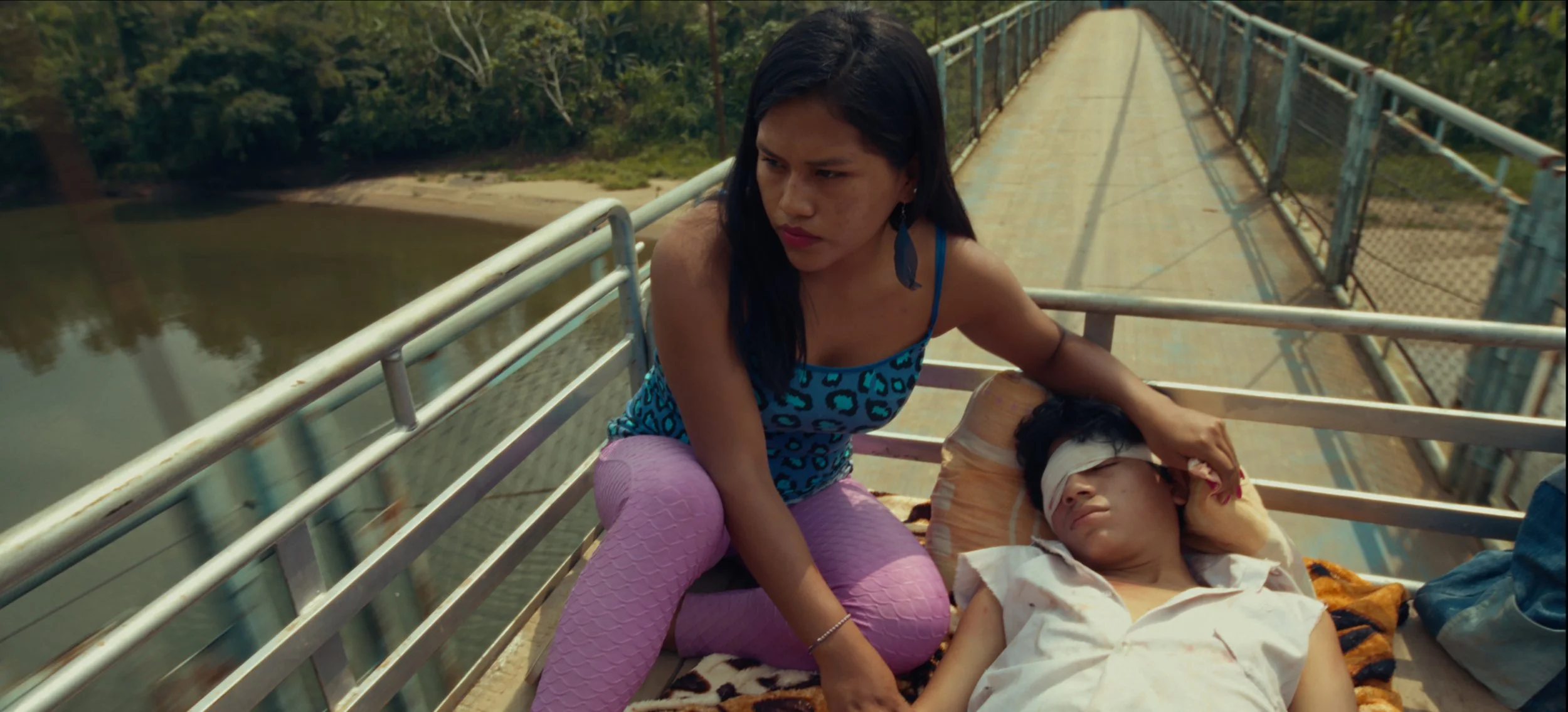
The same thing happened with the character of Meshia. Initially, I planned to cast a girl from the Amazonian community itself, but then became concerned about the ethics of bringing her to the city of Quillabamba and making her go through all these situations that are very rooted in urban life. Then Maritza appeared. She's from the city of Quillabamba, and she's also half Machiguenga (Amazon indigenous), and half Quechua (Andean indigenous). She gave life to this golem that is a character. Even the TikTok footage that we see in the movie is her own archive, which she recorded while we were shooting a film.
Together, Iván and Meshia embody this energy of haunting: one person being haunted by something that happened in the past, and the other by the possibility of something happening in the future. These two energies collide throughout the film.
Can you talk about the context of shooting in the town of Quillabamba?
It’s not a coincidence that both Yana-Wara and Historia de Shipibos come from outside of Lima. They are films that don't really care too much about how they will be received outside of Peru.
But Peru itself is a very surreal country. Not only because right now we are electing our ninth president in nine years, but also because the pre-Hispanic, millenary tradition of indigenous culture is very much alive deep inside us, more than we think it is. It blends in with Western and foreign influences.
When we stop trying to fit into a fixed idea of what it is to be “Peruvian,” a more raw and authentic form of representation emerges. For us, it’s natural to blend these kinds of surreal aspects of everyday life into our cinema.
You were talking in your introduction about being a film, also about immigration. But, at the same time, it's not a typical film about immigration. Could you elaborate on that?
It’s also about colonization, immigration, gentrification, decolonization—especially when you try to avoid reproducing the prejudices of the place that you're representing. It can be easy to just self-censor reality to fit it into a preconceived idea of what that place is supposed to be.
Native communities and their traditions are often imagined as pure or static, an idea that comes from the anthropological academy. In reality, these communities are open and deeply shaped by multiple and contemporary influences.
I think it's very important to decide what to show and what you're not showing. Ultimately, the work is about finding these elements that need to be on a big screen, even if there is no big narrative that justifies these images. Even if it's just fragments of spaces and people.
In that sense, the narrative comes as an excuse to show certain things. Usually, my first ideas are about a particular place, an energy, or an atmosphere. The story comes later, as an excuse to navigate through all that.
I was very curious about the darkness that permeates throughout the film, particularly in the ritual scene. Can you talk about what that ritualistic dimension represents for you?
These practices exist in my family as well, and I don't think they’re exclusive to Latin America. I’ve encountered similar rituals in Ukraine and other parts of Eastern Europe. You can often tell how familiar an audience is by their reaction—whether they are disturbed by the ritual or they recognize it and know what's gonna happen.
In some way, I think film can work in a similar way. Films can be cleansing, and they can also work like an amarre—this kind of love spell that hypnotizes you. It is interesting how, in some parts of Peru, the so-called “dark” and “white” magic are so differentiated, even though they’re often practiced by the same people.
I tried to approach the ritual in a less performative way. Usually, when you go to a shaman, it's more of a performance, actually. I was interested in doing something more universal. One of the actor-characters even says during the ritual, “I kind of believe in this.” That kind of is important: it's not about a radical faith, but approaching the ritual playfully while still allowing for the possibility that it might be real.
Much of what we hear in the film comes directly from the cast’s own experiences. When they're talking about these mythological creatures or about Iván being cursed, it's just them making theories on that. Because I didn't really tell them what happened—I don't even know what happened to Iván, and I don't want to know. I was more interested in letting the cast play with these ideas, and to find in them the answers to what they and their characters are going through.
Throughout the movie, images of children recur and help move the narrative forward keep coming around to move the narrative forward—for instance, in the moment in which Iván is found. I was wondering what they symbolize to you.
Deep down, I think this is a coming-of-age film. In a way, the children function as ghosts of childhood that come back to haunt you. Iván is constantly visited by figures that, in Peru, are known as duendes—spirits associated with, who can be mischievous, evil, and pure at the same time. Iván is in this kind of in-between space: where he is no longer a child, but not yet an adult, and he’s torn between those two states. Ultimately, the film is about the fear of growing up—and what you inherit when you become one of them.
This conversation has been edited and translated for length and clarity by Mariana Giacobbe.